
Musings on Mountains and The Tree of Life…
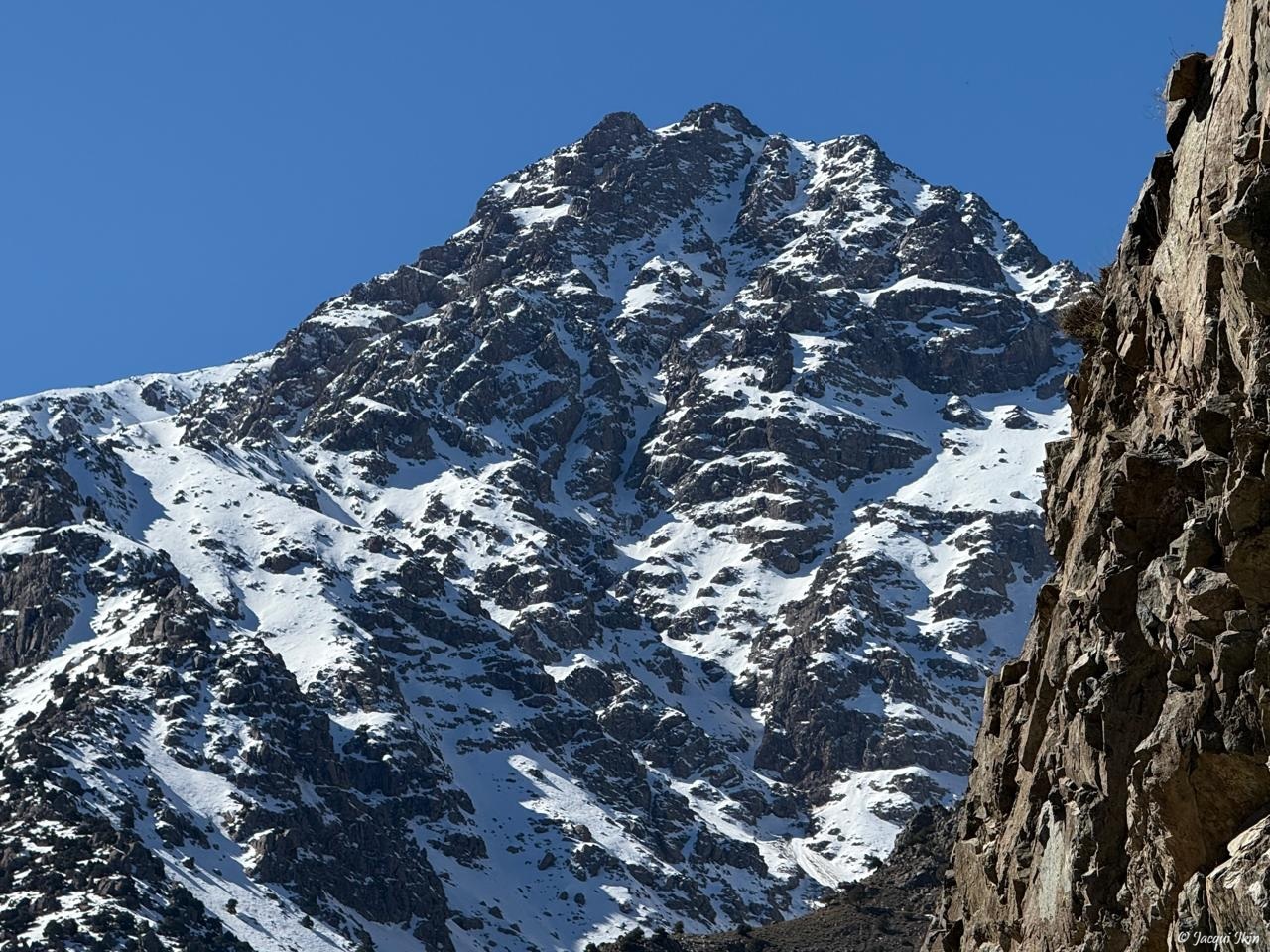
When most people think of Morocco, their imagination drifts naturally toward sun-washed deserts, labyrinthine medinas, and the warm breath of the Sahara Desert. One expects caravans, ochre dunes, and the scent of spices carried through ancient markets. Snow, in such a vision, seems almost an absurdity.
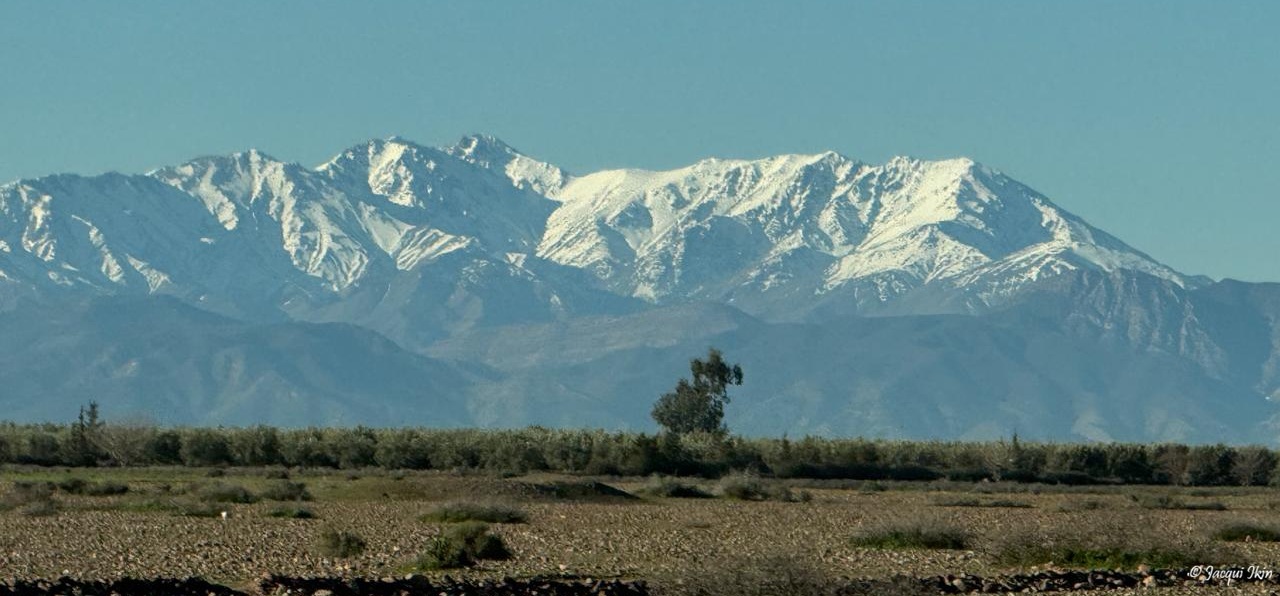
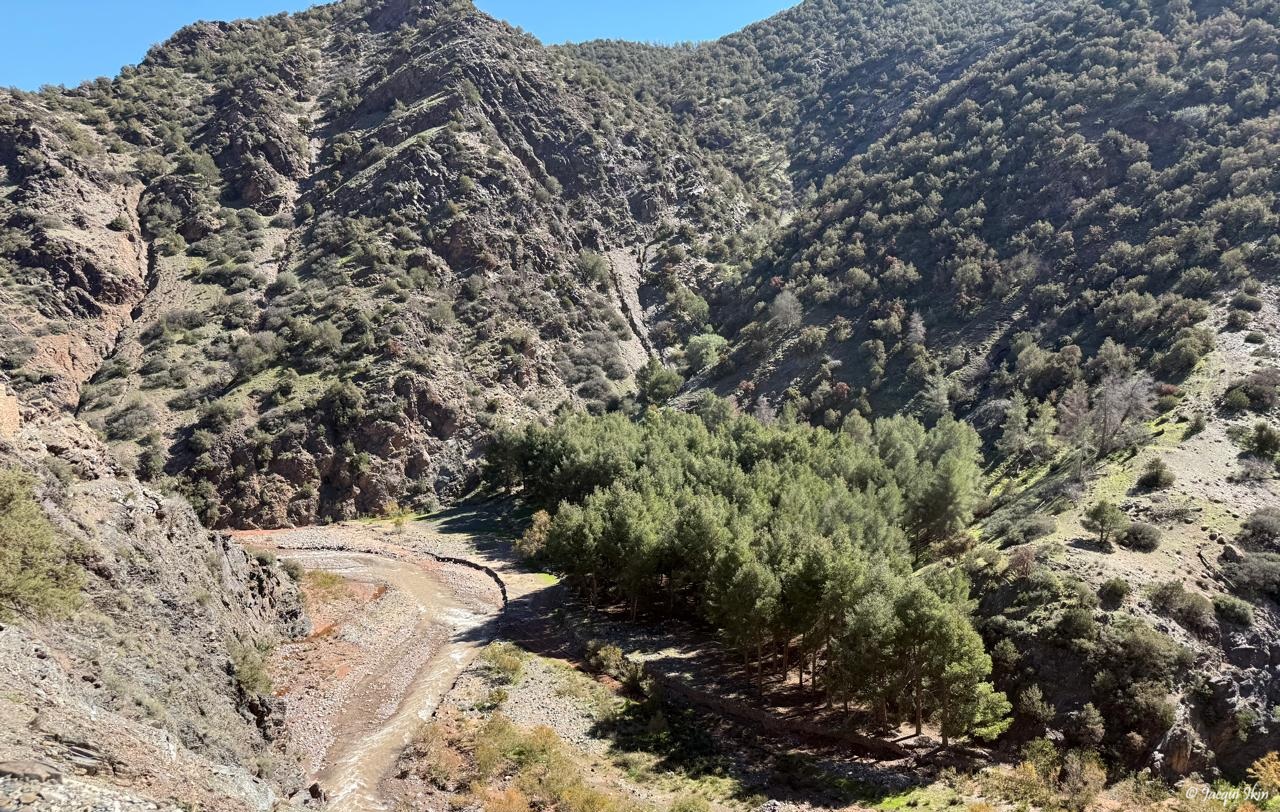
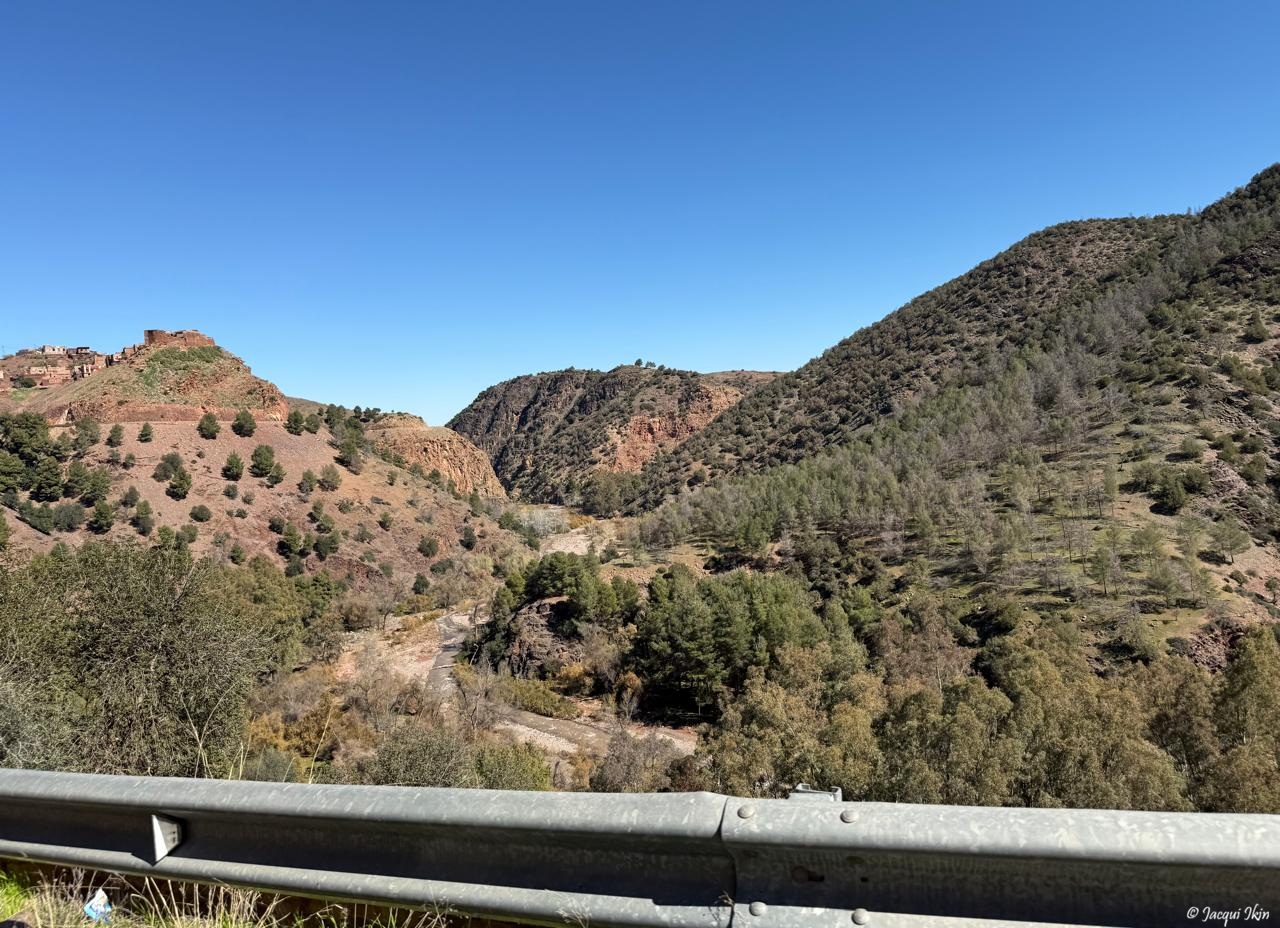
Yet Morocco possesses another face entirely – one that rises sharply from the earth in the form of the majestic Atlas Mountains. These ranges, stretching like a colossal spine across the country, ascend to heights where winter settles in earnest. Here the air thins, the wind sharpens, and the peaks gather blankets of snow that linger long after the plains have warmed.
In these lofty elevations lies the surprising spectacle of African ski resorts, such as Oukaïmeden, where chairlifts climb white-clad slopes and skiers carve lines against a backdrop that feels almost surreal for the continent. Located 75-80 km south of Marrakech, this is Africa’s highest ski resort.
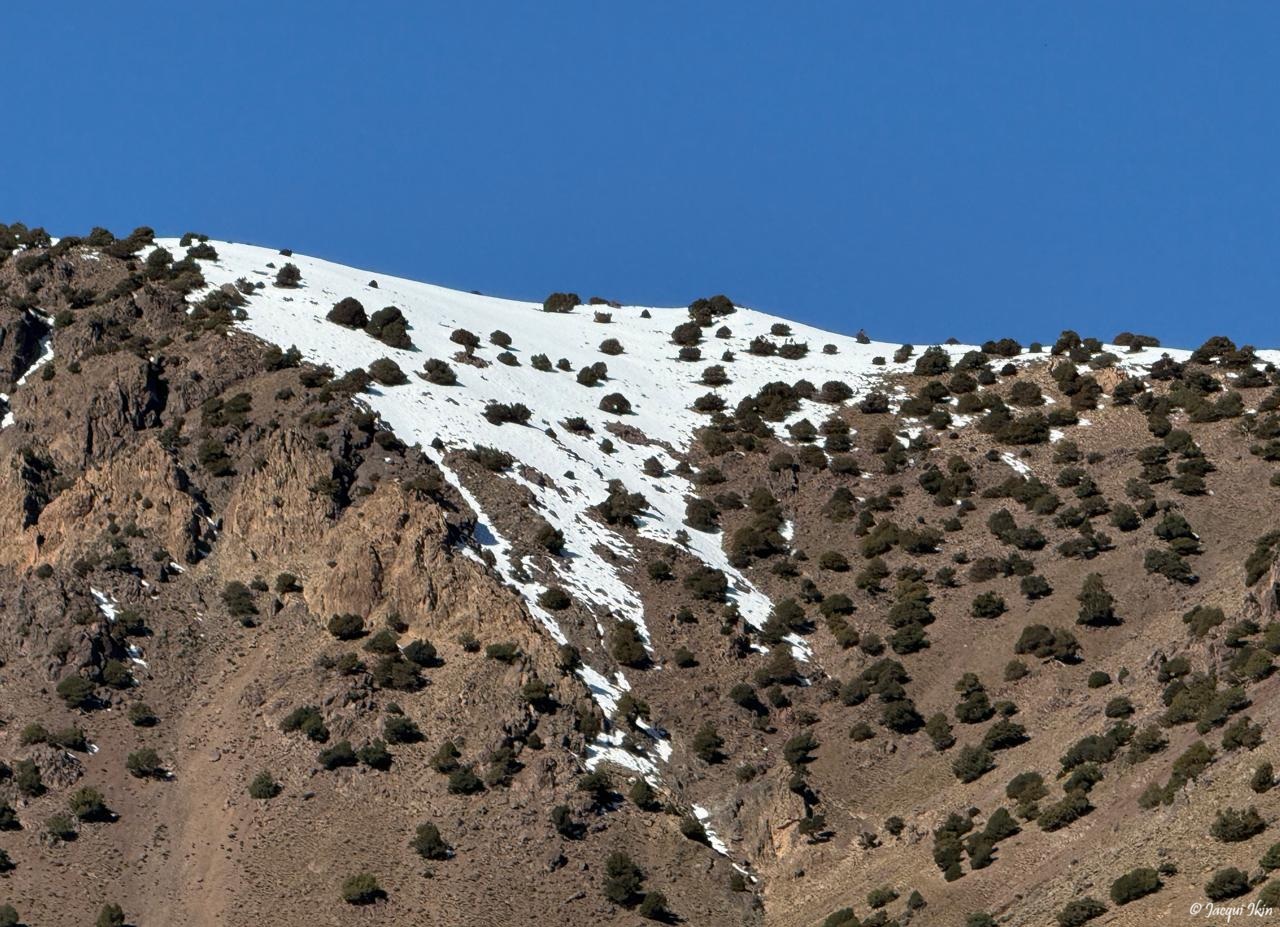
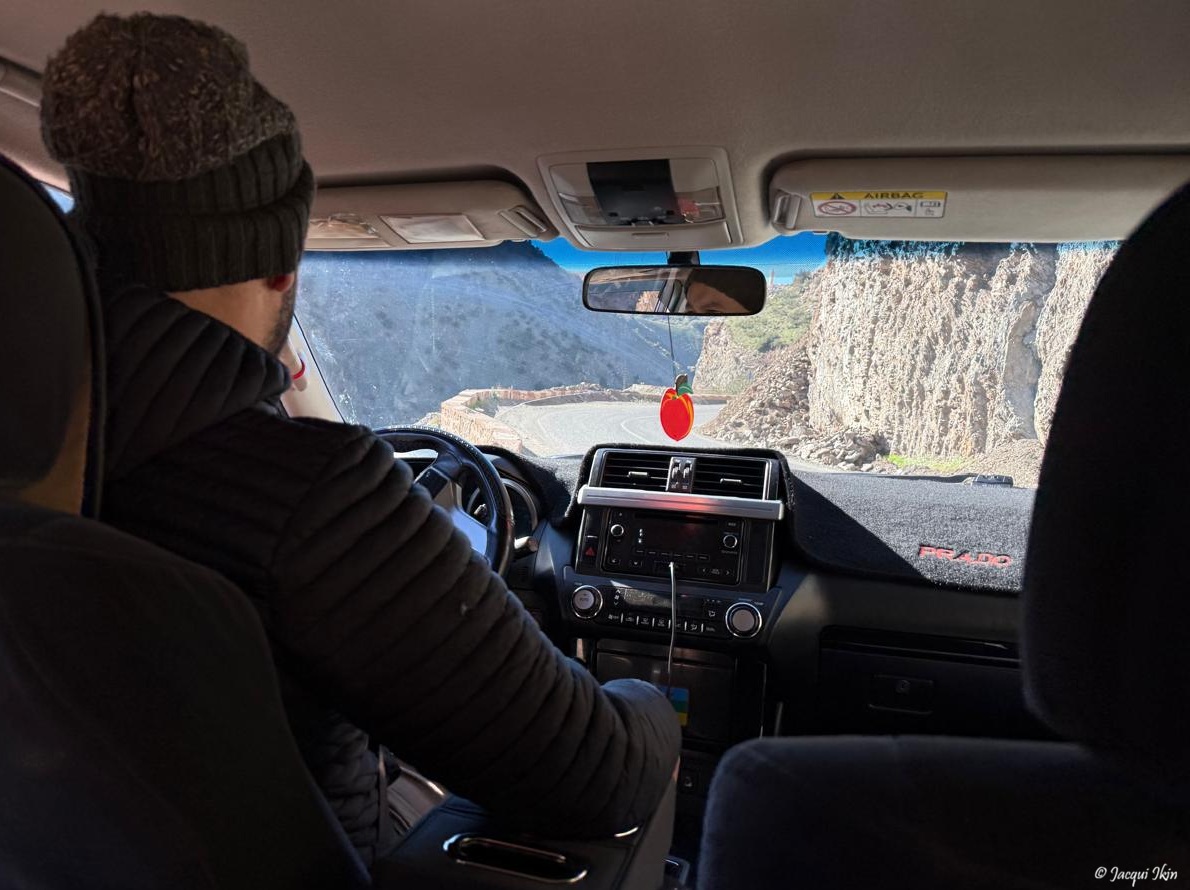
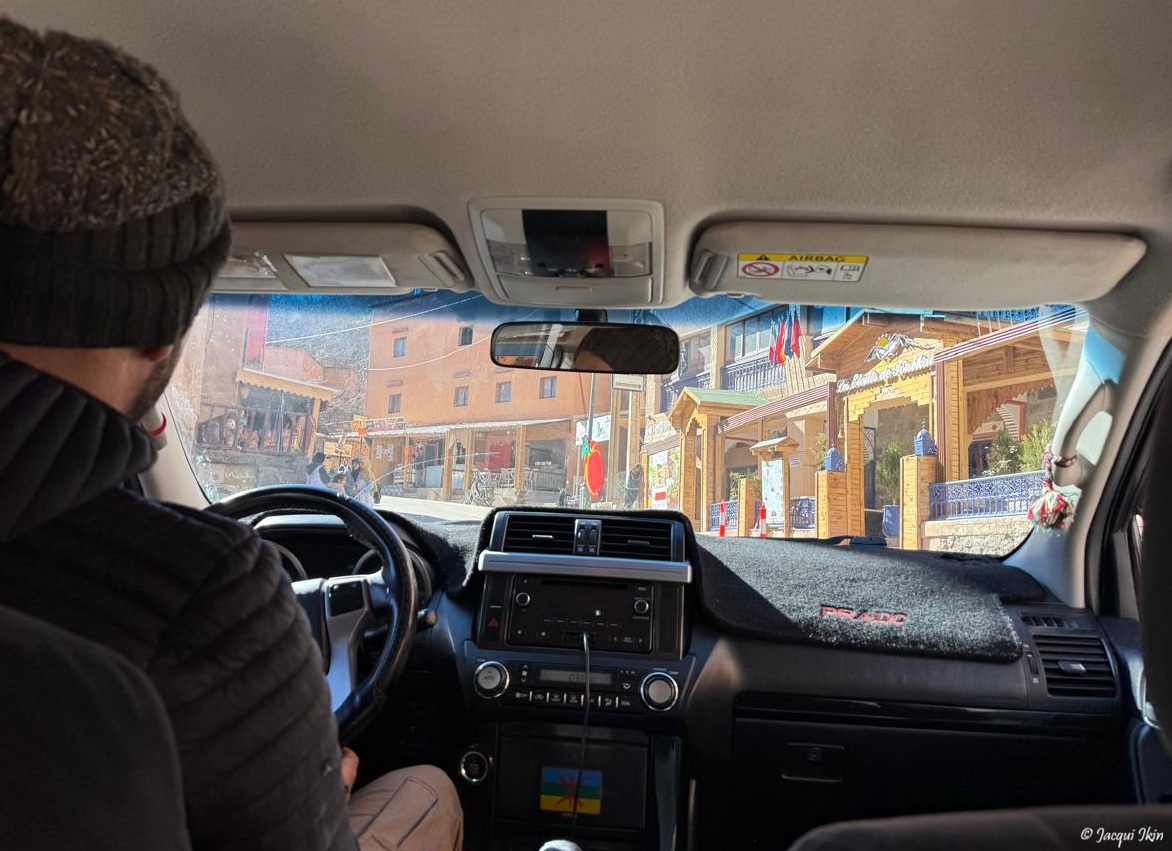
As a popular day-trip destination, it sees intense traffic on weekends when snowfall is good, particularly between December and March. The specified 30,000 visitors or 5000 cars/day in season specified by research seems almost surreal, as those roads are narrow and can be challenging! We didn’t visit the resort, and with these numbers I am really thankful! Instead, we accessed the Atlas Mountains through the quaint village of Imlil.
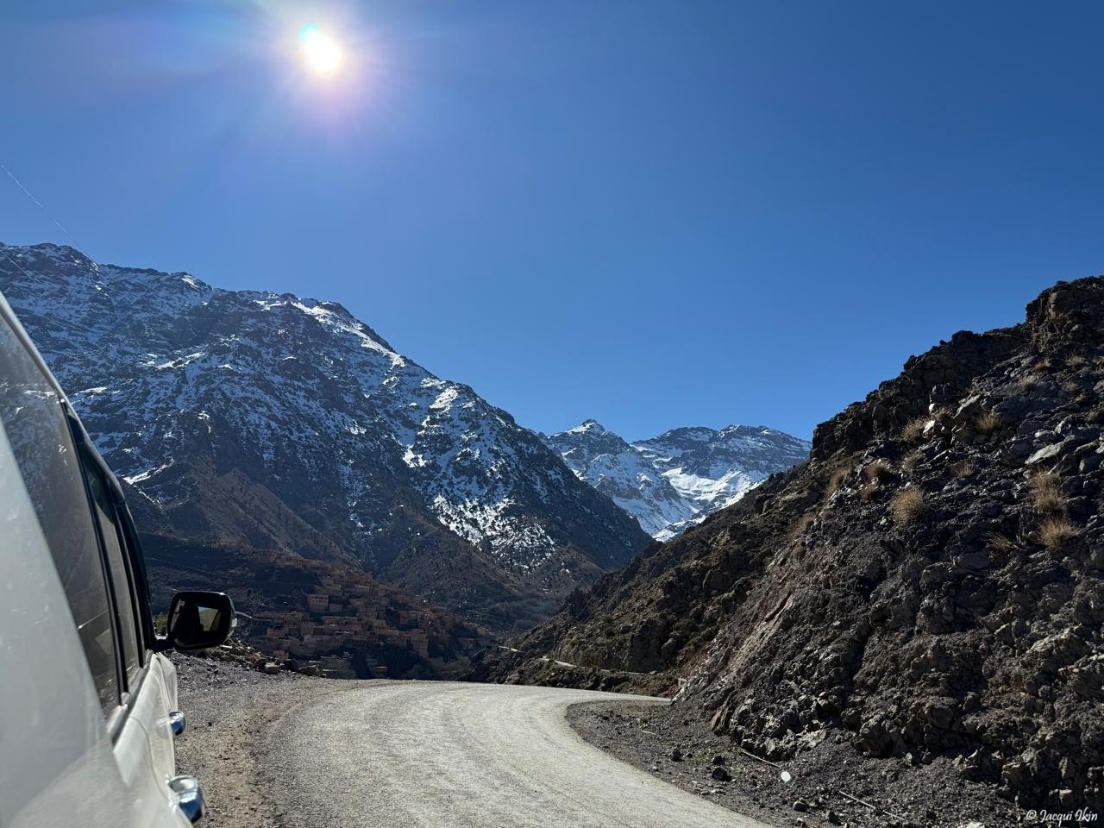
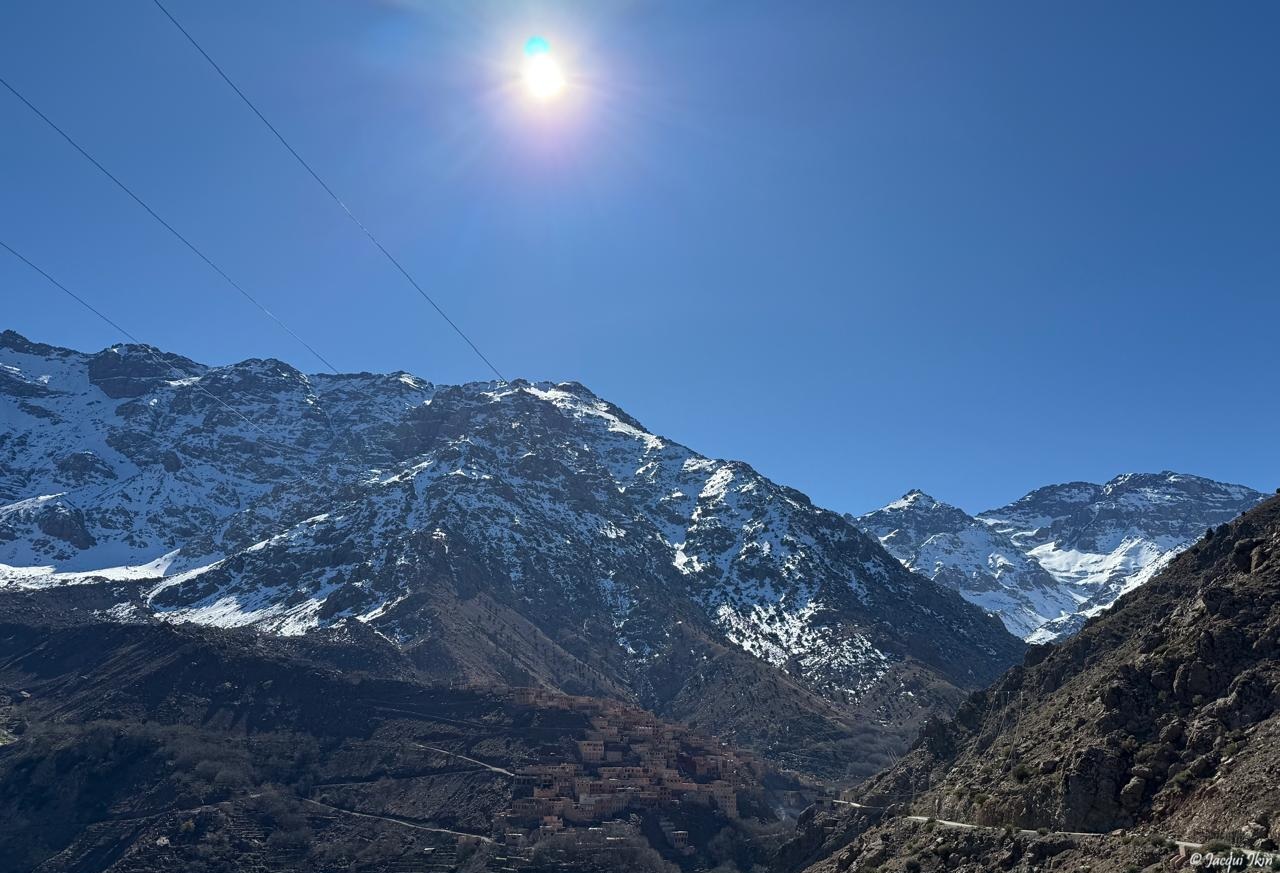
Imlil is located directly in the High Atlas Mountains, serving as the primary base for trekking and climbing in the range. The mountain air carries a chill that few would associate with North Africa. The sun still shines brilliantly, but it glints off ice rather than sand. Higher still rises Mount Toubkal – at 4167m, it is the highest peak in Morocco, the Atlas Mountains, North Africa and the Arab world.
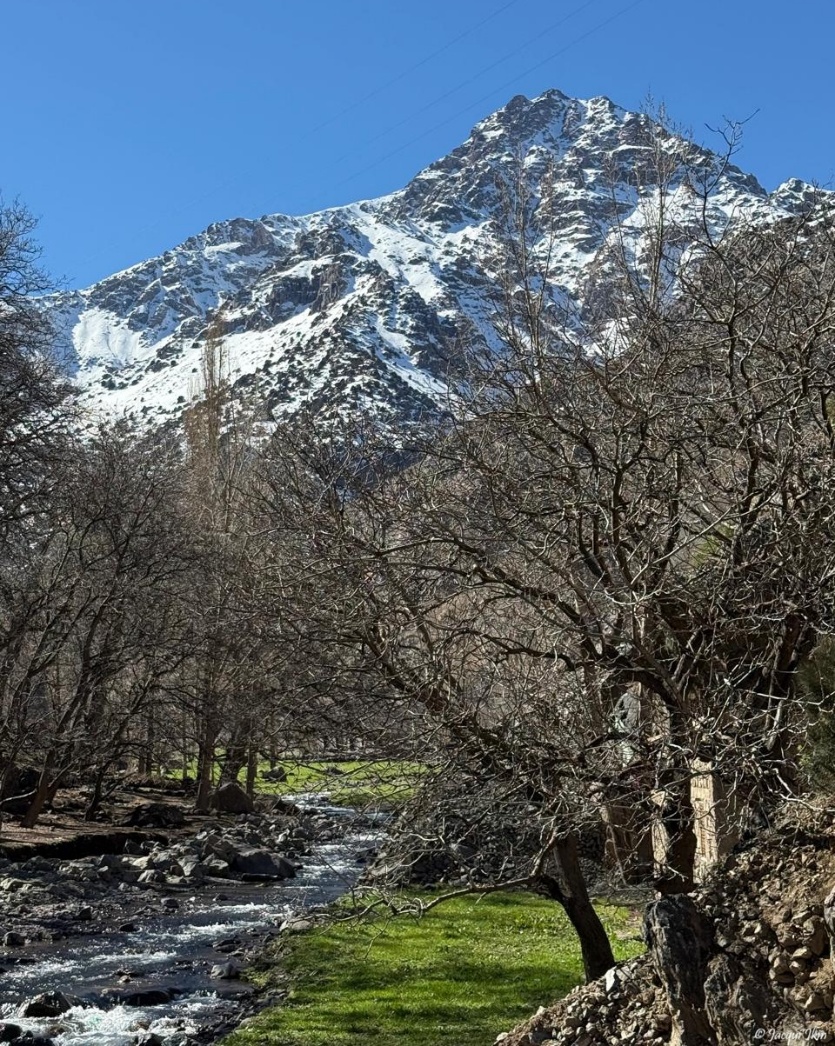
Trekkers often find themselves confronting the quiet disorientation of altitude. Breathing grows deliberate, steps slow, and the landscape becomes stark and immense. Altitude sickness is one of the possible dangers of climbing this peak. In such places, the traveller learns that Morocco is not merely a land of deserts, but of dramatic contrasts – where scorching valleys and snowbound summits exist within a day’s journey of one another.
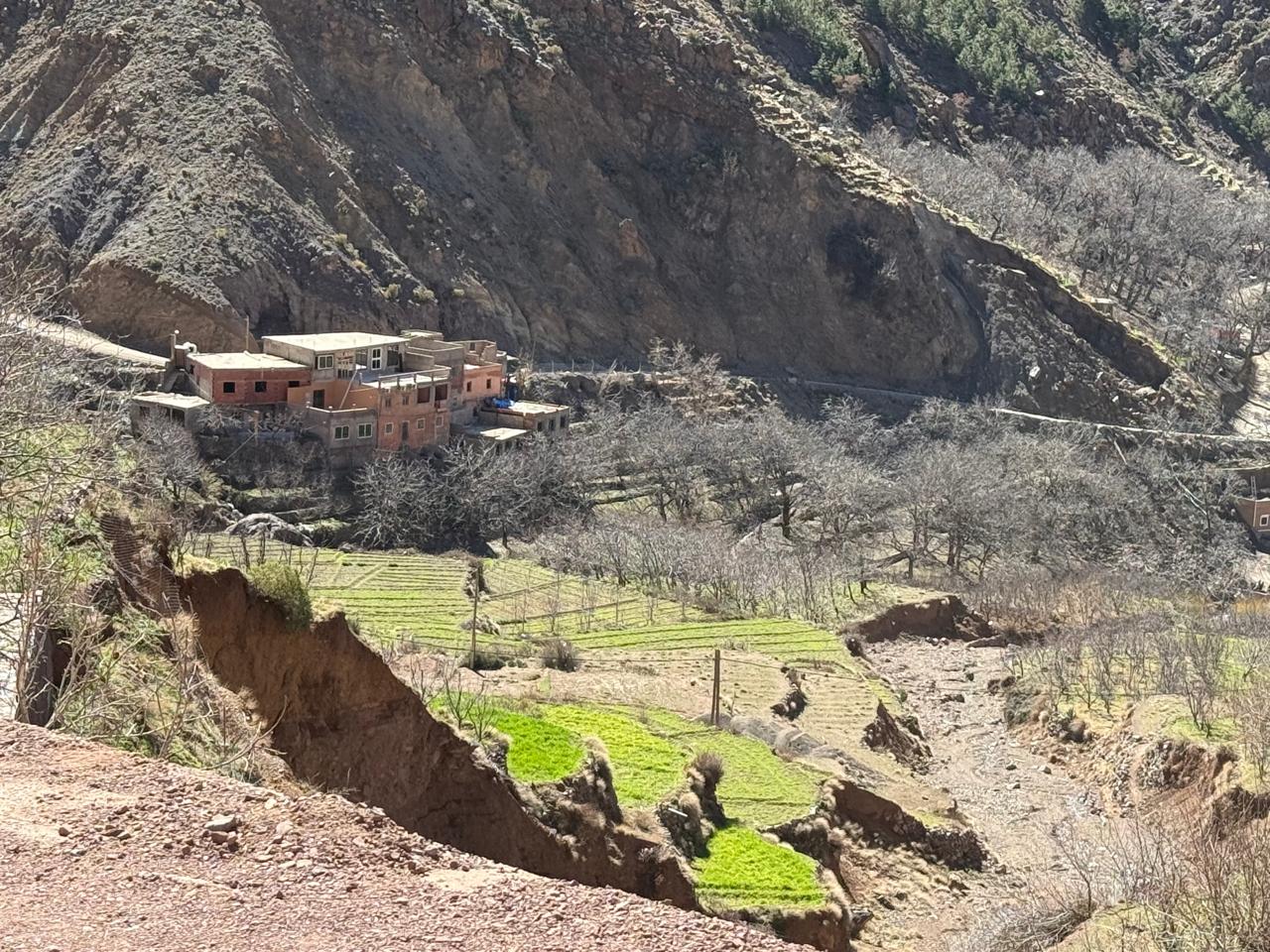
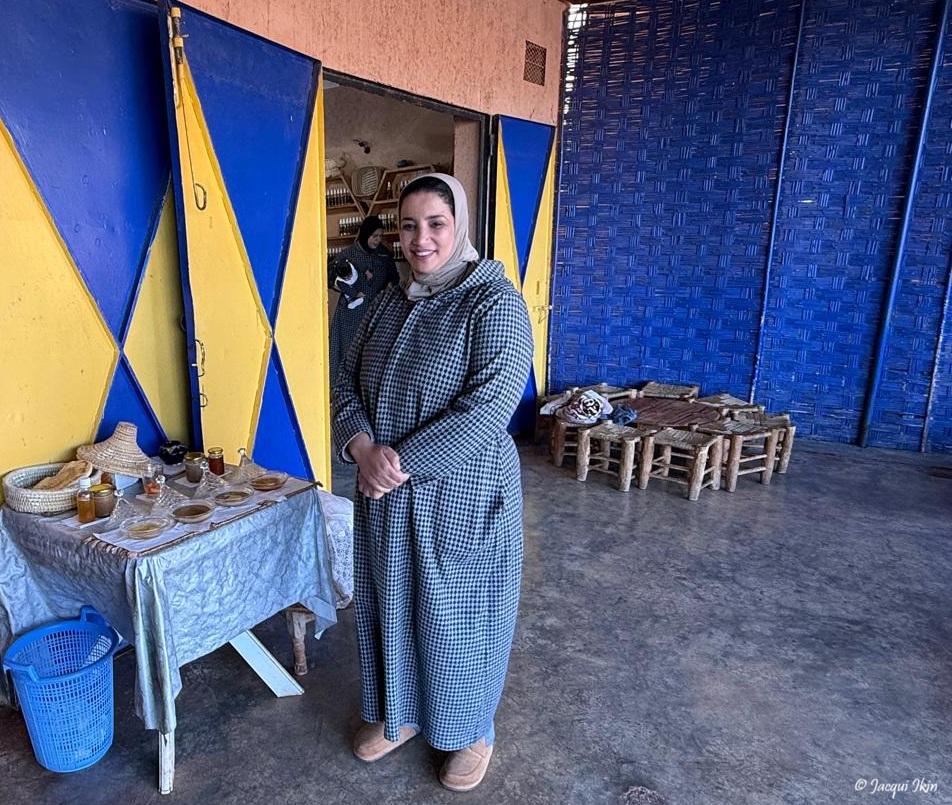
En route to the mountains, we paused at a small roadside shop run by the Coopérative ALDAYNE, a women’s cooperative devoted to the production and sale of traditional Moroccan goods. Modest in appearance yet rich in purpose, the shop displayed a variety of locally crafted items – fragrant teas, handmade soaps, and small artisanal curiosities – but its true focus was unmistakably Argan Oil.
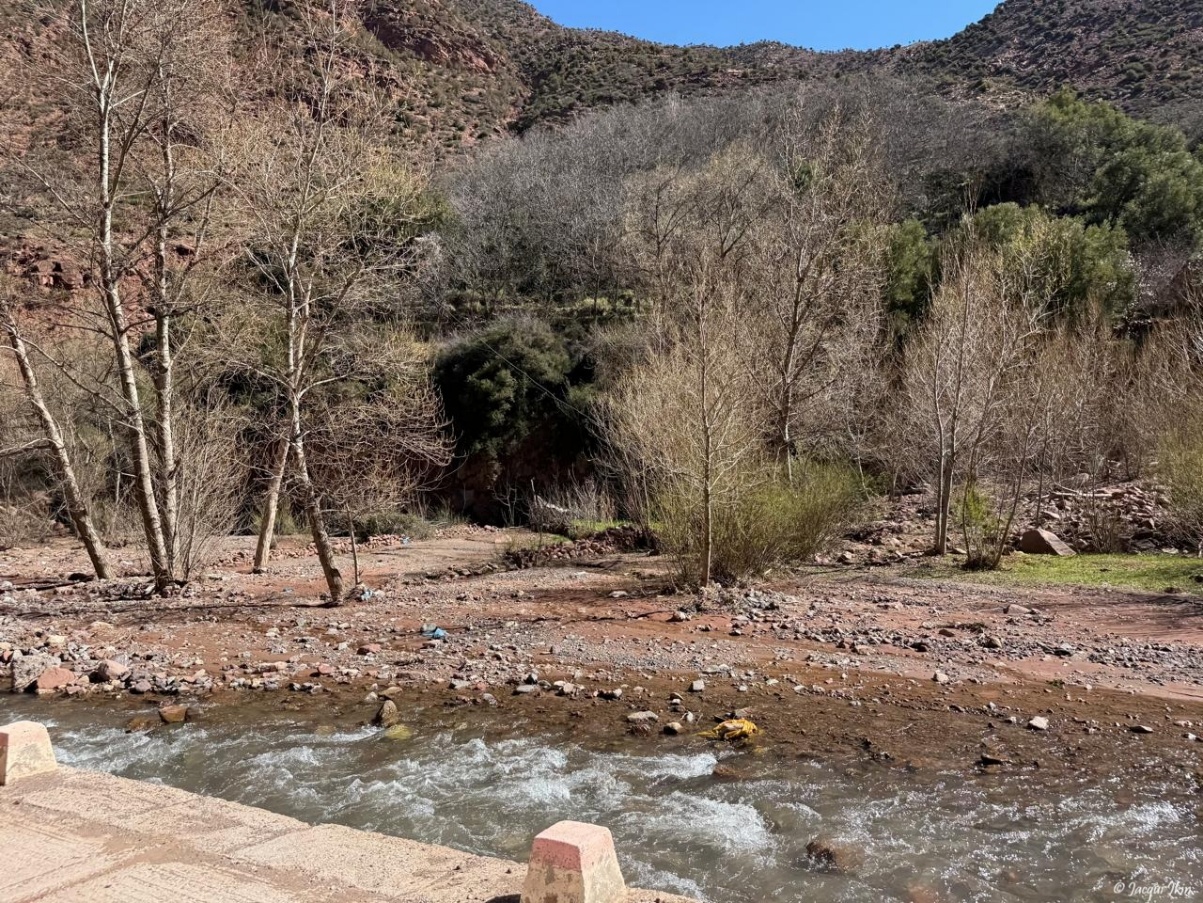
Argan oil is made from the seeds of the argan tree. This ancient tree used to grow across the whole of north Africa, but now it only grows in southwest Morocco, on a small strip of arid land between the Atlantic coast and the Atlas Mountains.
The cooperative forms part of a broader women’s initiative common in rural Morocco, where groups of women work collectively to harvest and process the kernels of the Argania spinosa tree. Through careful roasting, grinding, and pressing, they produce the celebrated oil often referred to as Morocco’s “liquid gold.”
Beyond its economic value, the cooperative represents something more meaningful: a quiet yet powerful model of empowerment. By organising their labour and selling their products directly to travellers, the women secure an independent income, preserve traditional knowledge, and contribute to the sustainability of rural communities. What might appear at first glance to be a simple roadside shop thus carries a deeper story – one of resilience, collaboration, and the enduring craftsmanship of Moroccan women.
Argan oil is traditionally made by hand, which is quite fascinating and surprisingly labour-intensive. The process begins with the fruit of the Argania spinosa tree, which grows almost exclusively in southwestern Morocco. These small, olive-like fruits are gathered once they fall naturally from the trees and are left to dry under the sun. When the outer pulp has hardened, it is carefully removed to reveal the extremely tough nut within.
What follows is perhaps the most labour-intensive stage. Each nut must be cracked open by hand, traditionally using two stones. With remarkable precision and patience, the women strike the shell just firmly enough to break it without damaging the delicate kernels hidden inside. It is painstaking work: thousands of nuts must be opened to yield even a small quantity of kernels.
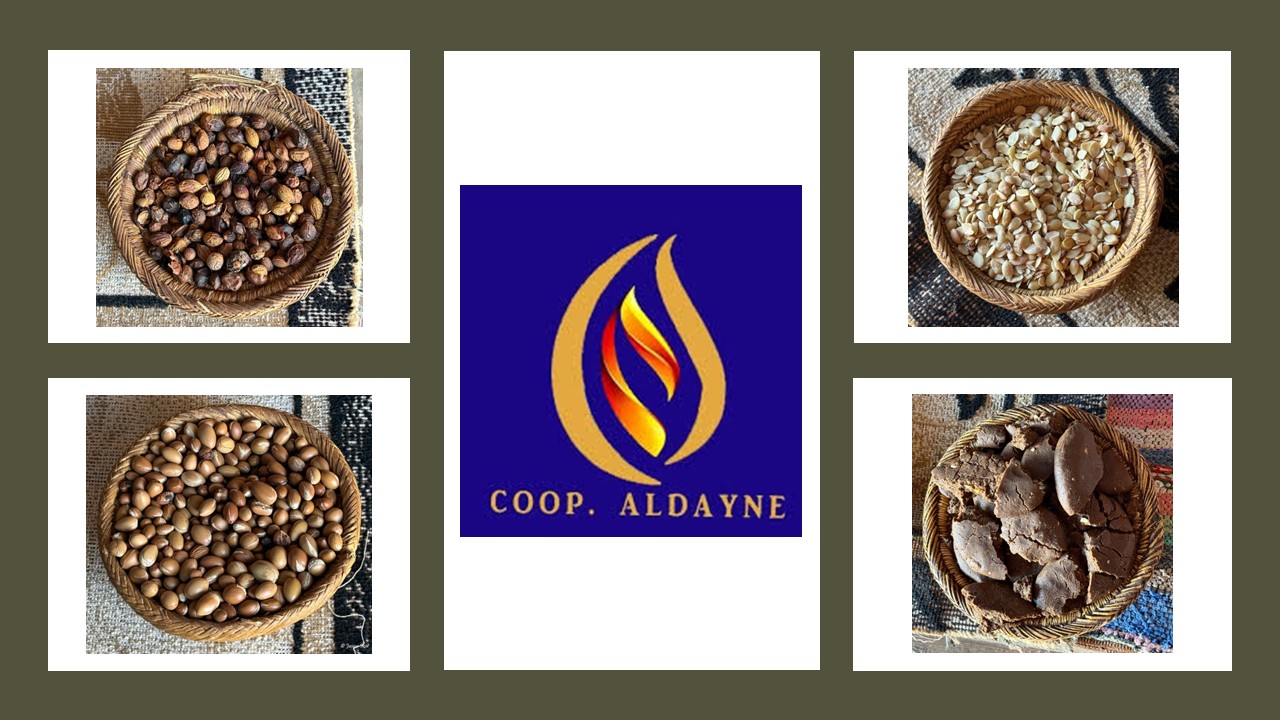
For culinary oil, the kernels are gently roasted over low heat, releasing their characteristic warm, nutty aroma. For cosmetic oil, this roasting step is omitted in order to preserve the oil’s natural properties. The kernels are then ground into a thick paste using a traditional hand-turned stone mill.
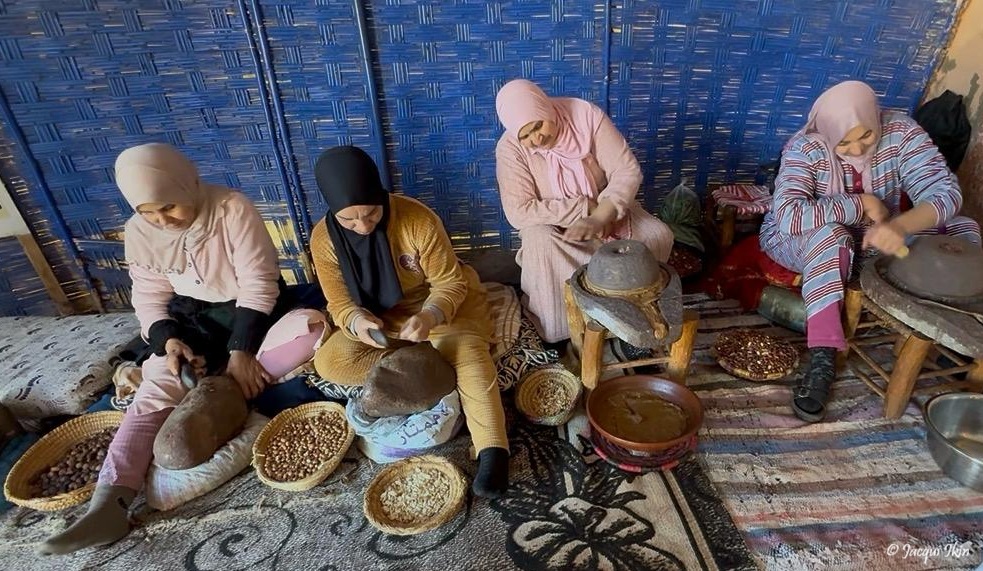
Next comes the slow extraction of the oil. Small amounts of warm water are added to the paste while it is kneaded by hand, gradually separating the precious golden oil from the dense mixture. The oil is then collected and left to settle before being filtered and bottled.
The yield is surprisingly modest. It can take 30 to 40 kilograms of fruit to produce just one litre of oil, and the entire process may require many hours of patient labour. Yet this demanding craft results in a product celebrated for its rich flavour, nourishing qualities, and cultural significance – an enduring symbol of Morocco’s heritage and the skill of the women who have safeguarded this tradition for centuries.
The Arganeraie Biosphere Reserve is a 2.5-million-hectare UNESCO-designated site in southwestern Morocco, established in 1998 to protect the endemic Argan tree (Argania spinosa). It serves as a vital ecological barrier against desertification, supports local livelihoods through argan oil production, and is known for its unique tree-climbing goats.
Seen in this wider light, the journey toward the Atlas Mountains becomes more than a simple change in landscape. It is a passage through Morocco’s remarkable contrasts: from warm plains to snow-dusted summits, from ancient mountain villages to the quiet industry of women sustaining traditions beneath the branches of the argan tree. Just as the mountains reveal a lesser-known face of the country, the Argan tree stands as a living emblem of resilience – its deep roots holding firm in harsh soil while sustaining both people and land. In the end, Morocco reveals itself not through a single image of desert or snow, but through the harmony of these unlikely elements, woven together like the enduring branches of its own tree of life…
Jacqui Ikin & The Cross Country Team
INFO BOX:
The Arganeraie Biosphere Reserve:
https://www.youtube.com/watch?v=-bxdxwCKOyU
The secrets of Moroccan argan oil:
https://www.youtube.com/watch?v=jhw4atvCe4w&t=4s
Oukaimeden – Snowboard in Morocco | 4K Travel Film:
https://www.youtube.com/watch?v=gYt8NB_Qzyk