
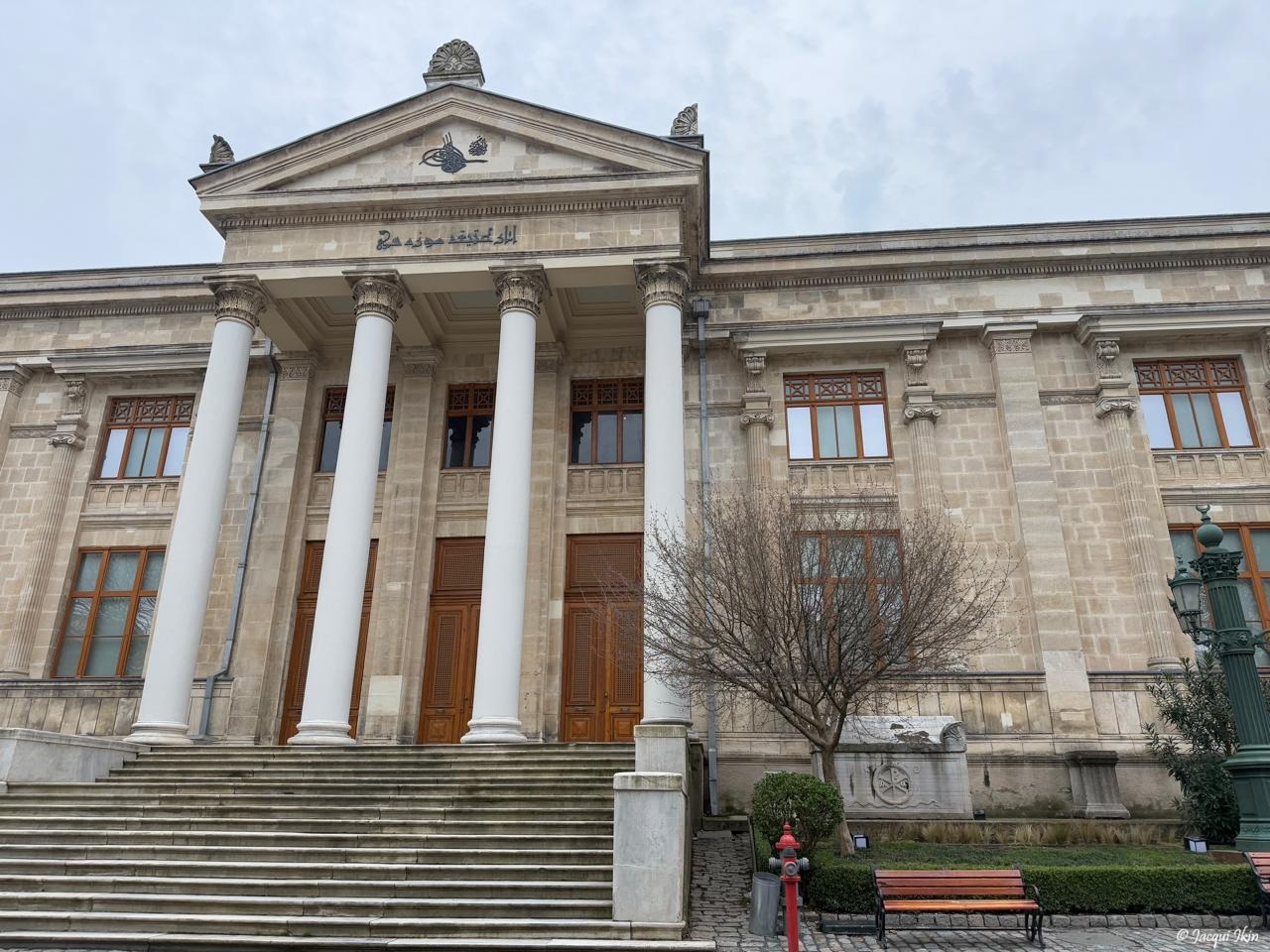
Istanbul Archaeological Museum
My personal opinion is that humans and animals differ in that humans create art for art’s sake. This may be a controversial take for some, who may argue that animals also create art. Animals absolutely produce things we perceive as beautiful or artistic. The famous sand mandalas of the pufferfish, or the intricate webs of an orb-weaver spider show pattern, symmetry, even what looks like aesthetic choice. But in every well-studied case, these creations are tightly tied to survival: attracting mates, catching prey, or signalling fitness. The “beauty” is instrumental.
The phrase “for art’s sake” is doing the real work here. Humans routinely create objects that have no survival function at all – or at least none that’s directly measurable. A painted urn need not hold anything. A coin need not be beautiful to function as currency. A coffin need not be ornate to serve its purpose. Yet we insist on form, symbolism, expression. We decorate beyond necessity.
Besides its importance as the first Turkish museum, the Istanbul Archaeological Museum remains one of the world’s largest museums with over one million artifacts. These represent various cultures and span 5,000 years of history – and each is a work of art. Founded on 13th July 1891, the main building was constructed in three phases between 1891 and 1907. It is the first regular museum in the Ottoman Empire, founded by Osman Hamdi Bey to house the vast collection of archaeological artifacts. The entry fee for foreign visitors is roughly 15 Euros – which, to be honest, is absolutely worth the price. You could comfortably spend three hours exploring here – or more if you are really intrigued. This is one of the articles where images will be used to tell the story!
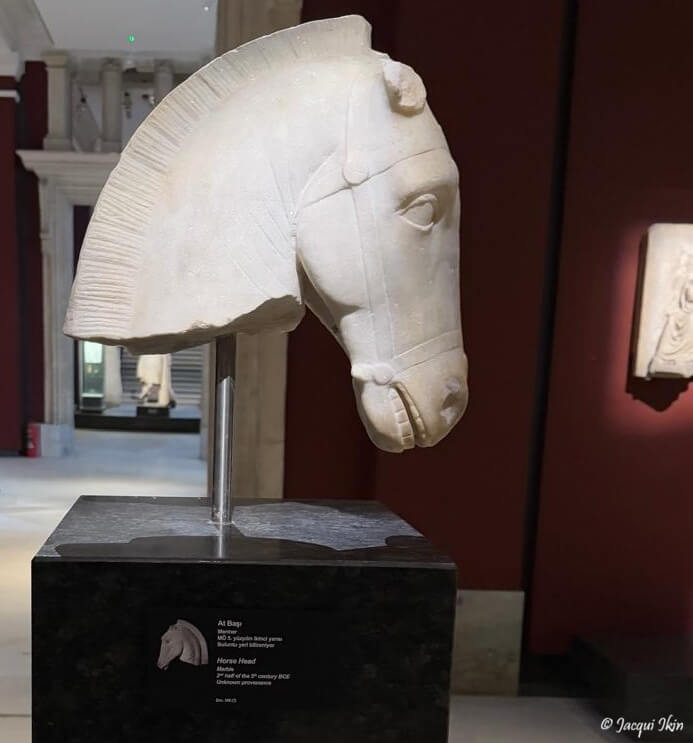
The marble horse head, often referred to as a “Head of a horse” or “Horse’s head sculpture” from the second half of the 5th century BCE (approx. 450–400 BCE), is a notable work. Its provenance is unknown. It is part of the extensive collection of classical Greek and Roman sculptures housed in the museum, which includes significant pieces from Anatolia and the Mediterranean, often collected under the guidance of Osman Hamdi Bey in the late 19th and early 20th centuries.
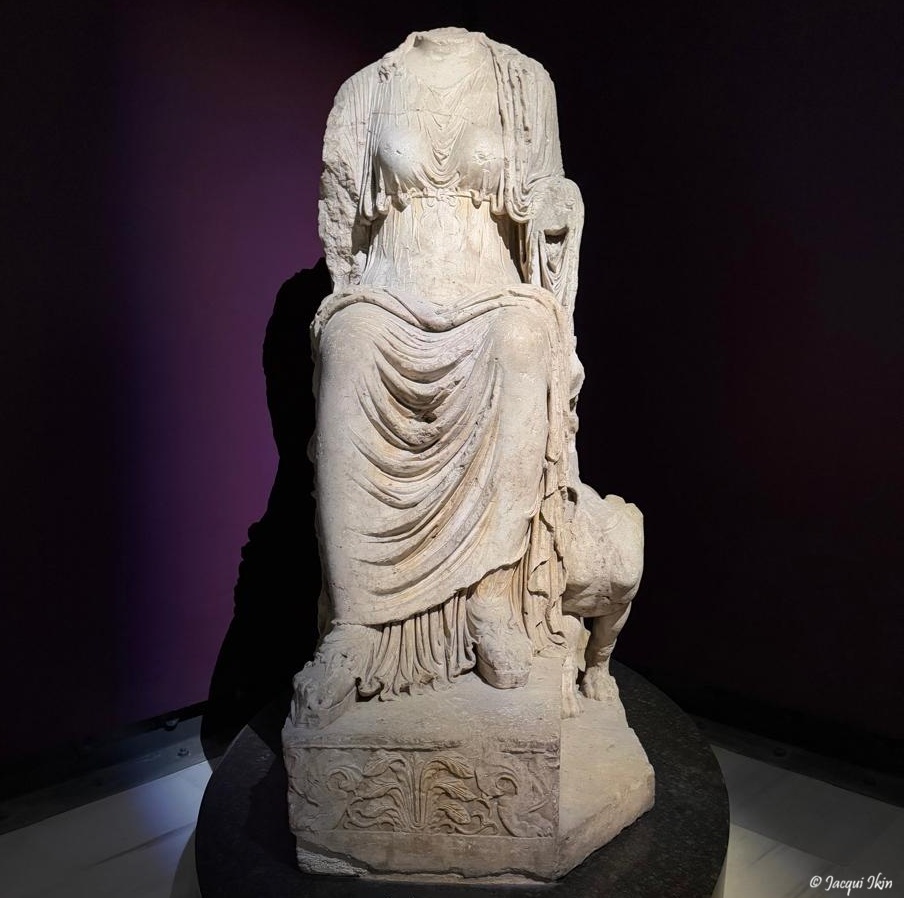
This Roman marble statue of a seated woman, likely representing an empress or the goddess Cybele, is dated from the 1st century AD. The statue is damaged, with the head and arms missing – but I still loved this piece for the delicate folds of material.
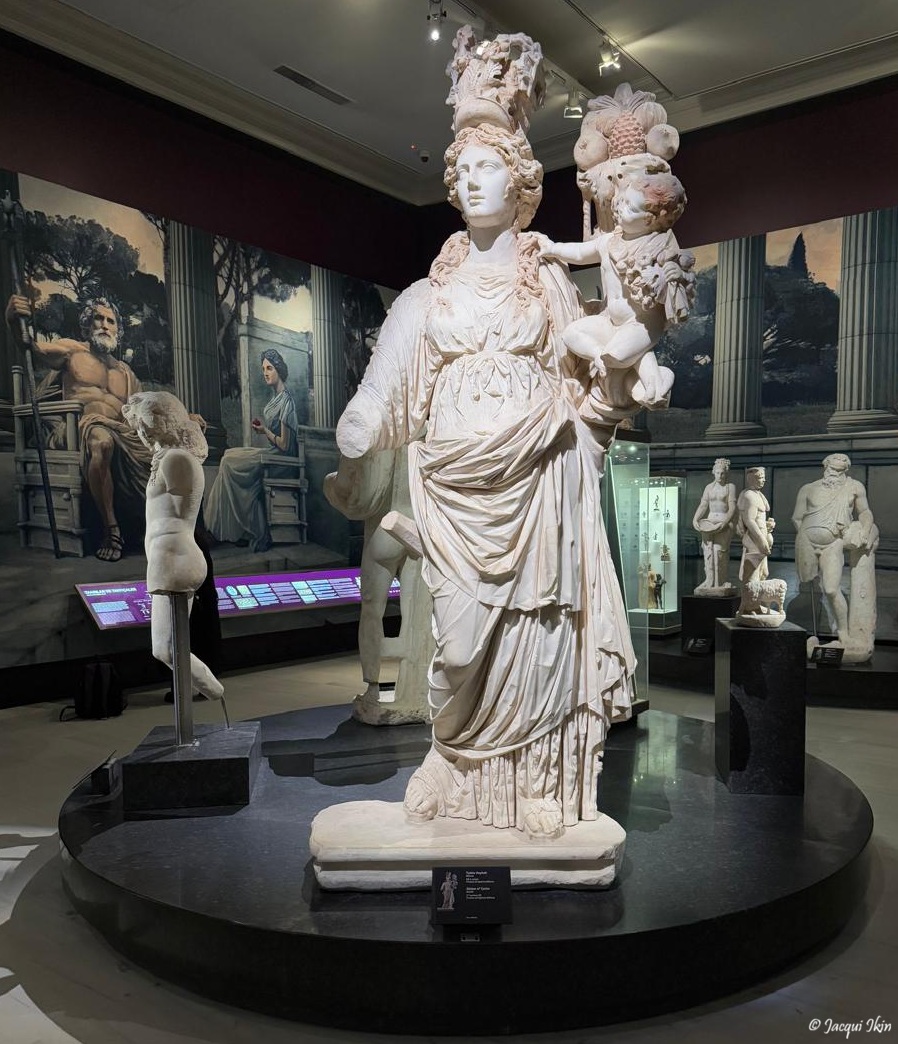
This statue depicts Tyche, the Greek goddess of fortune, luck, and fate, holding Plutus, the god of wealth, who is portrayed as a child. It is a piece of Hellenistic-style art produced during the Roman imperial period, specifically dated to the 2nd century AD. The goddess wears a tower-shaped crown (corona muralis) symbolizing her role as the protector of cities, and she holds a cornucopia (horn of plenty). The sculpture was discovered in Prusias ad Hypium (modern-day Düzce, Turkey) before being moved to this museum.
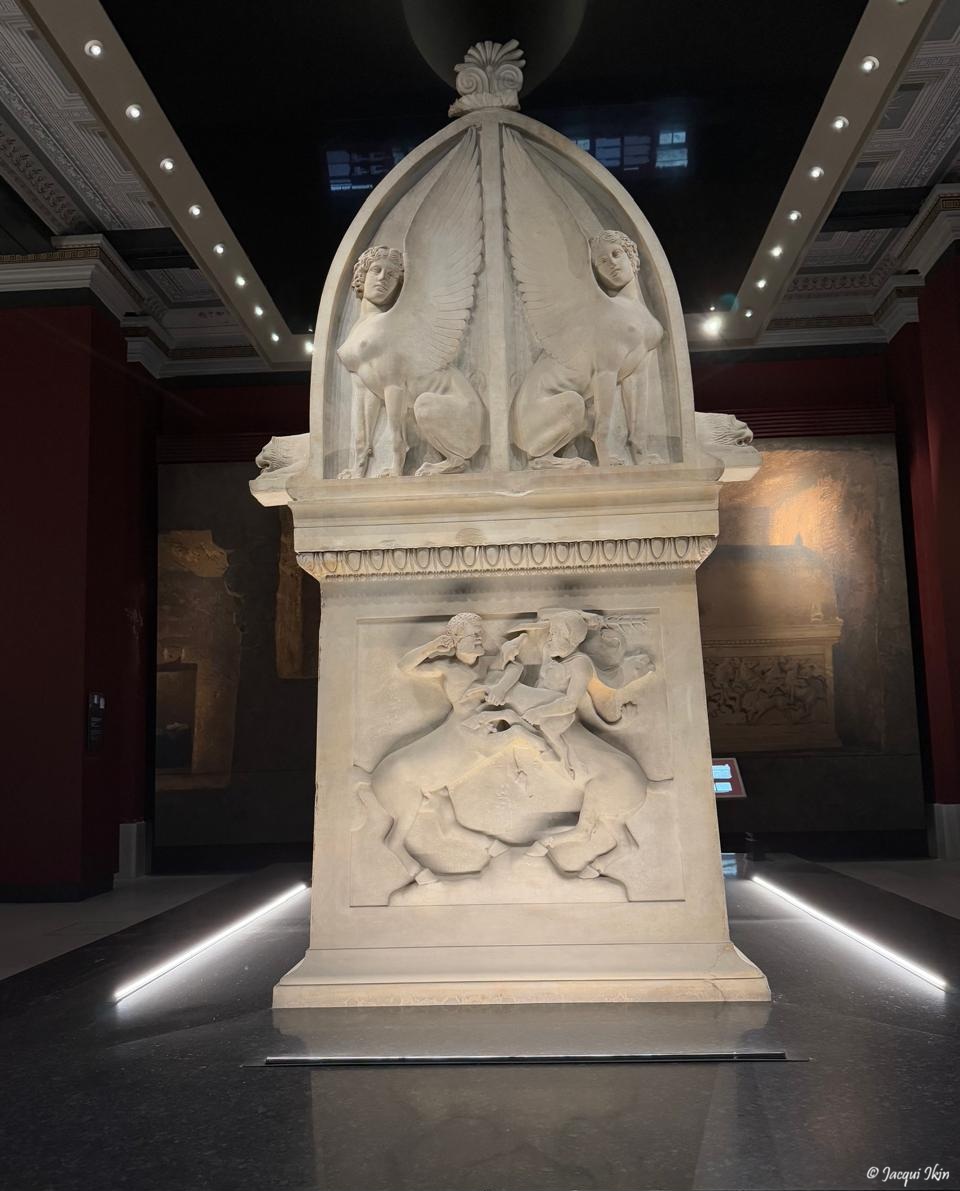
This item is the Lycian Sarcophagus of Sidon, an ancient funerary monument dating to the late 5th century BC. It was discovered in 1887 by Osman Hamdi Bey in the Royal Necropolis of Sidon, Lebanon. Made of Parian marble, it features a distinctive gabled lid typical of Lycian tombs. The lid is adorned with two symmetrical female sphinxes back-to-back, and the main body features intricate reliefs depicting scenes like a lion hunt and mythological tales. This was by far my personal favourite, and I sat staring at the incredible workmanship for quite some time. Parian marble is a highly prized, fine-grained, semi-translucent white marble quarried on the Greek island of Paros. Famous for its brilliant luminous quality, it was considered the finest material for ancient Greek sculpture – such as the Venus de Milo and Hermes and the Infant Dionysus – and architecture, including the Acropolis.
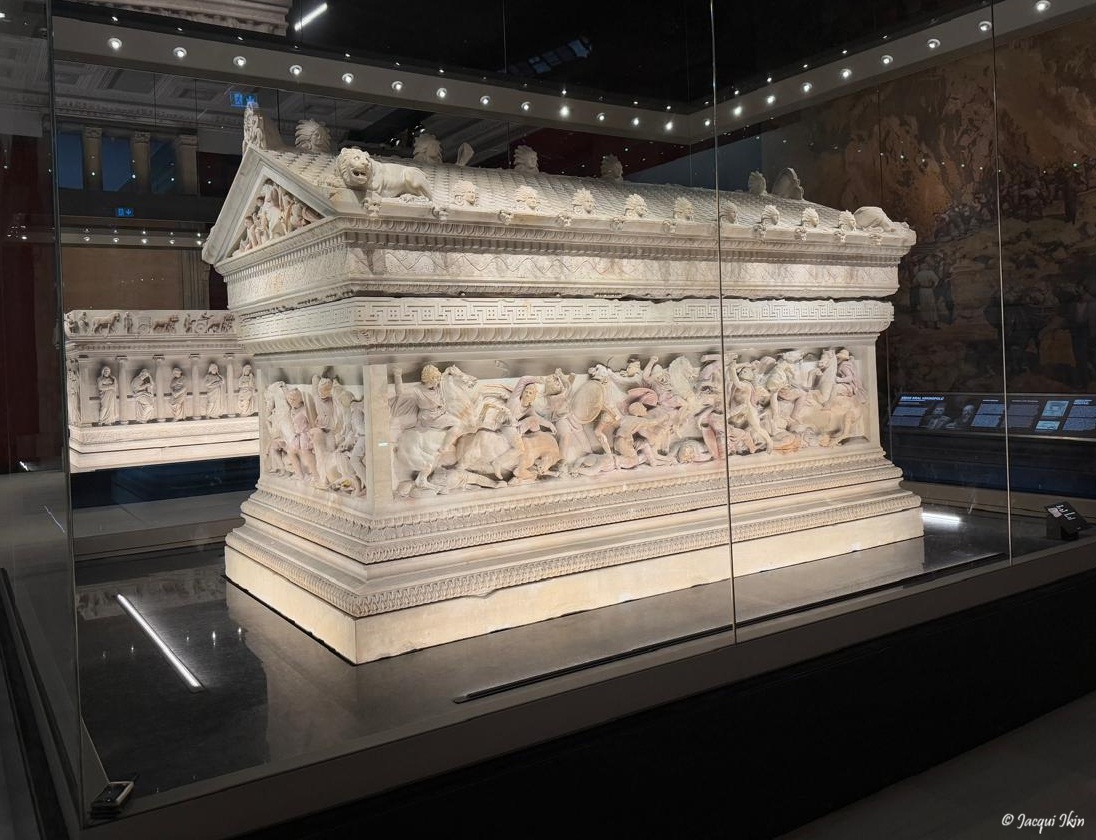
The Alexander Sarcophagus is a masterpiece of Hellenistic art. It dates back to the late 4th century BC and was discovered in 1887 in Sidon, Lebanon. Despite its name, it likely belonged to King Abdalonymos of Sidon, not Alexander the Great, although it does depict him in battle scenes.
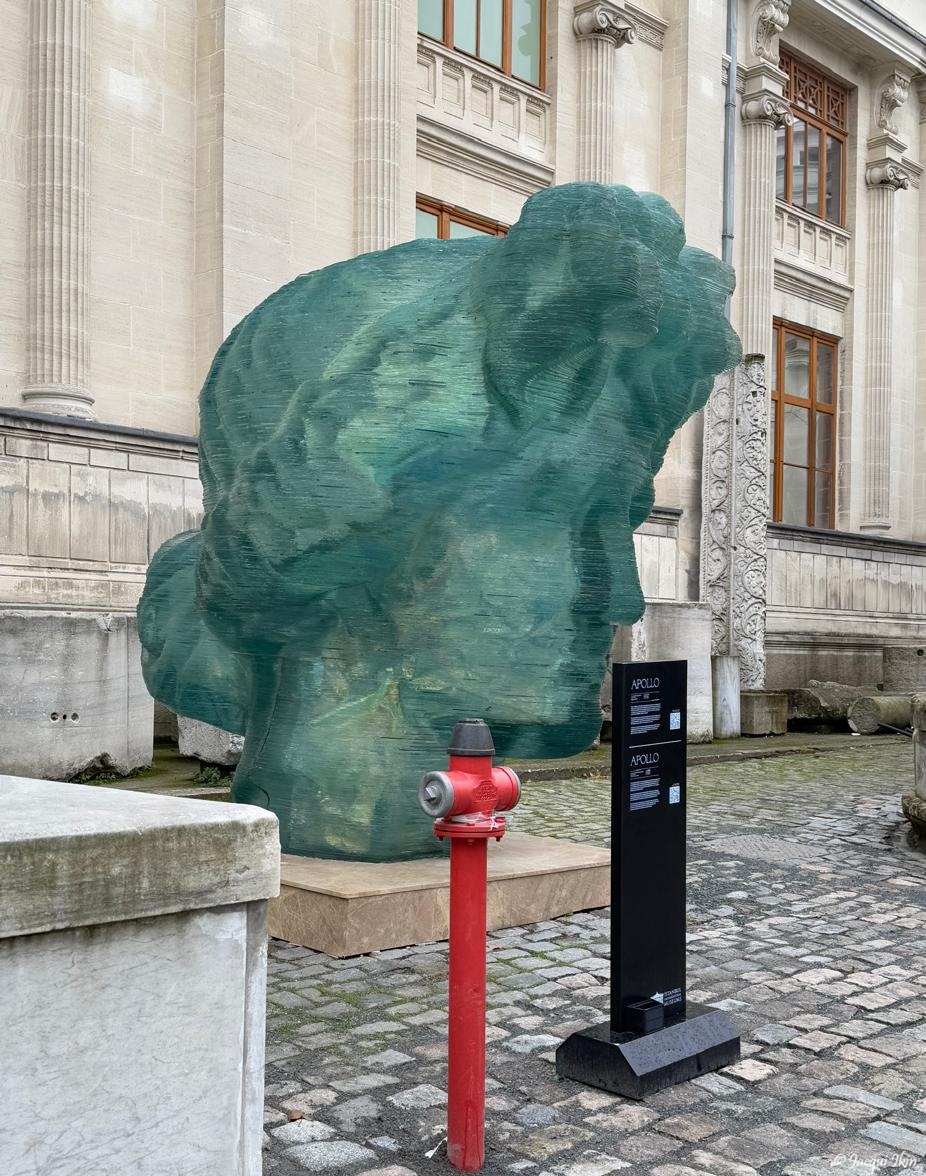
Not all art found here is ancient. The Apollo-themed work by artist Artem Martis, created in 2024, is made of raw glass, weighing 12 tons. “Artist Artem Martis, who transforms glass waste into works of art, will be exhibiting his work at the Istanbul Archaeology Museum for two years, starting in September 2025. Martis brings together the themes of transformation, light, and mythology. His work Apollo, inspired by Apollo – the god of music, arts, poetry, and fire – reflects the harmonious dance between glass and light, inviting viewers to explore the intersection of myth and material.”
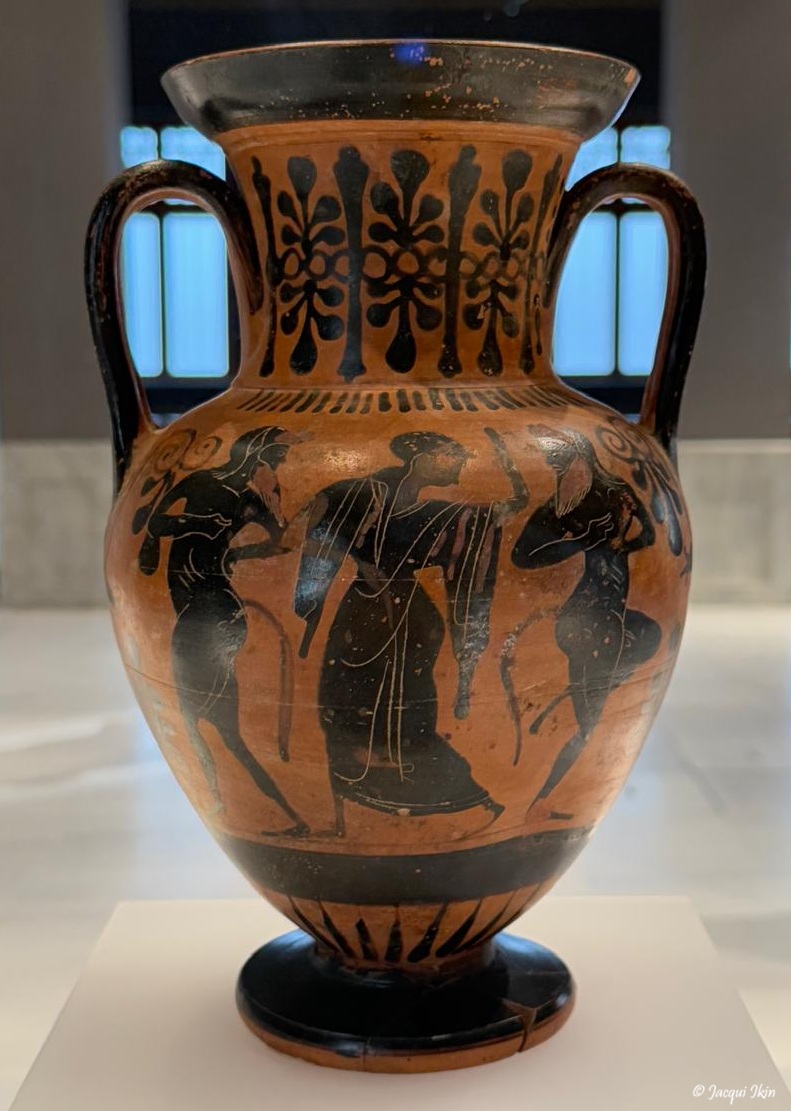
Ancient Greek Terracotta neck amphora (an ancient, two-handled clay vessel with a narrow neck and bulbous body, used extensively in the Mediterranean for transporting and storing goods like wine, oil, and grain). 6th Century BC, unknown provenance.
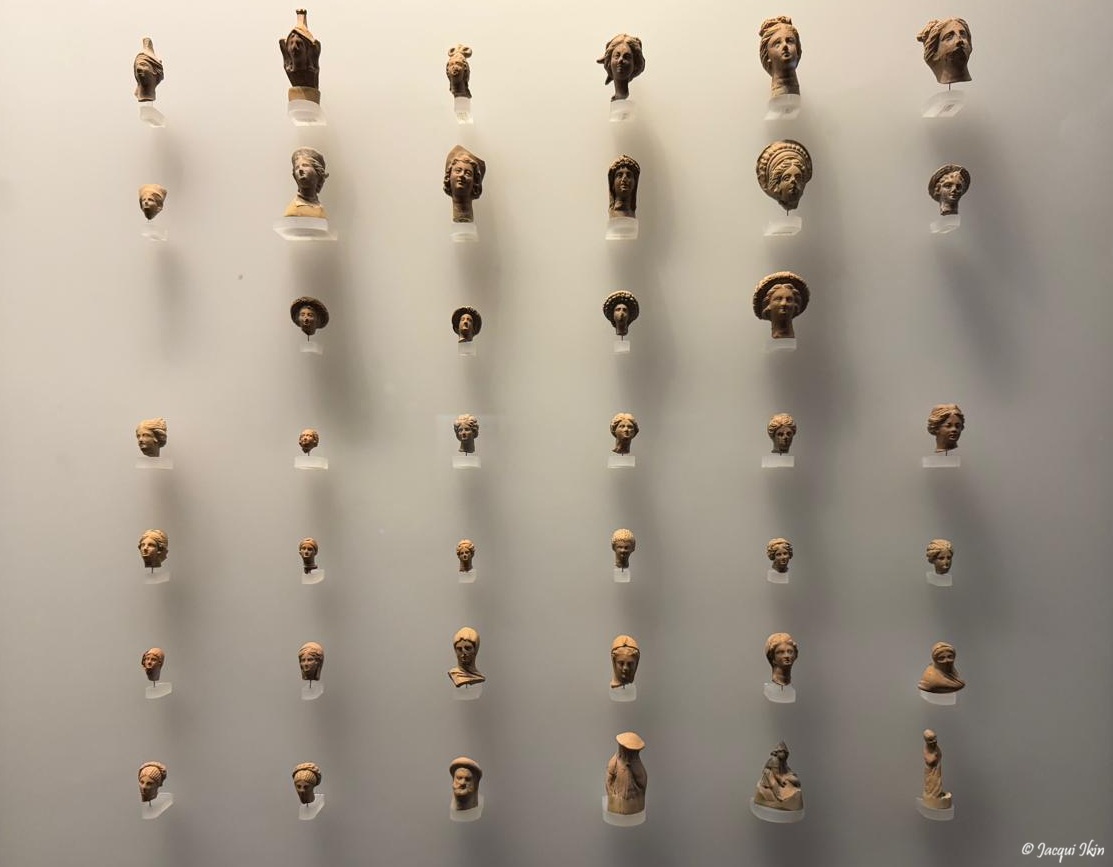
These small heads were often once part of full-body figurines used as votive offerings in temples or placed in tombs as funerary gifts. The terracotta objects in this museum typically range from the Archaic (7th–6th century BC) to the Hellenistic and Roman periods (4th century BC–2nd century AD). Many of these specific pieces were unearthed during excavations at major ancient sites across Anatolia, such as Troy, Sagalassos, and Myra. The figurines frequently represent deities – most commonly Aphrodite and Eros – as well as ordinary people, such as musicians or children.
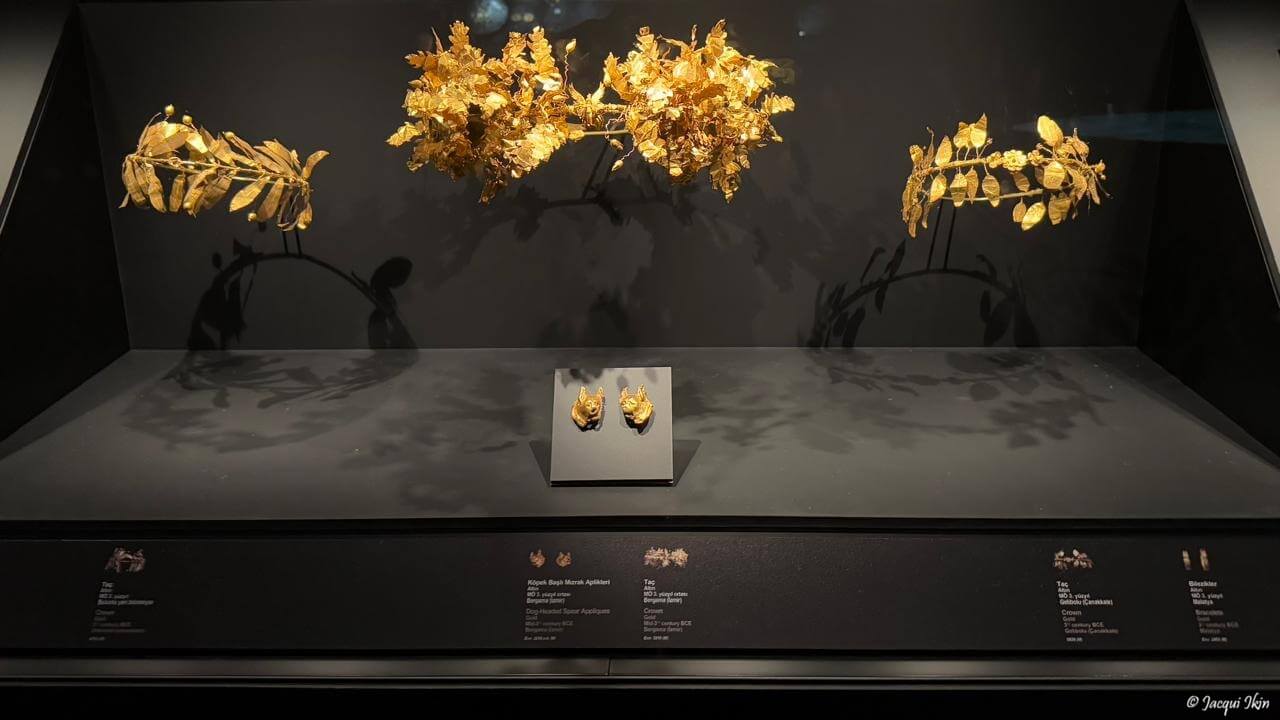
These items are ancient gold leaf crowns and jewellery. The collection includes intricate wreaths made from hammered gold leaves, mimicking oak or laurel branches. They date back to the Hellenistic period, specifically the 2nd to 1st centuries BC.
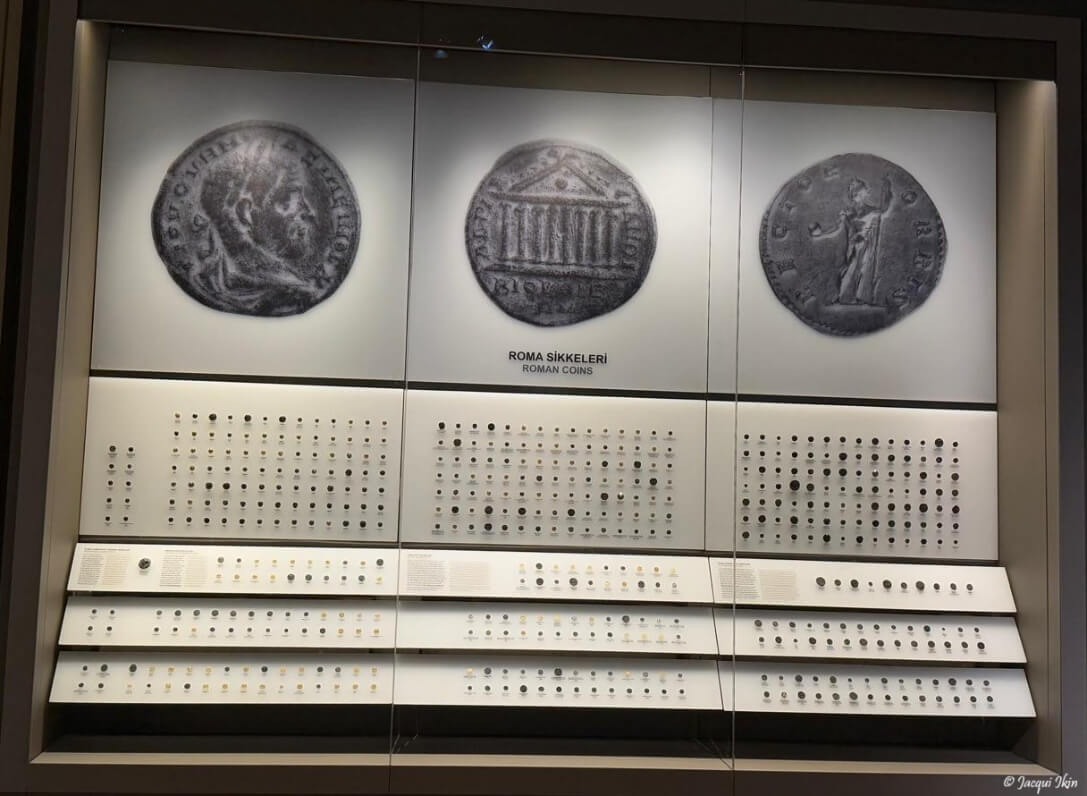
This image displays a collection of Roman coins (Roma Sikkeleri) exhibited in the Coin Hall. The museum holds one of the world’s most significant numismatic collections, totalling over 250,000 coins, medals, and medallions. The extensive archive covers Greek, Roman, Byzantine, and Islamic periods, reflecting Turkey’s history as a hub of civilizations. The collection highlights ancient metallurgy and includes early electrum coins. You need to see the hall to imagine the sheer scale of coins represented.
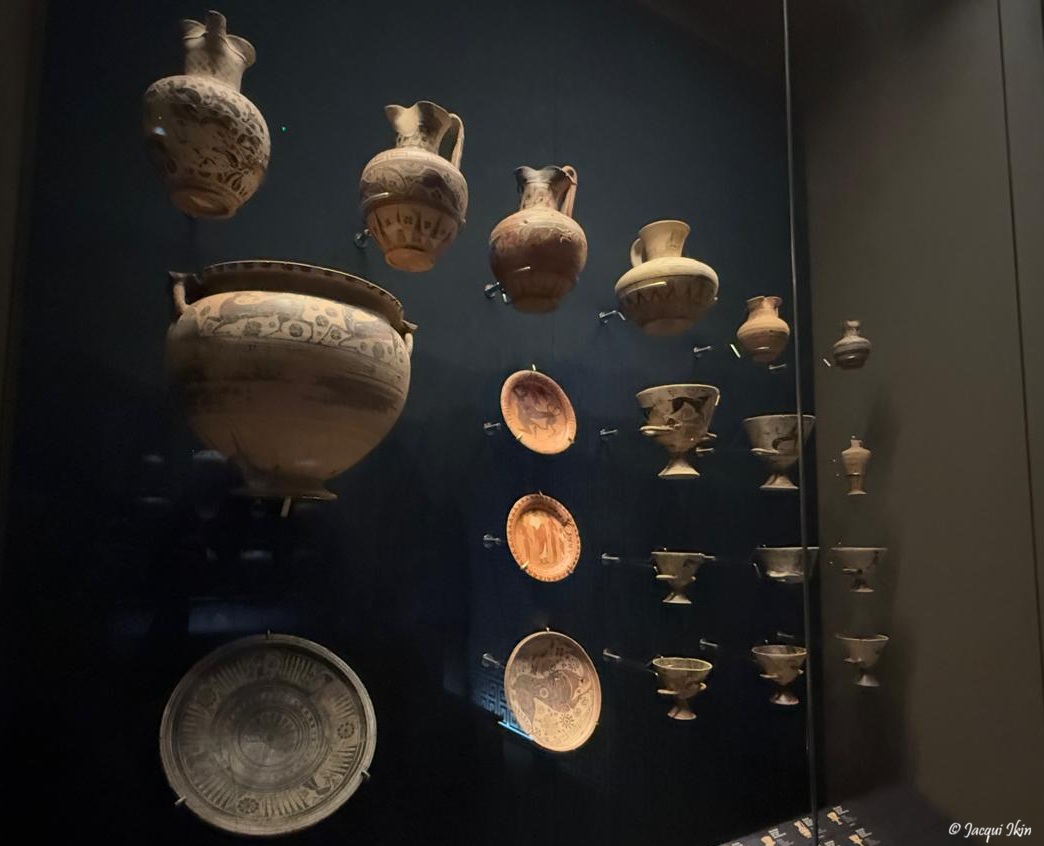
This image displays a collection of ancient pottery and earthenware including urns, jars, plates and figurines. The collection includes pottery from the Anatolian, Seljuk, and Ottoman civilizations.
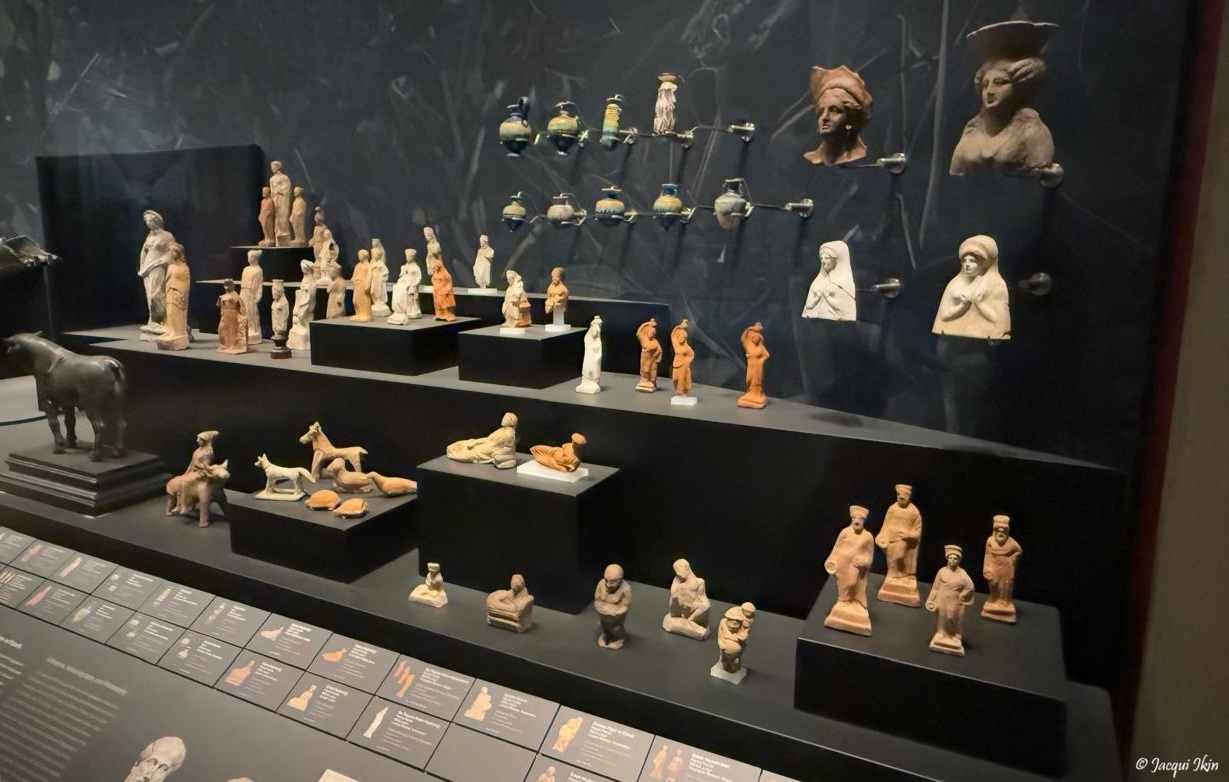
Because terracotta was available to all social classes, these figurines became popular gifts for the recently departed. As the demand for luxury daily goods increased, so too did new pottery techniques. These beautiful artefacts became immensely popular.
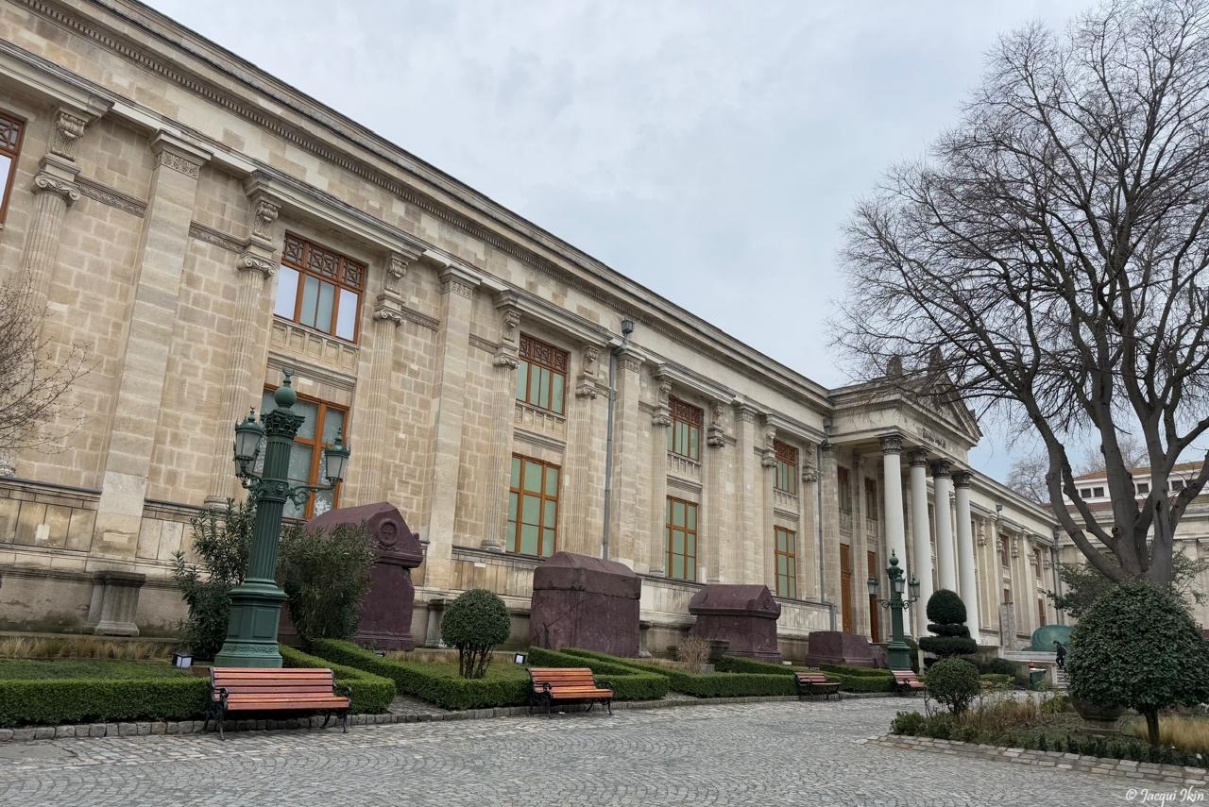
One can honestly continue waxing lyrical for pages and pages, without ever even remotely capturing the magnitude, the scope, the timelines and the opulence of this place. I cannot recommend it highly enough as a stop if you find yourself in Istanbul!!
Jacqui Ikin & The Cross Country Team

