
The Innate Wisdom of Instinctive Creatures
This may well become one of those columns where you are left pondering and scratching your head, wondering why I haven’t given you answers. But sometimes, perhaps, life should be like that. A little mystery goes a long way towards making life interesting. I believe that life with no mystery is like a waffle with no syrup – not nearly as appealing! Bear with me as we go down the rabbit hole…
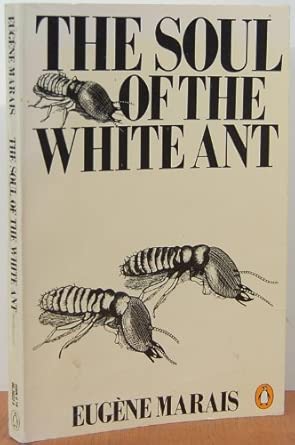
In 1937, Eugène Marais published The Soul of a White Ant – a worthy read by any measure. In it, he proposes that a termite colony functions as a single, composite organism. According to Marais, the mound’s intricate, instinct-driven, and seemingly unified activity suggests the presence of a collective psyche or “soul,” with the queen serving as the “brain” while the remaining termites operate as the various organs and systems of the body. His study explores this idea of communal consciousness in remarkable detail, drawing striking parallels with the workings of the human mind. Though Marais’s theory remained unconventional and continues to resist definitive proof or disproof, it sparked both scientific curiosity and philosophical debate. Today, his work is widely regarded as a foundational contribution to the modern concept of the “superorganism,” a model now commonly used to understand highly social insects such as termites and ants.

The term superorganism is most accurately applied to eusocial insect colonies – ants, bees, and others whose members cannot truly survive in isolation and are wholly dependent on the collective. Yet anyone who has watched a flock of quelea could be forgiven for thinking they were witnessing something similar. In their thousands, these tiny birds seem to shed their individuality, becoming a single, fluid entity in the sky. This “one organism” impression is the mesmerising effect of a murmuration, in which vast flocks of quelea (or starlings) wheel and twist in unison. There is no leader orchestrating the display; instead, each bird follows a few simple rules, responding primarily to the movements of its immediate neighbours.

The three main principles thought to guide each bird’s movement are relatively simple: collision avoidance (maintaining enough distance from neighbours to prevent mid-air bumps), alignment or velocity matching (adjusting speed and direction to mirror the average movement of nearby birds), and cohesion or flock centering (staying close to the centre of one’s local group to keep the flock from drifting apart). That’s the theory. Yet I can’t help feeling that these principles alone cannot fully account for the breathtaking aerial ballet of a quelea murmuration. To me, there is something that borders on a collective consciousness—an instinctive synchrony that feels deeper than the sum of its rules. If only humans could find a way to move through the world with such effortless harmony…

Let’s turn to the oceans for another fascinating example: bait balls. Clinically defined, a bait ball is a tightly packed, spherical formation of small fish created as a defensive response to predators. Yet such a dry explanation barely scratches the surface of the magic at play. This “safety in numbers” strategy works by overwhelming attackers, making it nearly impossible to isolate a single fish. During our annual sardine run, we’re offered countless opportunities to witness this underwater miracle. Some filmmakers even capture footage from inside the bait ball – astonishing images that require unbelievable courage and, if you ask me, far too much risk. But without these brave cameramen, we would never glimpse the swirling, shimmering beauty of this submerged choreography.
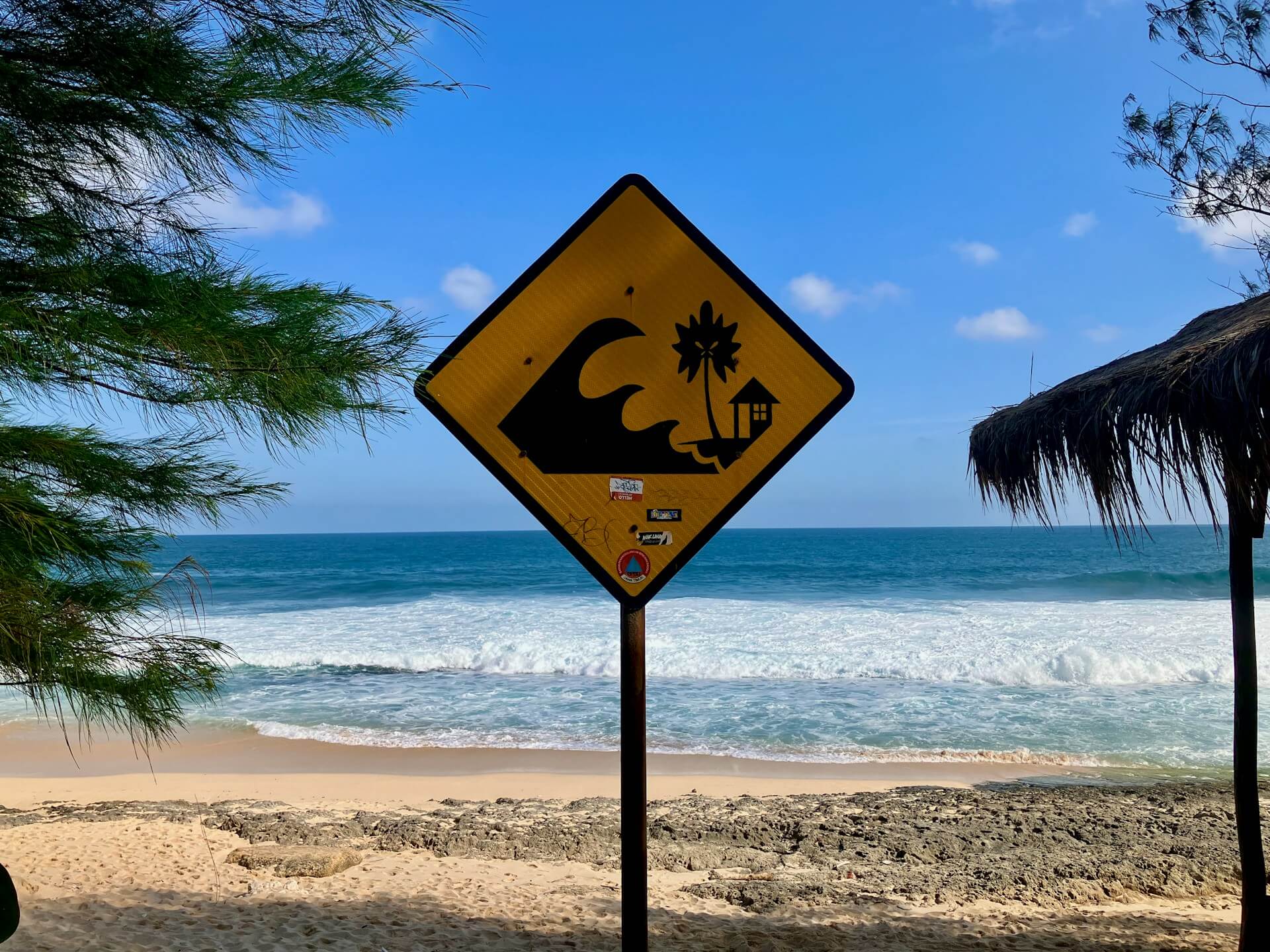
Another example of the innate intelligence in the animal kingdom is the way creatures seem to sense disaster long before humans do. Before the devastating 2004 tsunami struck Sri Lanka’s coastlines, both wild and domestic animals appeared to know what was coming and moved to higher ground. In an article on ResearchGate, it is noted that “Elephants in Sri Lanka and Sumatra moved to high ground before the giant waves struck; they did the same in Thailand, trumpeting before they did so. According to a villager in Bang Koey, Thailand, a herd of buffalo was grazing by the beach when the animals ‘suddenly lifted their heads and looked out to sea, ears standing upright’; they turned and stampeded up the hill, followed by bewildered villagers, whose lives were thereby saved.” The article is detailed below and well worth reading. Similar evasive behaviour has been observed before avalanches. It is believed that animals can sense an approaching tsunami by detecting subtle environmental cues that escape human perception: ground vibrations, shifts in air or water pressure, and low-frequency seismic infrasound. Some theories even suggest sensitivity to changes in electromagnetic fields or chemical variations in the atmosphere and ocean.
We often assume that humans have lost these subtle senses – but have we really? Intuition is described as “the ability to understand something instantly, without conscious reasoning.” It is the brain’s way of drawing on past experiences and knowledge to generate gut feelings or immediate apprehensions – insights that emerge without step-by-step logical analysis. This subconscious pattern-matching can guide complex decisions and help detect danger or deception.

What is both fascinating and profoundly tragic is that many women are socialized to prioritize politeness over their own safety and intuition, leading them to dismiss red flags or remain in uncomfortable situations. A combination of psychological and societal pressures – ranging from childhood conditioning to fear of backlash for appearing rude – reinforces this tendency. Sadly, there are numerous documented cases where women who ignored their intuition faced harm.
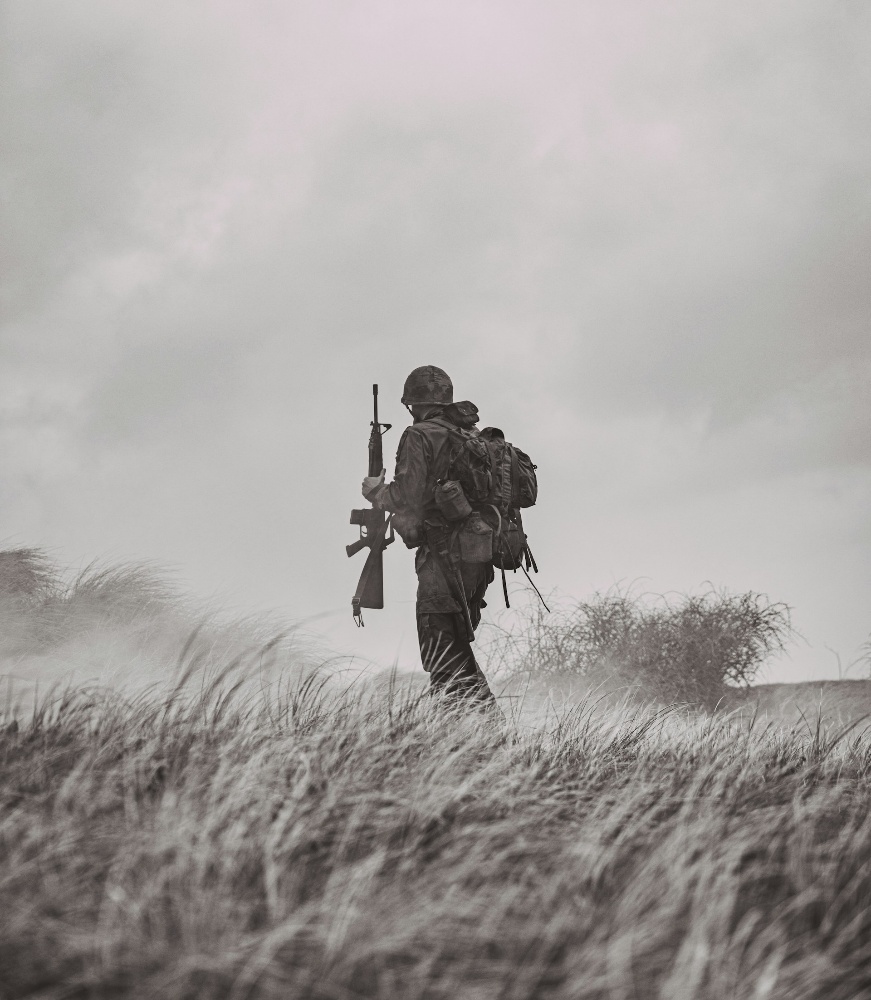
Soldiers too have reported a sudden, inexplicable sense of danger just before encountering an attacker or triggering an improvised explosive device. In fact, this is so prevalent that the United States Navy has started a program to investigate how members of the military can be trained to improve their “sixth sense,” or intuitive ability, during combat and other missions (see link to article below).

As humans, we like to believe ourselves vastly superior to animals, chiefly because of our intelligence. Yet I think this perceived advantage has come at a cost: we have grown somewhat disconnected from a more primal part of ourselves. Not entirely, of course, but we are often trained to override instinct and intuition with logic and reason – and sometimes to our detriment. Ultimately, I believe there is far more to life than what meets the eye. Beneath the surface lies a deeper, spiritual interconnectedness and purpose, waiting to be discovered throughout this journey we call life – beyond the visible, beyond the mundane.
If we venture a little further down the rabbit hole, Carl Jung’s concept of the collective unconscious offers a fascinating perspective. According to Jung, it is a reservoir of knowledge and imagery with which every person is born – a shared inheritance shaped by ancestral experience. While individuals may not be consciously aware of the thoughts and images stored within this collective unconscious, the psyche can access them in moments of crisis, guiding decisions and responses in ways that feel instinctive or intuitive.

What is the point of all this? You were warned at the start – there isn’t a single, definitive conclusion. But isn’t it exhilarating to contemplate these ideas, in the hope that one day we might understand them better? Perhaps one takeaway is worth holding onto: trust your instincts, your gut feelings, or your so-called sixth sense – whether you are a soldier in the field, a tourist facing a tsunami, or a woman alone in a dark alley. Sometimes, listening to that quiet inner warning might be what saves your life.
Jacqui Ikin & The Cross Country Team
INFO BLOCK:
Massive flocks of Red-billed Quelea fly as one in spectacular aerial displays
https://www.youtube.com/watch?v=b37g3nyVgUg
Mesmerising view from inside a bait ball: (worthy 12 sec watch)
https://www.facebook.com/watch/?v=508607138692581
Predators Decimate Bait Ball | National Geographic
https://www.youtube.com/watch?v=ofeYisqfOO8
Sardine Run 2010 (turn the sound up and enjoy this visual spectacle)
https://www.youtube.com/watch?v=xYl4m0xFcCU&list=RDxYl4m0xFcCU&start_radio=1
Sailfish Are Master Hunters | Planet Earth | BBC Earth
https://www.youtube.com/watch?v=pRyFGSTaQ_Y
Why did so many animals escape December’s tsunami?
https://www.researchgate.net/publication/293747157_Listen_to_the_Animals_Why_did_so_many_animals_escape_December%27s_tsunami
U.S. Navy Program to Study How Troops Use Intuition
https://archive.nytimes.com/atwar.blogs.nytimes.com/2012/03/27/navy-program-to-study-how-troops-use-intuition/