
Crows and Ravens

Somewhere, I have an old black-and-white photograph of my mum as a young woman on the farm, standing proudly with two crows perched beside her. I grew up hearing countless stories about those two remarkable characters, Dingaan and Shaka. They were far more than just birds; they were mischievous, clever, and clearly aware of the chaos they could cause. My mum’s brothers, Pat and John, each owned a horse, much to the delight of the crows. Dingaan and Shaka would hop onto the horses’ manes, dig their claws in, and see how long they could stay on as the startled animals bucked and reared like broncos. This was no accident or one-time experiment – the crows repeated this game again and again, apparently finding it endlessly entertaining. Their antics didn’t stop there. There was also a fiery, short-sighted bull named Billy who became another unwilling participant in their games. The crows would perch on the cable of his enclosure and wait patiently. When Billy wandered closer to inspect them, they would peck him smartly on the nose, then leap back out of reach, clearly enjoying the confusion and mayhem that followed. They could keep this up all day, provoking and evading him with impressive timing and confidence – until, eventually, the boys came to collect their crows and restore some peace to the farm. Please note: It’s now generally illegal or highly restricted to own a crow in South Africa, especially the invasive House Crow (must be eradicated), while native species like the Pied Crow are protected under the National Environmental Management Biodiversity Act (NEMBA) and require specific permits, which aren’t issued for pets, meaning you must contact wildlife rehab for found birds.

Corvus is the genus for crows, ravens, and rooks, all known for their intelligence and adaptability The term comes from Latin for “crow,” encompassing many species across continents known for being smart, using tools, and scavenging. In South Africa, we have several Corvid species. The Pied Crow (Corvus albus) – a common and widespread species known for its black and white plumage. The White-necked Raven (Corvus albicollis) – larger than the Pied Crow, with a distinct white collar and a heavy, white-tipped bill. The Cape Crow (Corvus capensis) – also known as the Cape Rook, this all-black species is smaller than the others. And lastly, the House Crow (Corvus splendens) – an invasive species in South Africa. While the Afrikaans common name for both is often “Kraai” (crow), the English names distinguish them as “crow” or “raven” based on typical size conventions, and these names have been consistently used in scientific and common English usage in the region.

As members of the Corvus genus, they share high cognitive abilities, and both crows and ravens are exceptionally intelligent birds. Research often suggests ravens might have a slight edge, showing advanced planning, tool use, and “theory of mind” (understanding others’ thoughts) at very young ages, sometimes matching or exceeding primates in certain tasks, while crows excel in understanding concepts like water displacement, though differences can depend on the specific tasks and species compared.
Their similarities in intelligence include three areas. Problem-Solving i.e. both are expert problem-solvers, using memory, tools, and planning. Tool Use: Crows can add objects to water to raise the level for a treat (water displacement); ravens learn to use tools for food. Social Learning: Both learn from each other and remember individuals who help or harm them.
Potential differences include ravens showing advanced planning (pre-planning tasks) and performing well in tasks requiring “theory of mind,” suggesting they can imagine what others think. Crows excel in specific physical tasks like water displacement, demonstrating an understanding of cause and effect. Many scientists suggest ravens might be slightly smarter due to their complex social lives and advanced cognitive feats, though both are considered exceptionally smart birds. Whilst many of the examples discussed below are from other regions in the world, crows in South Africa are considered to be just as clever as those in Europe, as intelligence is a characteristic of the entire Corvus genus.
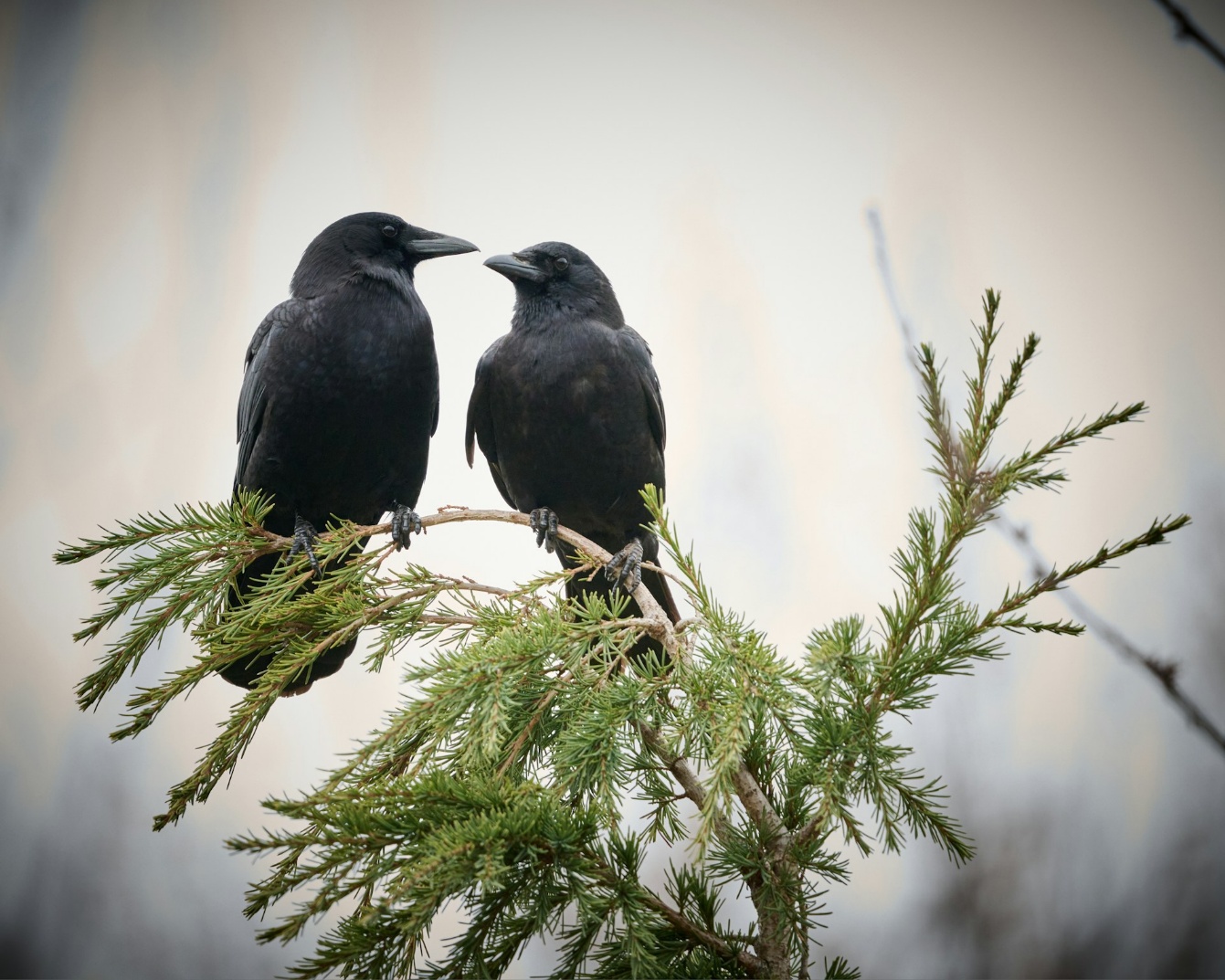
Crows and ravens in South Africa display remarkable cognitive flexibility, adapting their foraging strategies to new conditions and learning from past experiences. This includes innovative behaviours like using rocks or other items to break into food sources. White-necked Ravens have been known to pick up tortoises and drop them from a great height, usually onto rocks, to break their shells. They also employ group hunting tactics and cooperative behaviours to find food and protect against predators.

In Sweden, more than one billion cigarette butts are left on the streets each year, accounting for an estimated 62% of all litter, and the municipality of Södertälje alone spends around 20 million Swedish kronor (£1.6 million) annually on street cleaning. In response, a Swedish startup called Corvid Cleaning has launched an innovative pilot program – informally known as “Butts for Nuts” – that trains wild crows to collect cigarette butts in exchange for food rewards. The birds voluntarily pick up the litter and deposit it into a custom-designed machine, often referred to as a “Crowbox,” which uses cameras and AI to identify the debris before dispensing seeds or peanuts. Recent reports from late 2025 indicate that the project remains in the testing phase in Södertälje, with early results showing that the crows quickly learn how to use the system. The initiative is not yet a full-scale operation, and human involvement is deliberately kept minimal, limited to maintaining the machines, refilling food dispensers, and monitoring performance. If the pilot continues to succeed, Corvid Cleaning hopes to expand the program to other cities, with estimates suggesting municipalities could reduce street-cleaning costs by up to 75 percent. At the same time, ongoing evaluations are assessing key challenges, including scalability and the long-term welfare of the birds, particularly potential exposure to toxins from cigarette waste, as the project continues to attract significant attention for its creative use of animal intelligence to address a widespread human-made pollution problem.
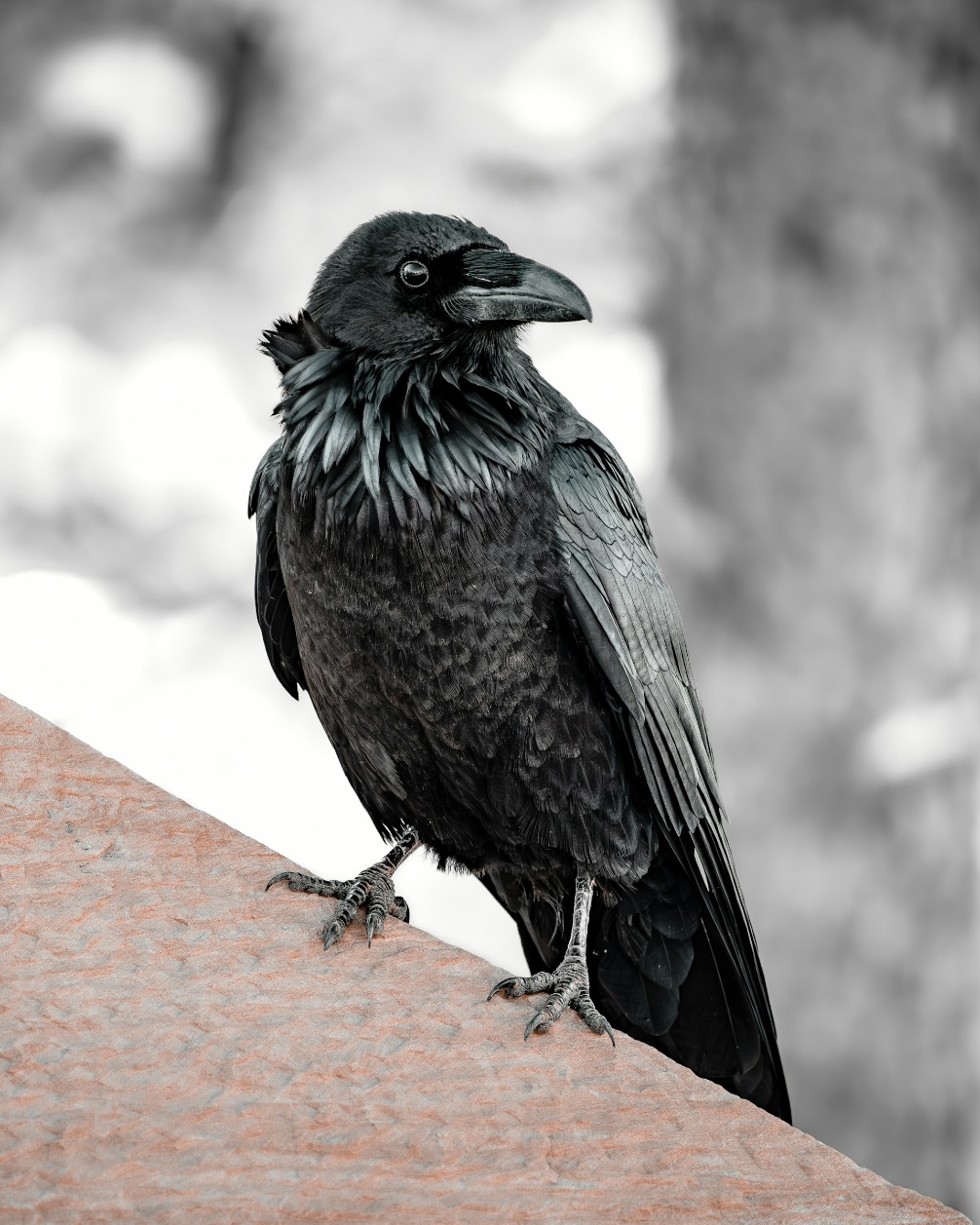
Crows typically live 7-15 years in the wild, but often only 7-8 years on average as many perish in their first year, while in captivity they can live much longer, often exceeding 20 years, with some reaching ages of 29 or even 30+ years, and a record of nearly 60 years for a captive crow. Crows and other corvids have a prolonged developmental period during which they stay with their parents, sometimes for several years. This extended youth, surrounded by tolerant adults, is crucial for their brains to develop fully and for them to acquire vital survival and social skills. This long lifespan also allows a crow to accumulate a vast amount of experience and information about its environment, threats, and food sources. Did you know that crows even build fake nests to trick predators like hawks and eagles into thinking they’ve found a target, diverting them from the real nest??
Crows are often overlooked because they are so common, and they are rarely described as exciting or exotic. However, this ordinary reputation is misleading. In reality, crows and ravens are among the most intelligent and adaptable birds in the world. Far from being dull or ordinary, they are clever, social, and essential birds that deserve far more appreciation than they usually receive…
Jacqui Ikin & The Cross Country Team
INFO BOX:
Are ravens as smart (or smarter) than us?
https://www.bbcearth.com/news/are-ravens-as-smart-or-smarter-than-us
Joshua Klein: The intelligence of crows
https://www.youtube.com/watch?v=bXQAgzfwuNQ
Testing The World’s Smartest Crow
https://www.youtube.com/watch?v=tpg3VvoIVfA
Why Crows Are as Smart as 7 Year Old Humans
https://www.youtube.com/watch?v=7aWL2iEb6y4
Intelligent Crows Build A Decoy Nest
https://www.youtube.com/watch?v=e7ySYjyXUe8