
The Wind Beneath my Wings
All images ©Disney.
The title of this article came to me out of the blue. That in itself is interesting, because more often than not the process works the other way around: the article is written first, and only then does the title reveal itself. At first glance, the choice seemed to stem purely from my absolute passion for the flight scenes in Avatar. On closer introspection, however, many other reasons emerged. “Wind beneath my wings” refers to someone who provides crucial support, often unseen, encouragement, and strength, enabling another person to succeed, soar to new heights, and achieve their dreams, much like the wind lifting a bird in flight. James Francis Cameron, the 71-year-old Canadian filmmaker and deep-sea explorer, is (perhaps surprisingly) such a person for me – although obviously simply by example.
An “auteur” is defined as “a film director who influences their films so much that they rank as their author”. The post-New Hollywood era, beginning roughly in the early 1980s, marks the shift from the auteur-driven, gritty, and socially conscious films of the New Hollywood period (late 1960s-1970s) towards a more commercially driven, effects-heavy, high-concept blockbuster model. It is indicative of the rise of powerful producers and studios, often influenced by MTV aesthetics and focused on spectacle, ushering in the modern blockbuster age with genres, sequels, and event movies dominating the mainstream. Enter Cameron – widely considered an auteur in this era. He is characterized by his distinctive style of blending groundbreaking technology with grand, action-packed narratives, strong female leads, and ambitious world-building across blockbuster franchises (like Terminator, Aliens and, of course, Avatar).

Cameron is known as a demanding perfectionist, a visionary technical innovator, and a driven explorer, often described as intense on set but capable of creating immersive, visually stunning blockbusters that push cinematic boundaries. While historically having a reputation for being hard on his crew, recent reports suggest he has mellowed, balancing his obsessive attention to detail with a deeper appreciation for collaboration, all while funding deep-sea exploration through his filmmaking success. It is thus not surprising that Cameron has been married five times. He views marriage as a partnership with an equal who wants you to succeed, noting the challenge with strong, independent women who don’t need you, but emphasizing mutual support and equal footing as key for a healthy bond, despite his multiple marriages. He sees love and support as vital, even calling all his films love stories, and has often spoken about finding happiness in shared success with a partner like his current wife, Suzy Amis (25 years and counting). When asked about his five marriages, James Cameron said; “Being attracted to strong independent women has the downside that they’re strong independent women – they inherently don’t need you…” I admire James Cameron, and consider him to be, at least partially, above or subversive of the traditional “beauty myth” – which refers to the societal imposition of unattainable physical standards on women – due to his consistent creation of strong, complex, and physically capable female characters and choice of the same as his wives.
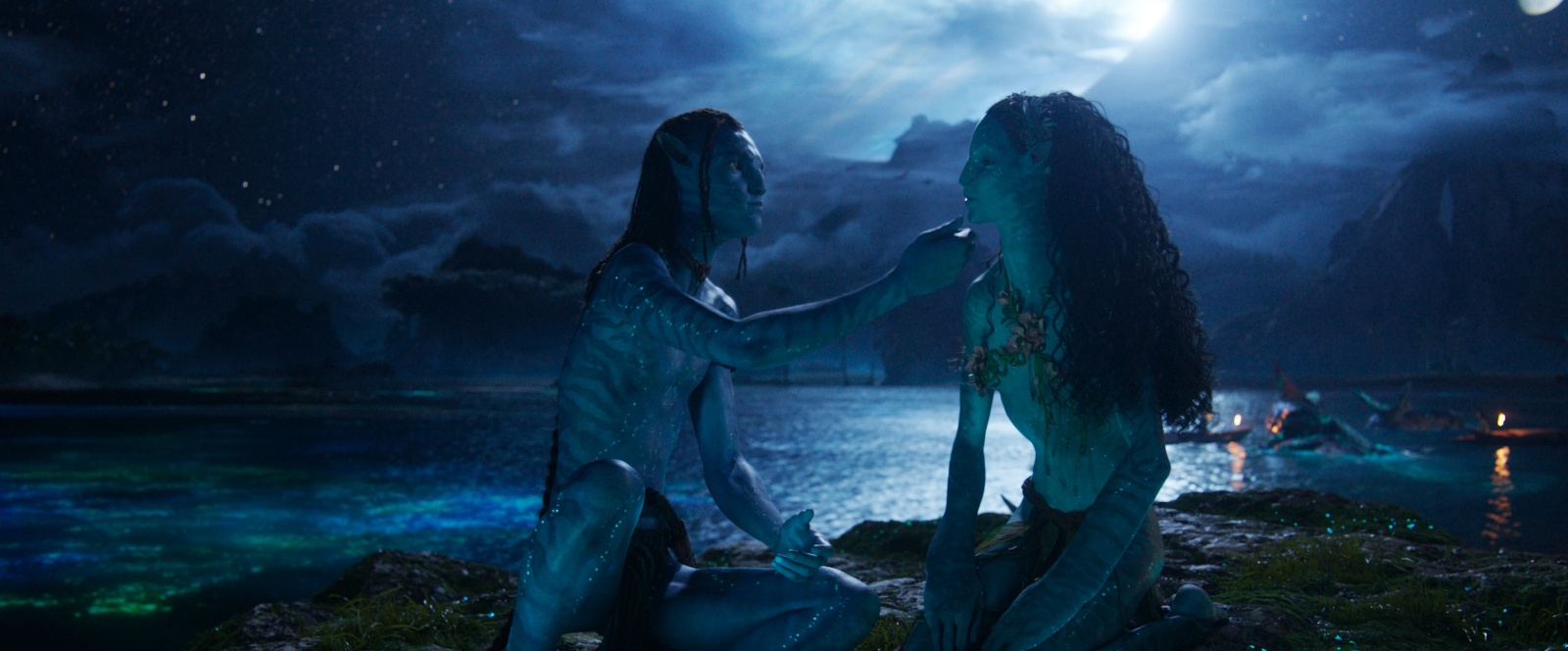
His films blend cutting-edge technology with classical filmmaking discipline, and together they have grossed over $10 billion worldwide – making him the second highest-grossing film director of all time. Avatar: Fire and Ash (2025) is widely regarded as one of the most technologically advanced films ever made, continuing the groundbreaking legacy of James Cameron’s previous Avatar instalments. Rather than a single revolutionary leap, it represents the culmination of years of technical refinement in motion capture, 3D cinematography, and CGI. The film is nearly 95% CGI, with only about 11 seconds containing no visual effects at all. This level of integration places it in a rare class of films (alongside its predecessors, and perhaps 2001: A Space Odyssey or The Matrix in their respective eras) that fundamentally redefine the boundary between live-action and animation. With its focus on perfected 3D, high frame rates, and advanced performance capture, it stands as a testament to what can be achieved with technology. As of mid-January 2026, Avatar: Fire and Ash has grossed over $1.24 billion worldwide. And Cameron is 71. Read that again. Seventy-one. A fact that is one of the reasons I consider Cameron a “wind beneath my wings’ inspiration. To remain this creative, this ambitious, and this relentlessly cutting-edge at 71 is extraordinary. One can only hope, and aspire, to still be pushing boundaries at that level after so many years.

In my humble opinion, elements of Hollywood culture and certain celebrities display high levels of narcissism and arrogance. While not all individuals in the industry are this way, the structure of the industry often fosters these traits. Surrounded by people catering to their every whim, many individuals in the industry possess a strong need for public adoration. I have often considered the Hollywood glitterati superficial and particularly good at creating vacuous aspirations in their adoring public. James Cameron is the exception to this – on every level. And that is another reason to celebrate the man.
James Cameron has famously stated that he uses his Hollywood blockbusters to finance his passion for deep-sea exploration and technological development. He describes himself as an engineer and explorer who happens to make movies to pay for his expeditions, a sentiment that aligns with his work as a National Geographic Explorer-in-Residence. His success with movies like Titanic allowed him to fund deep-sea exploration, while the profits from Avatar helped finance the creation of the Deepsea Challenger submersible. His expeditions go beyond filmmaking; they involve serious scientific research, such as documenting the wreck of the Bismarck and creating 3D, high-definition footage of deep hydrothermal vents. In 2012, Cameron became the first person to make a solo descent to the bottom of the Mariana Trench (Challenger Deep). The technology, cameras, and lighting developed for this mission were specifically designed to advance, not just document, marine exploration. Cameron frequently develops new, groundbreaking technology for his films (like the 3D Fusion Camera System) which he then applies to scientific, underwater, and robotic, imaging, including working with NASA on cameras for the Mars Rover. He has donated his Deepsea Challenger sub to the Woods Hole Oceanographic Institution to continue research.
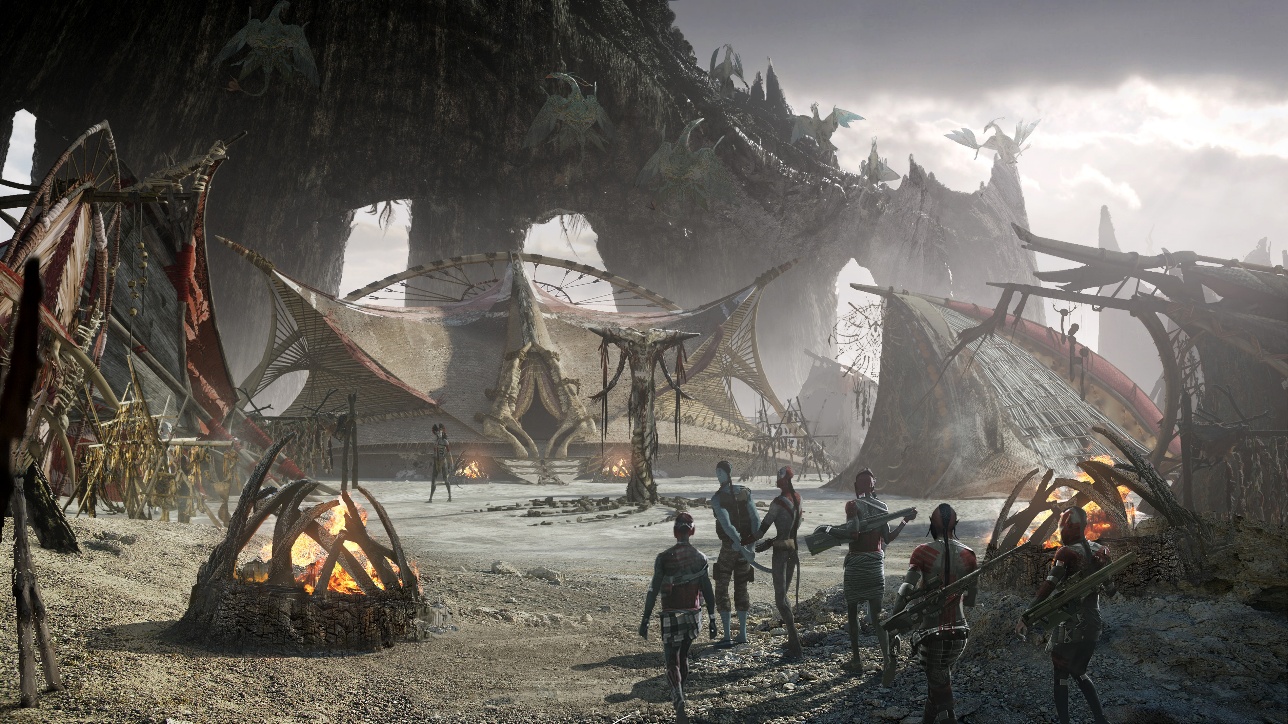
Hollywood is a massive, influential media giant known for its corporate power, global reach, and profitability – that often adopts edgy themes for mass appeal. It excels at refining and globalizing ideas. James Cameron’s Avatar series function as a direct allegorical critique of modern industrial civilization, mirroring key principles of a conservation ethic – the belief that humans have an ethical duty to protect and manage natural resources sustainably. The film argues for an eco-centric, rather than anthropocentric, worldview, where nature has intrinsic value beyond its utility to humans. James Cameron designed the creatures of Pandora to be “alien yet familiar,” with many Pandoran animals having direct anatomical or functional counterparts on Earth. He has demonstrated a deep, long-standing commitment to environmental conservation, bridging his careers as a filmmaker and deep-sea explorer with active advocacy and philanthropy. We’ll explore more of this in Part II of this article next week, together with the impact Hollywood has on conservation…
Avatar: Fire and Ash (Avatar 3) was released in South African cinemas on December 19, 2025. I have no idea how long it will stay on the big screen, but I do know for sure that this is definitely something you should make an effort to watch on the big screen. It was launched across major cinema chains, with screenings in IMAX, 3D, 2D, and even 4DX (an immersive, multi-sensory cinema technology that adds physical effects to movies) at select locations. Even certain independent and art-house cinemas are screening it. Which version you choose to see depends on your personal preference and your budget. It comes highly recommended – and is so much more than simply “a movie”…
Jacqui Ikin and The Cross Country Team
INFO BOX:
Avatar: Fire and Ash | Official Trailer:
https://www.youtube.com/watch?v=nb_fFj_0rq8
DEEPSEA CHALLENGE 3D Trailer | National Geographic:
https://www.youtube.com/watch?v=-8r_-79SjpA