
Expect the Unexpected in Complex Life
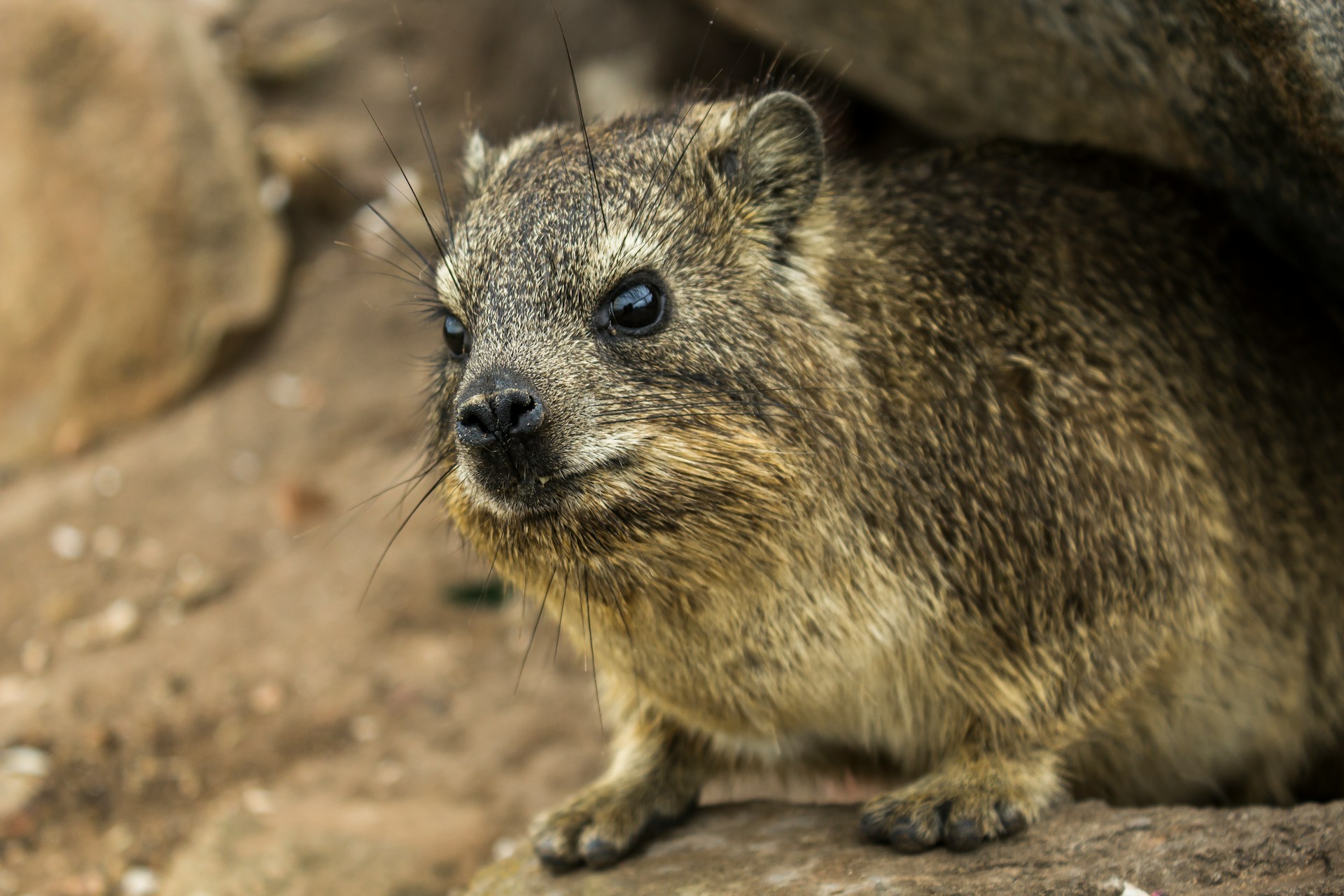
In South Africa, we have a great sense of humor. Whatever has happened, no matter how large or tragic the issue is, we, the people, find a way to laugh. This often manifests on social media. But not every incident is large – or, for that matter, tragic. Some may simply be an issue in an estate. On a WhatsApp group. When a well-known local comedian jumps onto it, it becomes ever funnier. So, before I continue this week’s column on our innocuous “Dassie”, please pop to the info box and watch “Dassie Mayhem in Ballito” with a great local comedian Schalk Bezuidenhout.
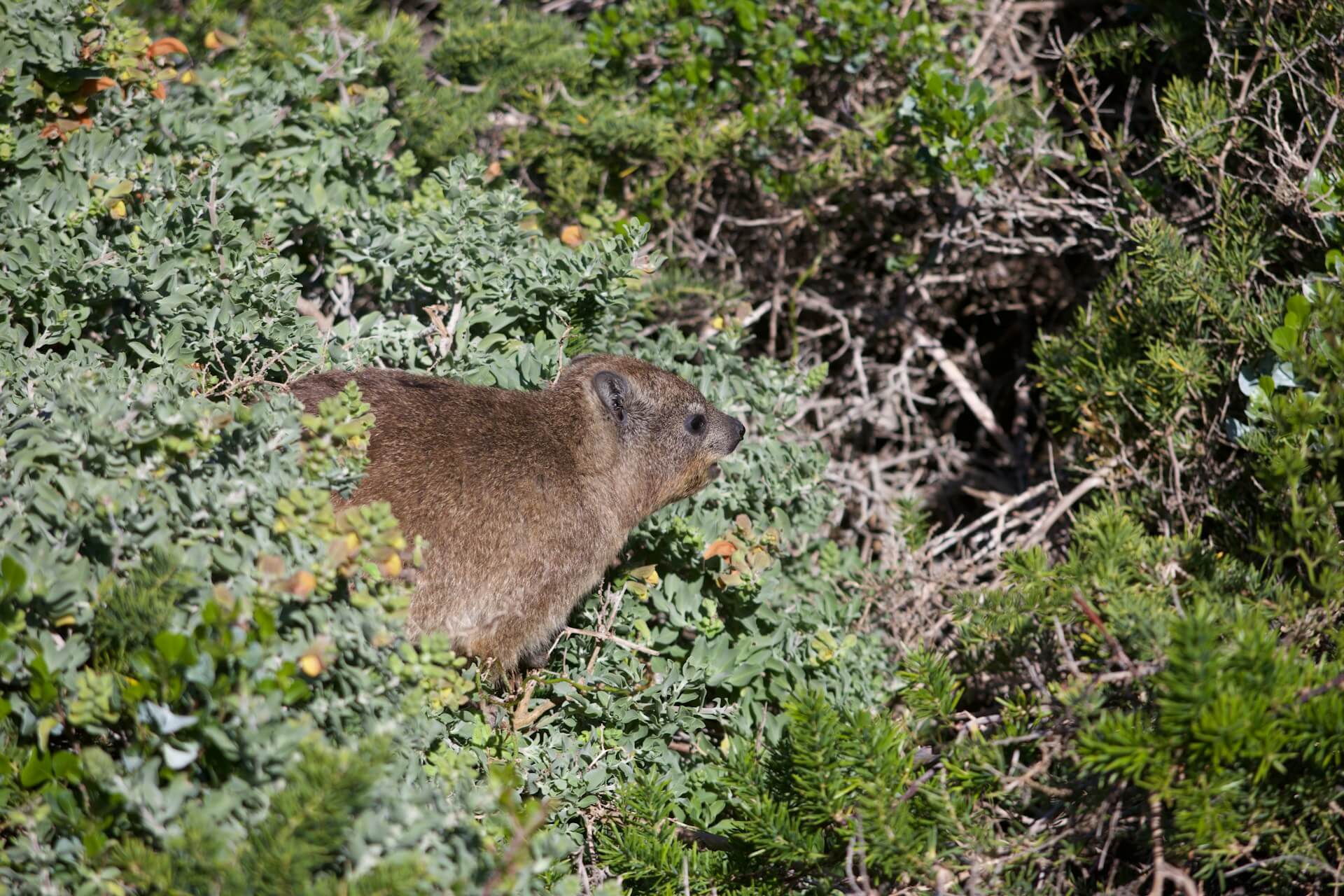
Many of us have seen dassies, and for the most part, they will be the “Rock Hyrax” or Provacia capensis. There is currently only the one species of Procavia recognised, but two other hyrax species, the yellow-spotted hyrax (also known as the ‘bush hyrax’), Heterohyrax brucei and the southern tree hyrax, Dendrohyrax arboreus, also occur in South Africa.In truth, even in guidebooks, it is quite difficult to tell the difference! The tree hyrax is endemic to South Africa and is “found in forests and thickets along the Eastern Cape and KwaZulu-Natal coasts” – so I am guessing this would be the one causing havoc in the Ballito estate. Their underside is paler than other hyraxes and most of its time is spent in isolation – i.e. solitary.
With regard to their alleged aggression, like most wild animals, whilst they don’t typically initiate fights with dogs, hyraxes will defend themselves and their young and/or territory. So yes, if your yorkie picks a fight with a dassie, it may well come second as a dassie can inflict a nasty bite. That said, one would assume that in a complex, dogs are supposed to be on a lead – which would mitigate any conflict.
For the purposes of this article, we will focus on the more common rock hyrax.
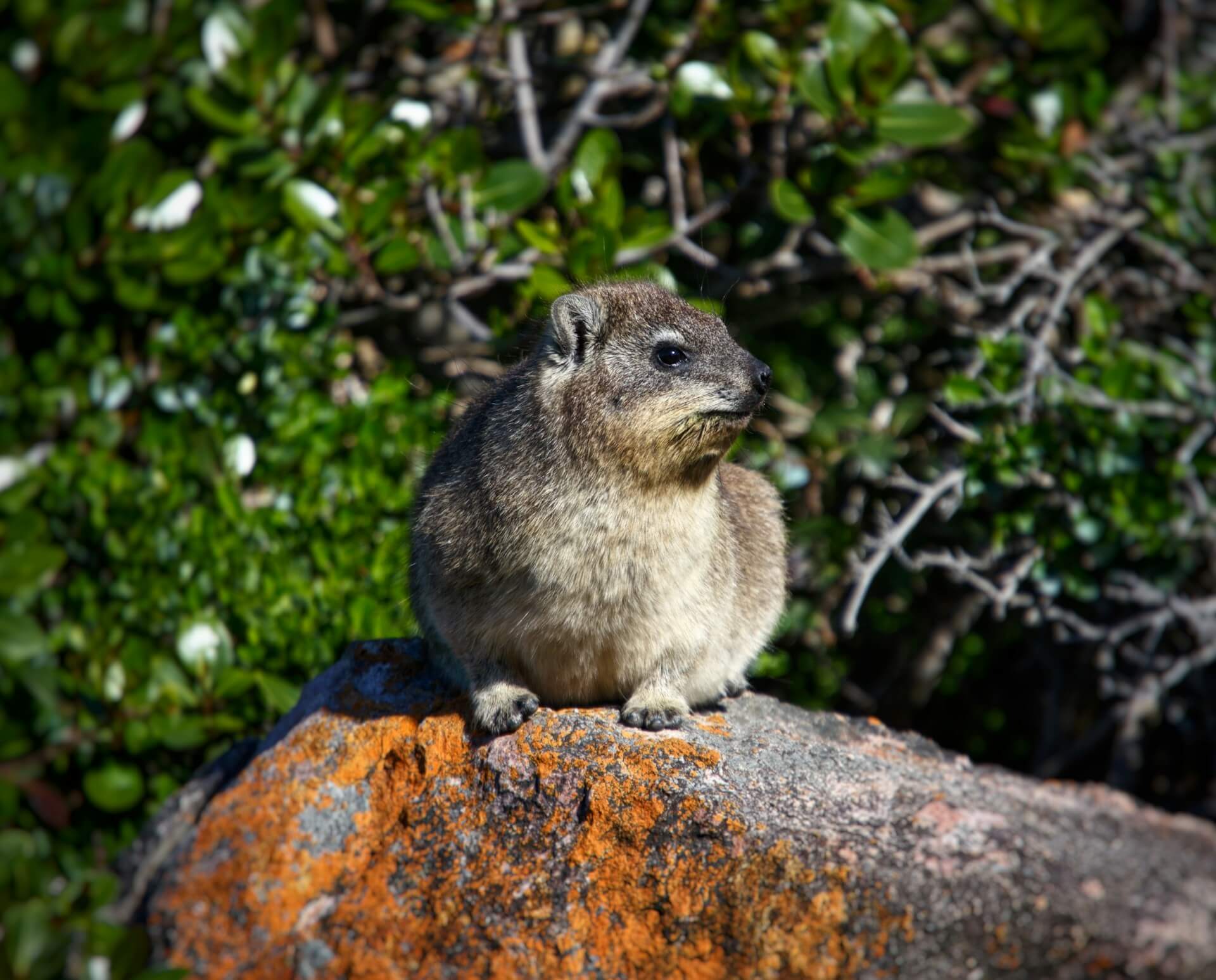
As a point of interest, based largely on DNA, dassies are considered to be the closest living relative of the largest land mammal, the African elephant, and also of the manatee and dugong.
Rock dassies are known to bask in the sun, particularly on cooler mornings. They do this to warm up their bodies due to their slow metabolism. They rely on the sun’s heat because they don’t have the ability to generate enough warmth internally to keep themselves warm. When inside their rock shelters, they may pack together in rows or heaps to keep themselves warm. This behaviour is called “heaping”. They also do this outside if it’s cold enough.
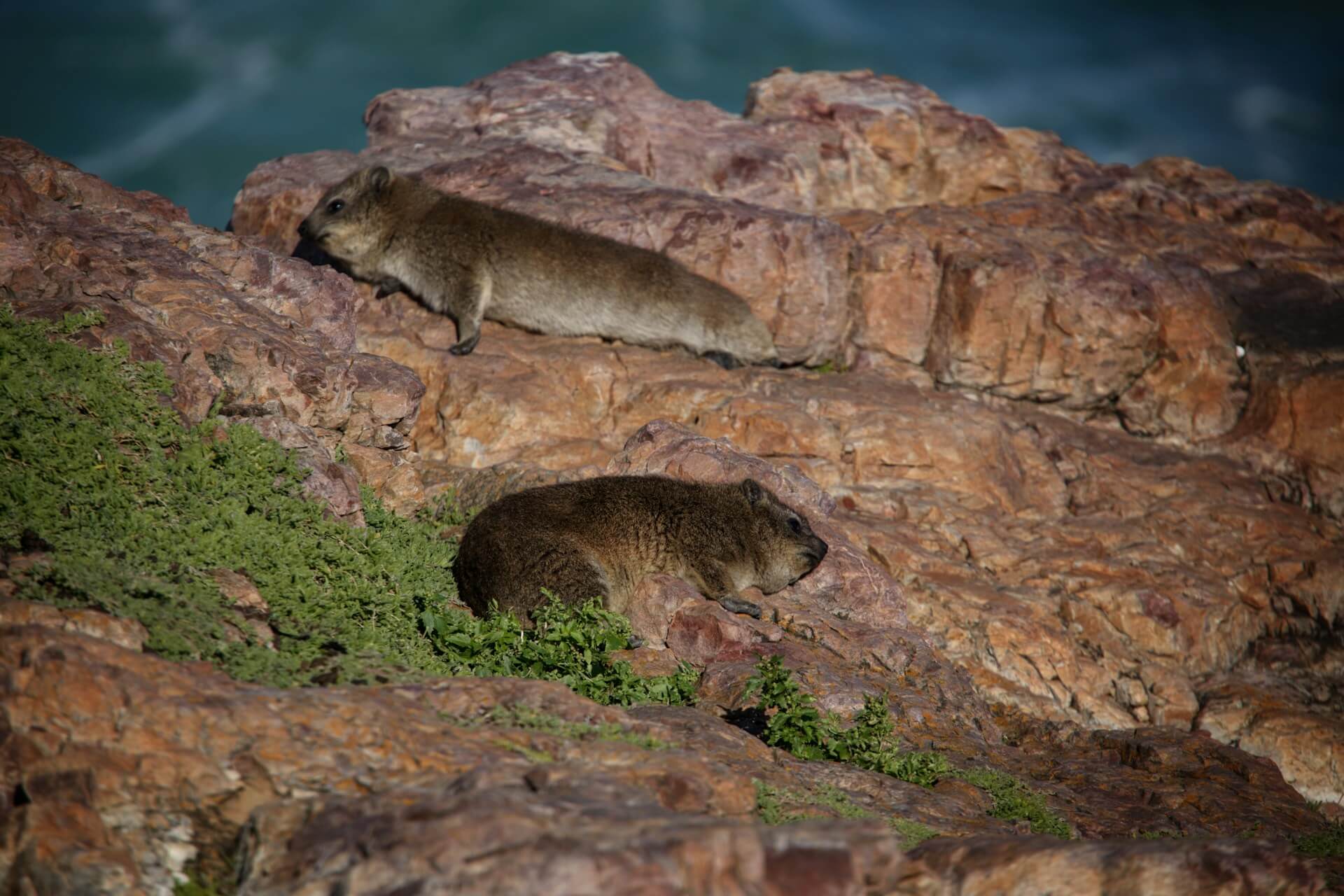
One of the dassie’s main predator’s is the black eagle. The dassies have evolved a number of strategies to deal with them. They are well-camouflaged against the rocky terrain they inhabit, which makes it difficult to spot them from a distance. Black eagles have learned that they are more successful flying in with the sun behind them, as most animals would not be able to look straight into the sun to detect them. Dassies have a special membrane over their eye that shields the pupil against the sun’s glare – enabling them to look directly into the sun. This adaptation allows dassies to better see and anticipate attacks from the eagles. They also seek shelter within nooks and crannies of the rocks very quickly after an alarm call is sounded, making it near impossible for a black eagle to grab them after that.
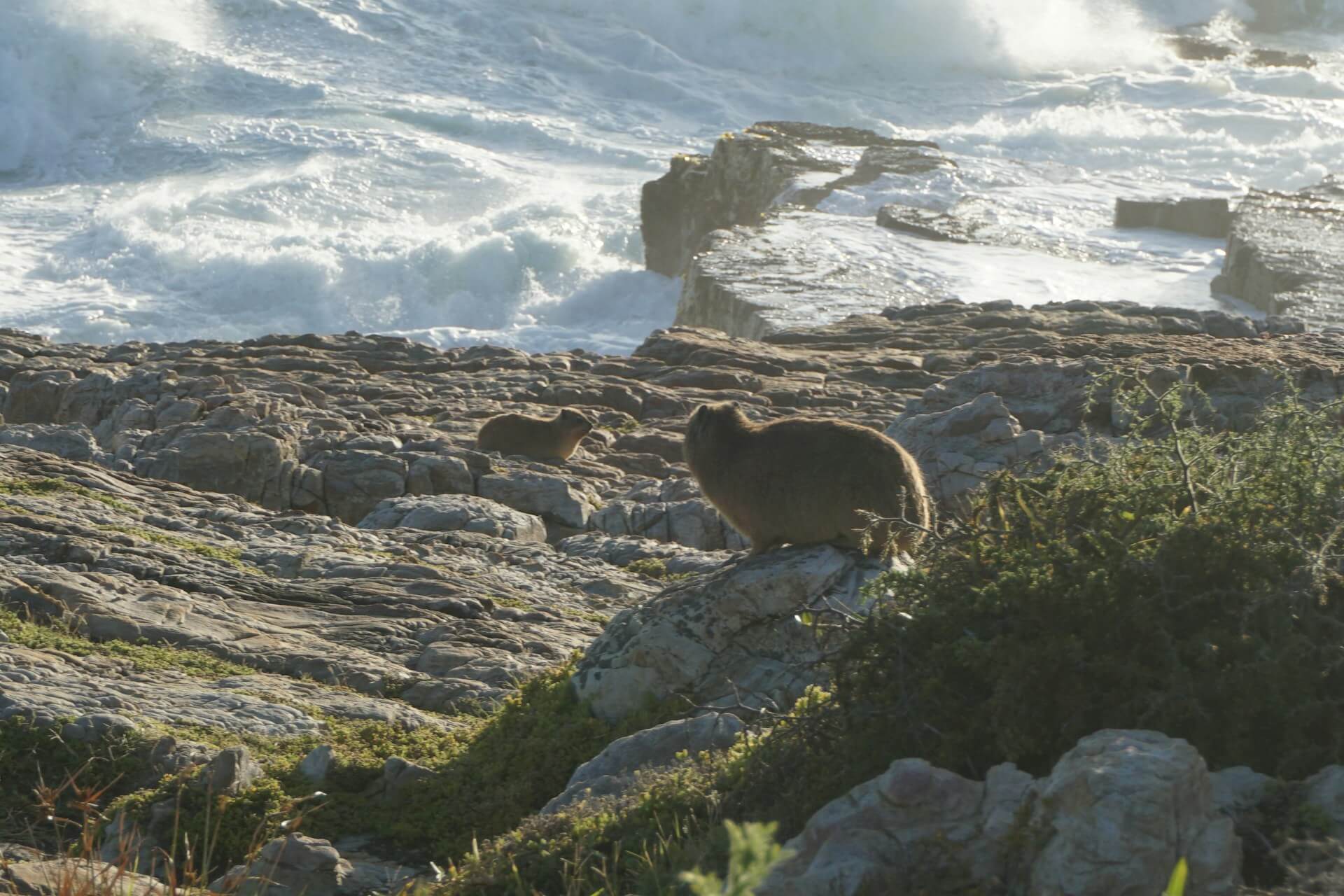
Dassies also only spend about one hour a day foraging and eating. This is because they eat fast and spend most of their time resting to conserve energy. This could also be seen as an adaptation to predation, as they are at their most vulnerable when foraging.
Dassies are well adapted to using their rocky habitat to protect them from predators. One is often left breathless at the antics dassies get up to on sheer rock faces. Whilst they are indeed built for this environment, they also have four short legs with padded feet, which have glands that produce a secretion that keeps their feet permanently moist. This moisture helps them to quickly climb up very steep rocks and tree trunks and branches. Their social system also helps in terms of warning the colony of danger, and the rocks provide them with a secure hiding place. Dassies seldom move more than 50 m from their sleeping place, so they can access safety really quickly.
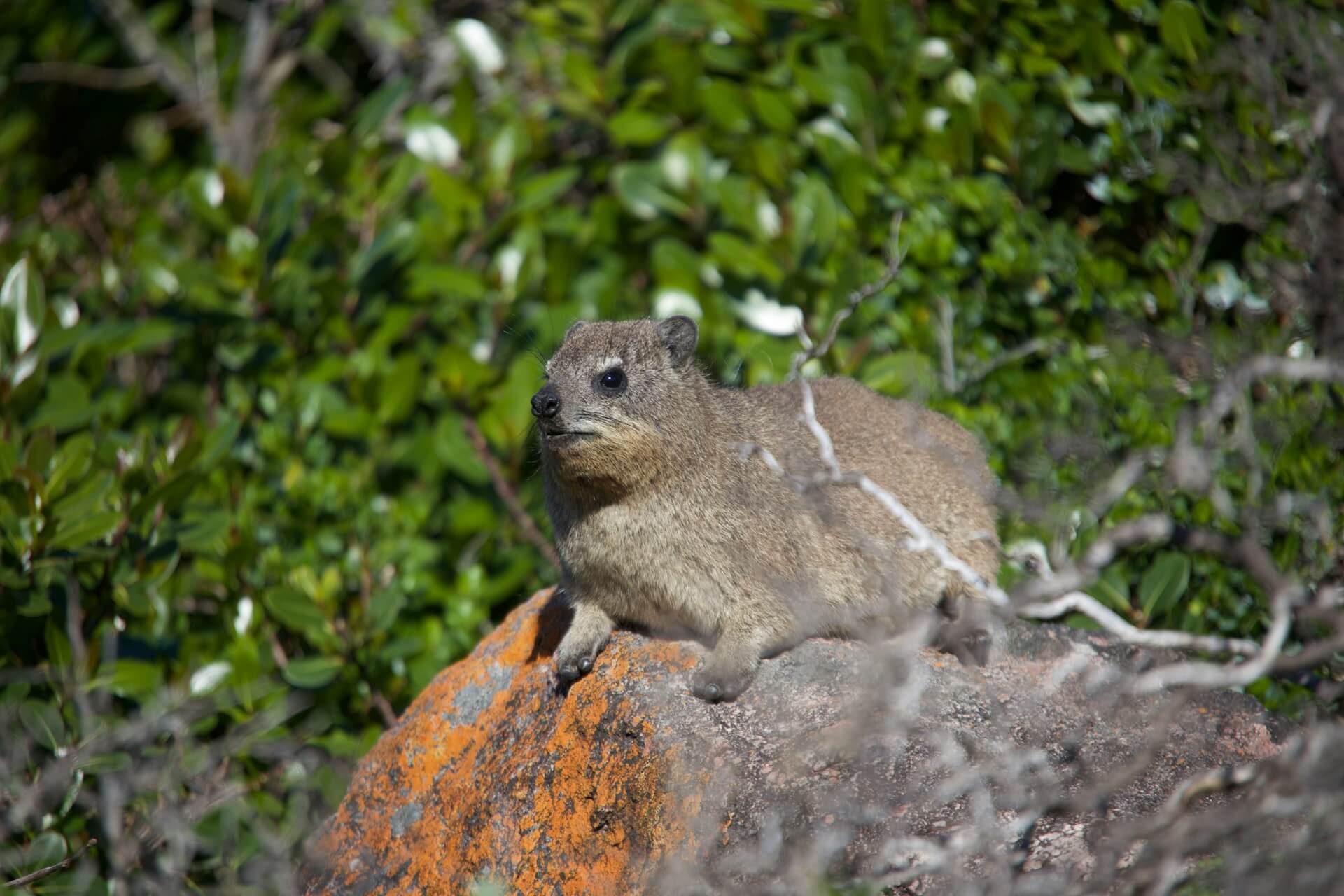
Dassies have an average life span of ten years and they become sexually mature at about 16 to 17 months. Females have two or three babies, which they carry for about 230 days. It may sometimes appear as though one female has a large number of offspring – but this is simply because babies will suckle on any female in the colony. Dassies are not especially caring mothers, and they pay little attention to their young, apart from suckling them for a few months. They will, however, protect them if presented with a threat.
These interesting critters often make a great subject to watch when on a game drive – or sitting on Table Mountain for that matter – especially if they have youngsters. Like so many over-looked life forms in our country, they can be interesting and, if you know just a little about them, they can become downright fascinating…
Jacqui Ikin & The Cross Country Team
INFO BOX:
Dassie Mayhem in Ballito:
https://www.facebook.com/reel/1132522718432408
This African Mammal Always Has Time For a Quick Nap:
https://www.youtube.com/watch?v=3dgT8a9f78Q
The Dassie – A South African Survival Specialist – Go Wild:
https://www.youtube.com/watch?v=mCSfLHVj4T0
Rock Hyrax Sounds – Cackling call & cries:
https://www.youtube.com/watch?v=IQtIwwedLbI

