
The Ghost Town of Kolmanskop
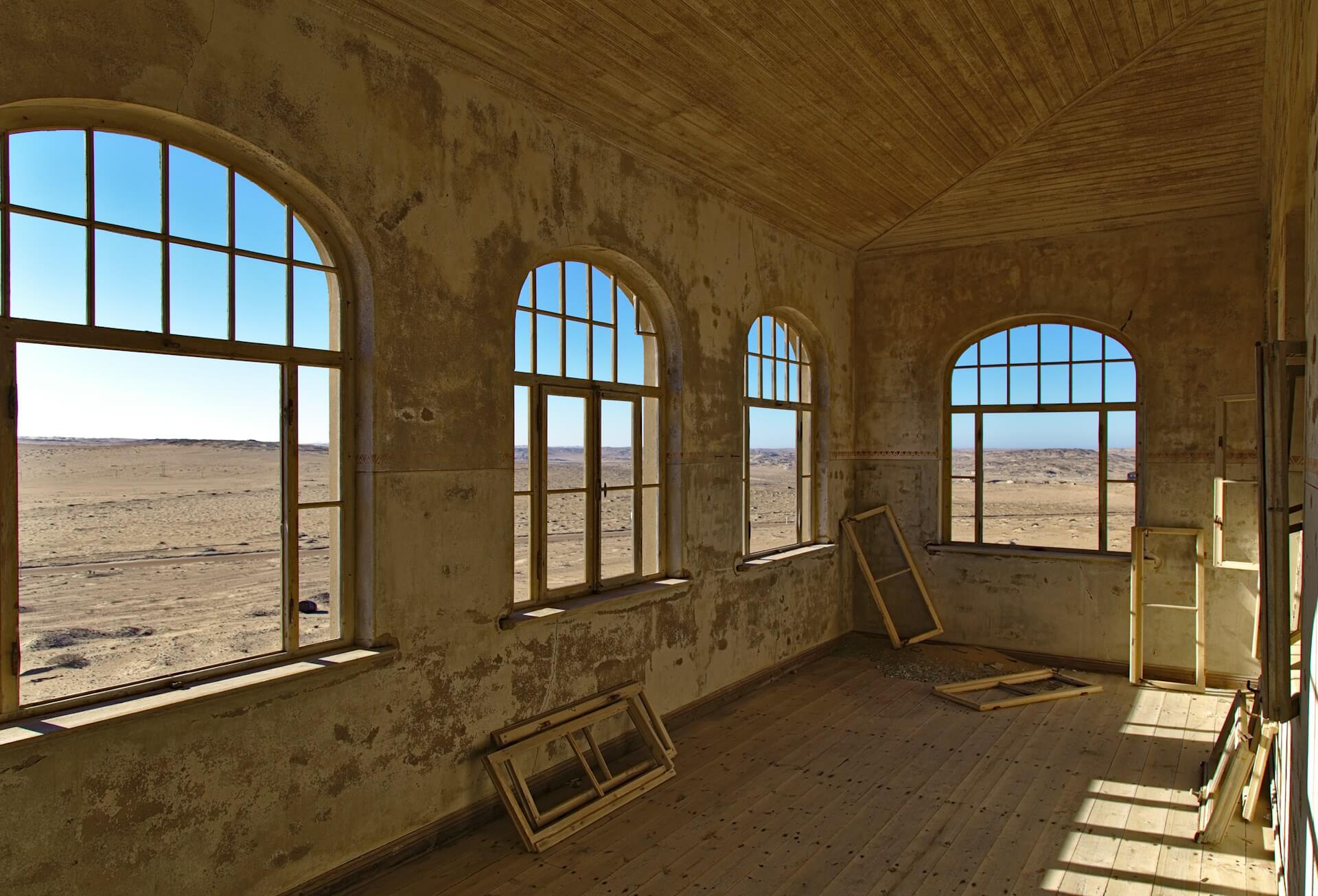
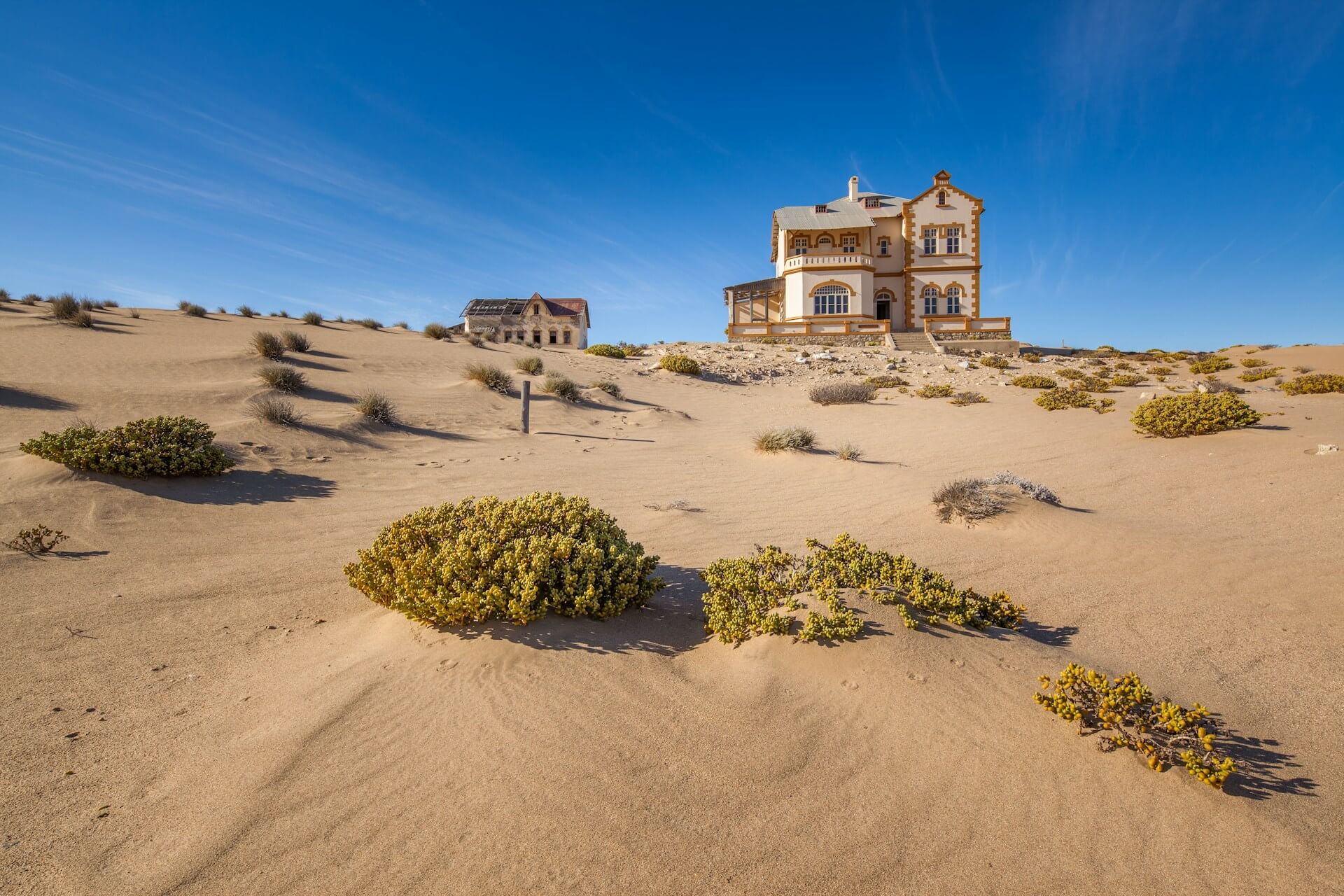
Namibia is a country of contrasts, a land with something unusual around every corner. This week we focus on Kolmanskop – a “Ghost Town” just 10 kilometres inland from the port town of Lüderitz. It is a ghost town not in the sense of actual ghosts, but because it is abandoned, deserted, now in ruins, filled with sand and reclaimed by the desert. It is, however, fascinating – a great spot for photography and a town with a past, with an intriguing history.
The name Kolmanskuppe, Kolmanskoppe or Kolmanskop is believed to have originated from a transport driver named Johnny Coleman. Coleman transported goods from Keetmanshoop to Luderitzbucht (the German spelling of Luderitz Bay) and it was his habit to outspan his oxen and make camp in the vicinity of a low-lying gneiss kopje (Kuppe) or hillock. Like so many places in Africa, the hill had no name. It was simply another fold in an already folded landscape, and it was covered in thick sand. Here and there a rocky outcrop existed. In 1905 he was caught in a terrible sandstorm there, and his oxen vanished. He was eventually rescued but the wagon remained abandoned in situ for years. From that time the kopje was known as Kolmanskuppe (meaning “Coleman’s Peak” or “Coleman’s Hill”), and the wagon stood as a grim reminder and a beacon in that lonely spot so often plagued by sandstorms.
Like so much in our part of the world, Kolmanskop owes its existence to diamonds. In 1908, the first diamond was found in the region. To be precise, on 14 April, Zacharias Lewala, a railway worker in Namibia, found the diamond. He was shovelling the railroad tracks clear of the creeping sand dunes, when he saw some stones shining in the low light. On informing his German employer, they were eventually identified as diamonds. The German boss, August Stauch, made a fortune buying up land around Kolmanskop before the diamond rush began, while Lewala received nothing for his discovery.
With the first diamonds being found on/near the surface, and with them being so abundant, many of the miners harvested the gems at night as they could be seen glittering in the moonlight. The image of prospectors crawling on their stomachs, collecting the stones in jars, is an enchanting one – and an image that one would not normally associate with ‘mining’.
Very soon, hordes of prospectors descended upon the area. By 1912, a town had sprung up, producing a million carats a year, or 11.7 percent of the world’s total diamond production! This town was something out of a dream, with quirky and unusual being the order of the day. There is something about the excessive luxury and decadence that reminds me of Kenya during the White Mischief era.
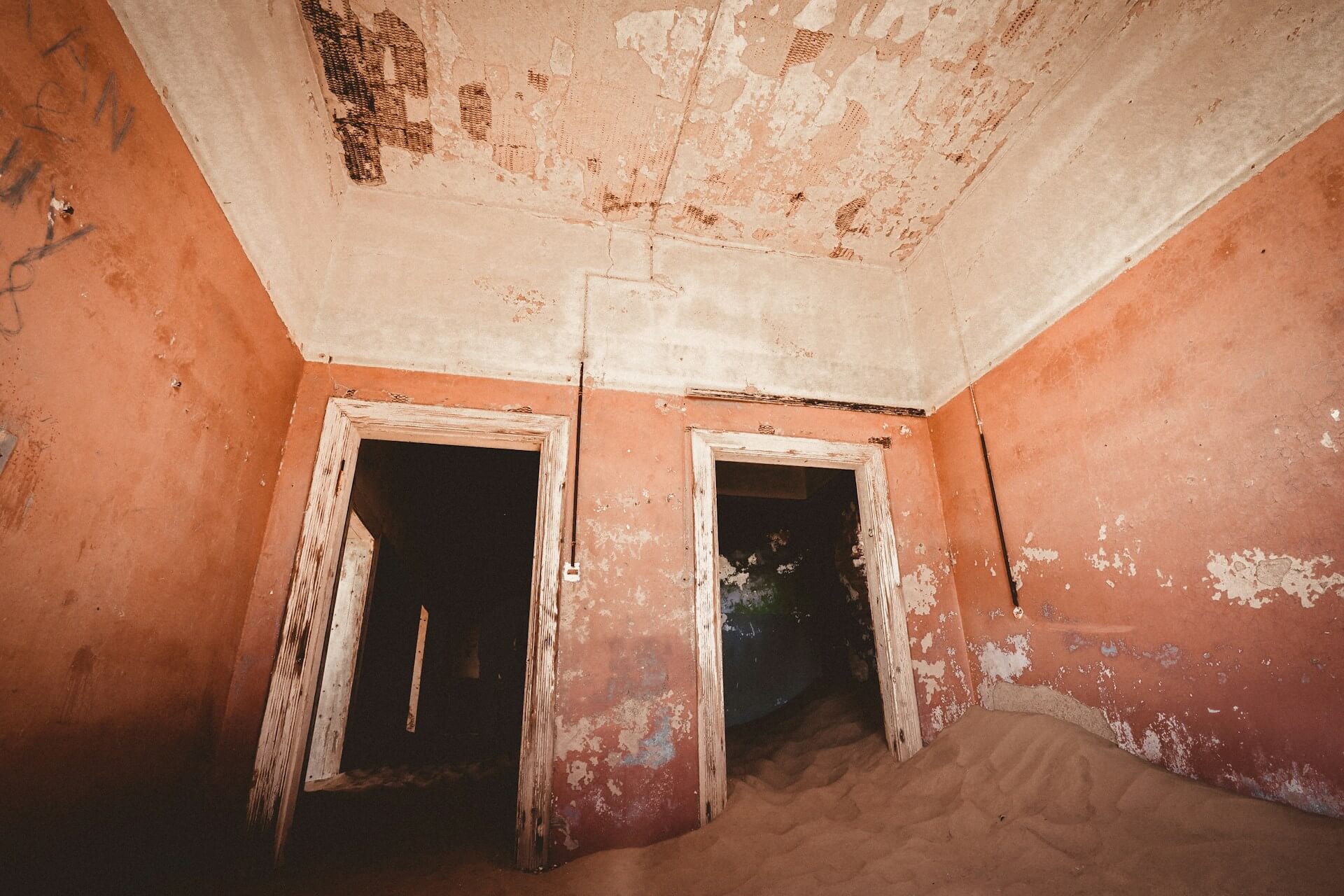
Besides the usual butcher, baker, and post office, there was an ice factory. Each household was allocated one 20-liter block of ice per day along with free lemonade and soda water, an unbelievable luxury in a desert environment. This ice was crucial for keeping food fresh and drinks cool. The ice factory also supplied the adjacent butcher shop with chilled pipes to keep their meat fresh. Fresh water was brought in by rail, and this imported water was available at the same price as champagne.
There was a “mad eccentricity” about the town. European opera groups came to perform. One family apparently kept a pet ostrich that terrorized other townspeople and was made to pull a sleigh at Christmas. They also built themselves a ballroom, skittle hall, hospital (with the first X-ray station in the southern hemisphere), school, theatre, power station, casino and sports hall. The caviar and champagne parties would go on for days. It was a boomtown – with all the opulence that implied…
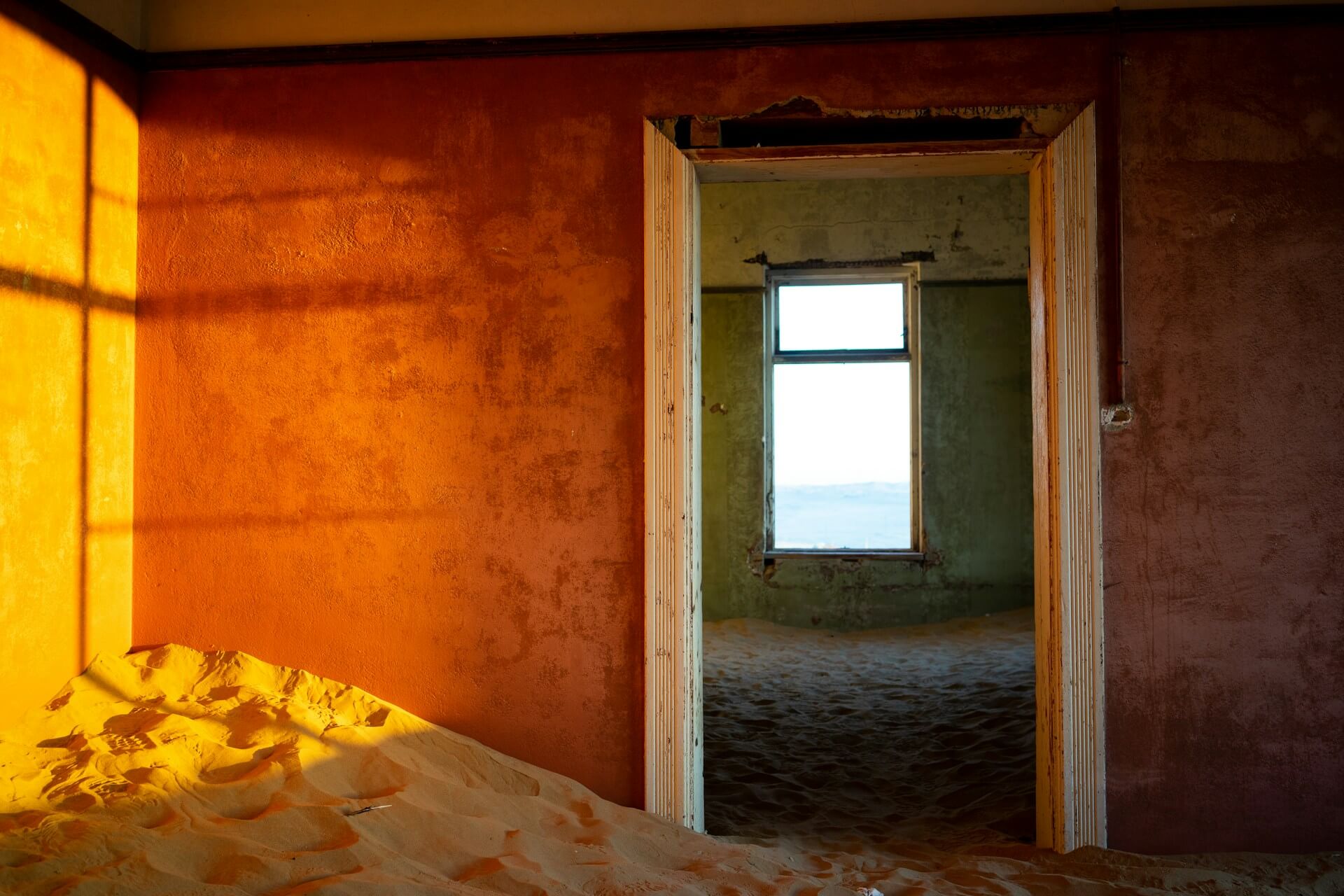
As soon as the word spread, the rush to what became the diamond town of Kolmanskop was on. The diamonds were just below the surface, which meant that anyone could easily access them. It soon became clear that the discovery wasn’t a localised deposit but a vast diamond field, which extended from the Orange River in the south, northwards for 300 km and inland from the Atlantic coast for 100 km. The German colonial government of South West Africa promptly proclaimed the area, ‘Forbidden Territory’ or “Sperrgebiet’. Almost a hundred years later, this 26 000 square km of sand remains a no-go zone hemmed in barbed wire and restricted signs. Only a very limited number of tour operators have permission to access this area, and the permitting process is still strictly controlled.
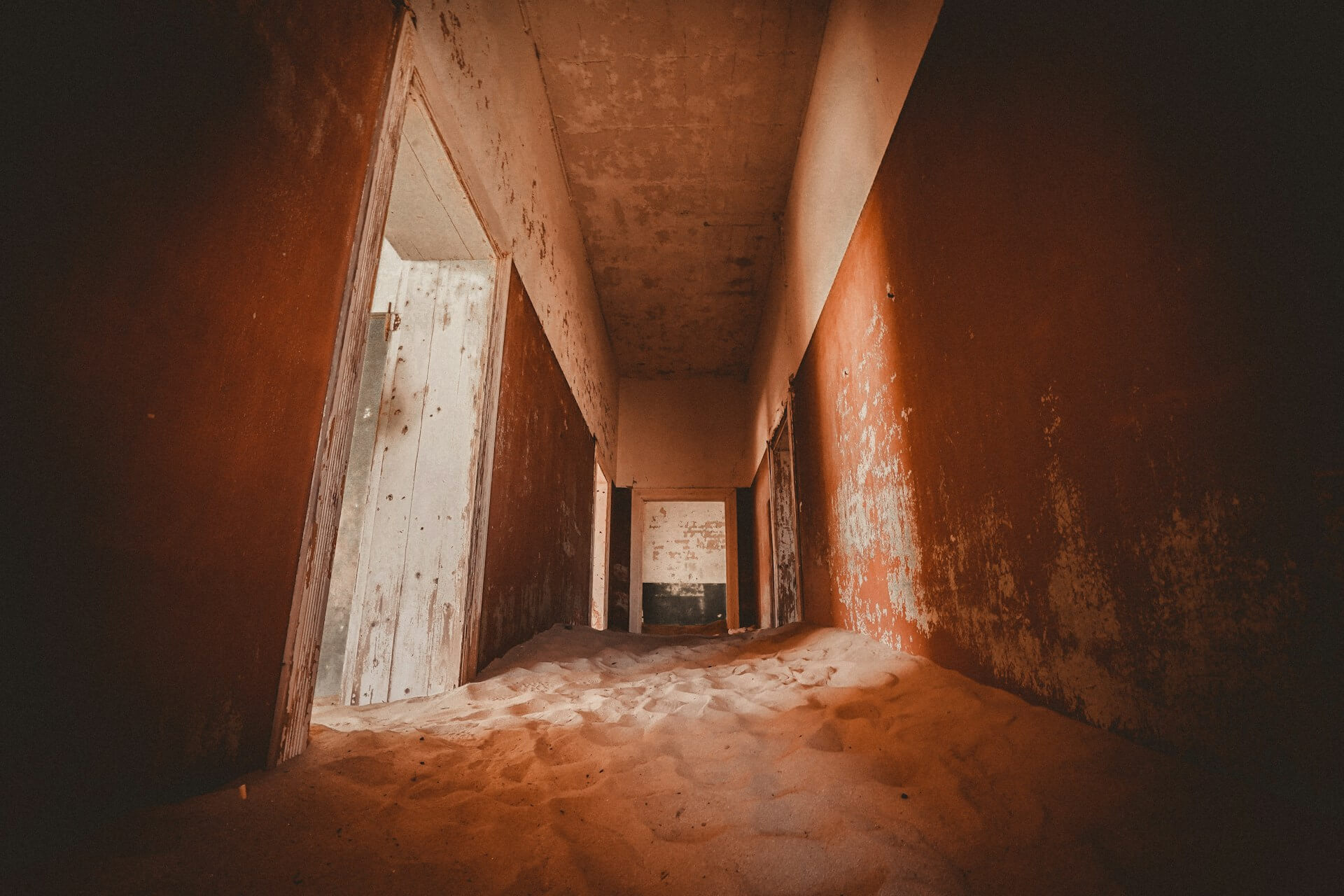
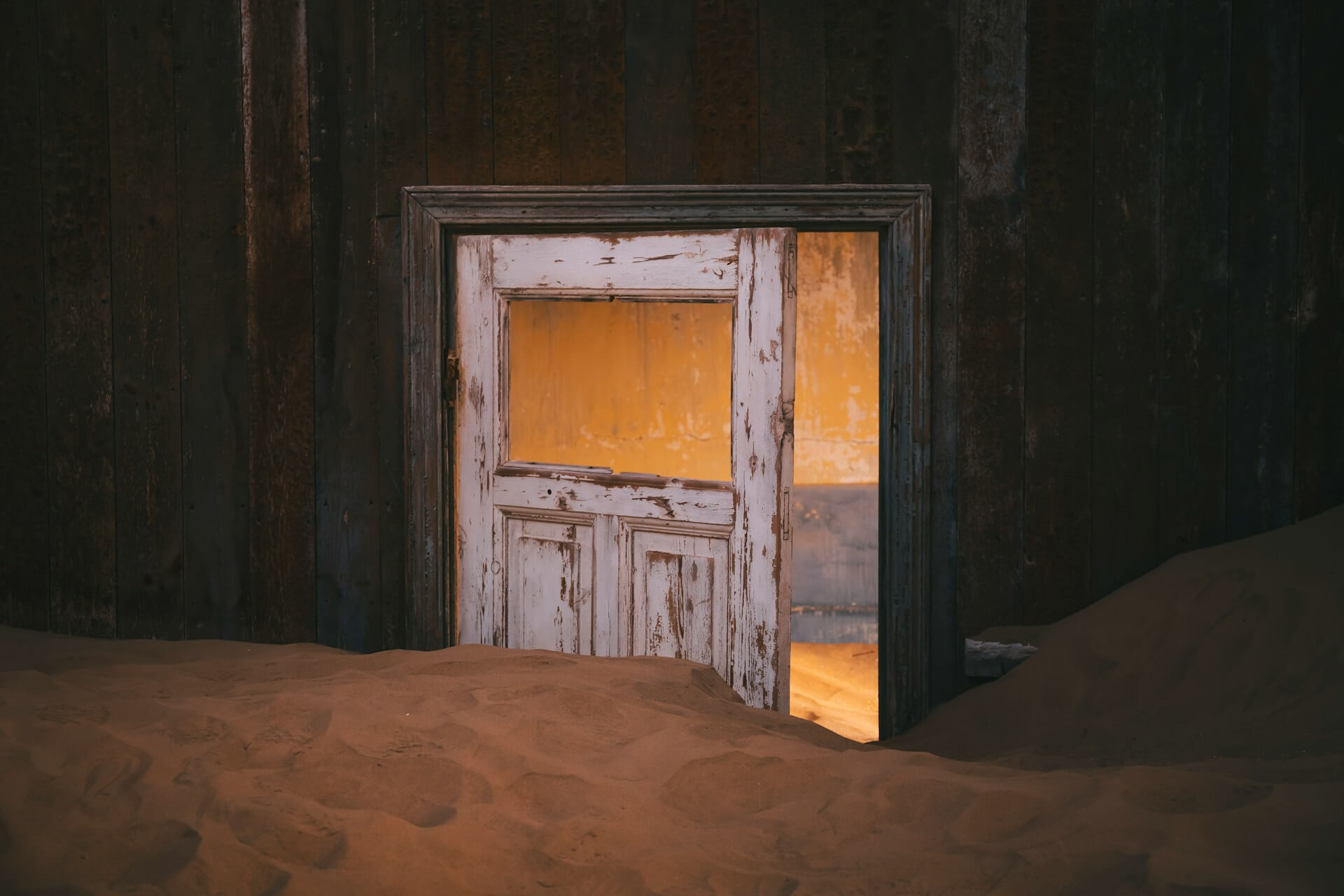
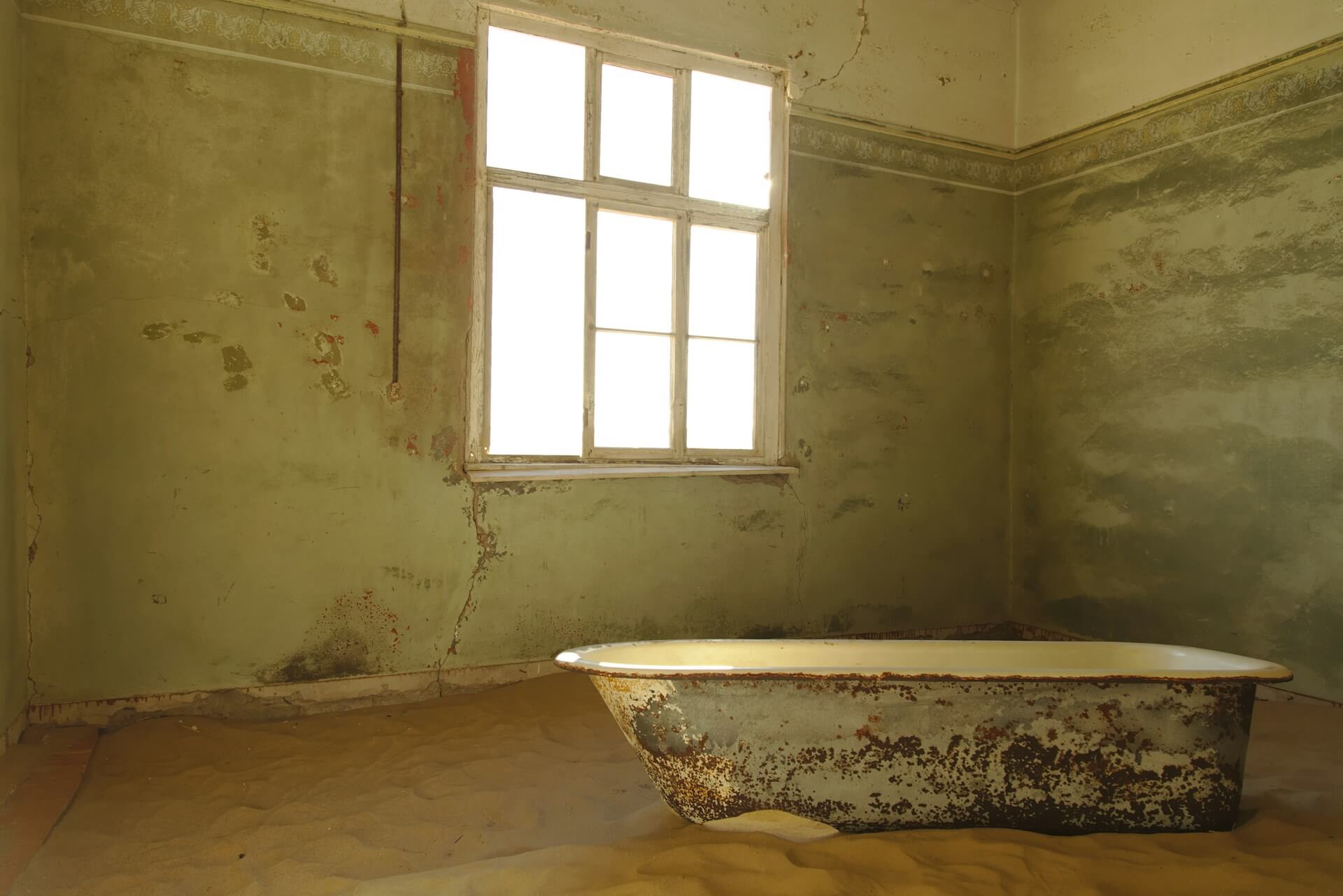
So – what happened? Well, quite simply, the diamonds ran out and richer fields were discovered. The town’s heyday was short-lived, and the diamond supplies were petering out by the 1920s, which also coincided with the discovery of much richer diamond fields a few hours away. The town slowly emptied and was totally abandoned by the mid-1950s. The paint started to fade, doors and windows dropped off their hinges, and rooms slowly filled with drifts of sand. Voila! Kolmanskop Ghost Town.
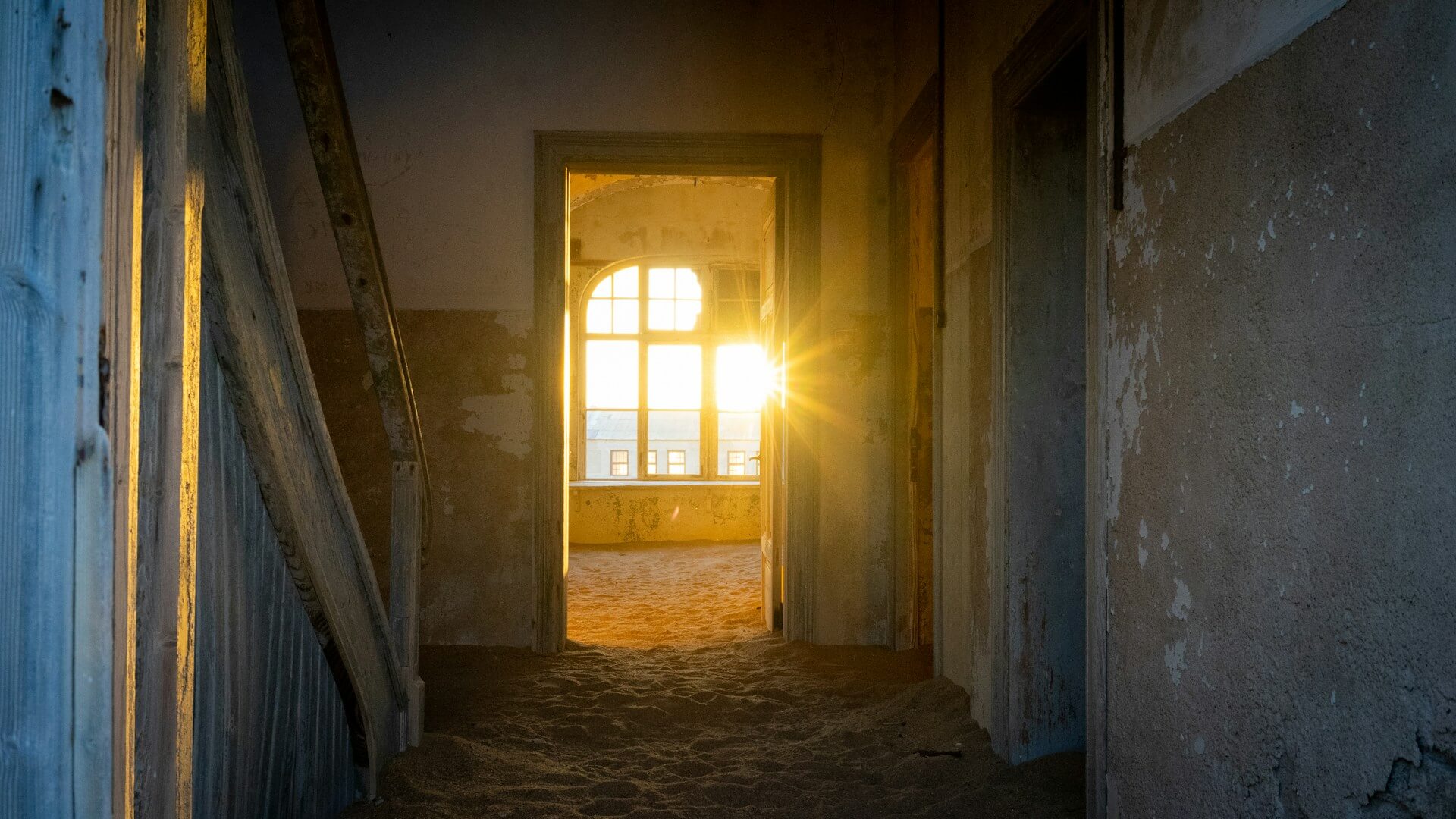
It is relatively easy to gain access to Kolmanskop, as it is only 10km outside of Luderitz. Give yourself at least three to five hours to explore this intriguing spot. Sunset or sunrise would be the best time for a more dramatic visit and photos. If you are there for the photography, we strongly recommend purchasing the Photo Permit and arriving before dawn. Usually, at these times, the sand has ripples and isn’t yet disturbed by footprints. Lastly, be super-careful… The buildings are in a state of disrepair and thus potentially dangerous (especially stairs, rusty nails and barbed wire). Wear robust shoes.
Tickets can be purchased at the website detailed below. Apparently “Desert Deli” which is located in Luderitz can also provide permits, or you can get them at the Kolmanskop gate.
Jacqui Ikin & The Cross Country Team
INFO BOX:
Official website:
https://kolmanskuppe.com/
