
The Story of Knysna: Forest Legends Museum
A cute wooden sign directs you to the museum.
Knysna is, for most of us, just a really pleasant holiday destination. That said, however, the reality is that it has been home for people for hundreds of thousands of years! An Earlier Stone Age (ESA) site exposed by the June 2017 fires reveals evidence that people have lived in Knysna for well over 300,000 years. This site, located on the Featherbed Private Nature Reserve on the Western Head of the Knysna Estuary, is not open to the public. The horticulturist managing the rehabilitation of the fynbos on the reserve, Martin Hatchuel, reported the find to Dr Naomi Cleghorn, an Assistant Professor in the Department of Sociology and Anthropology at the University of Texas at Arlington, who has been leading a team researching the Middle Stone Age in Knysna since 2014. (See info box).
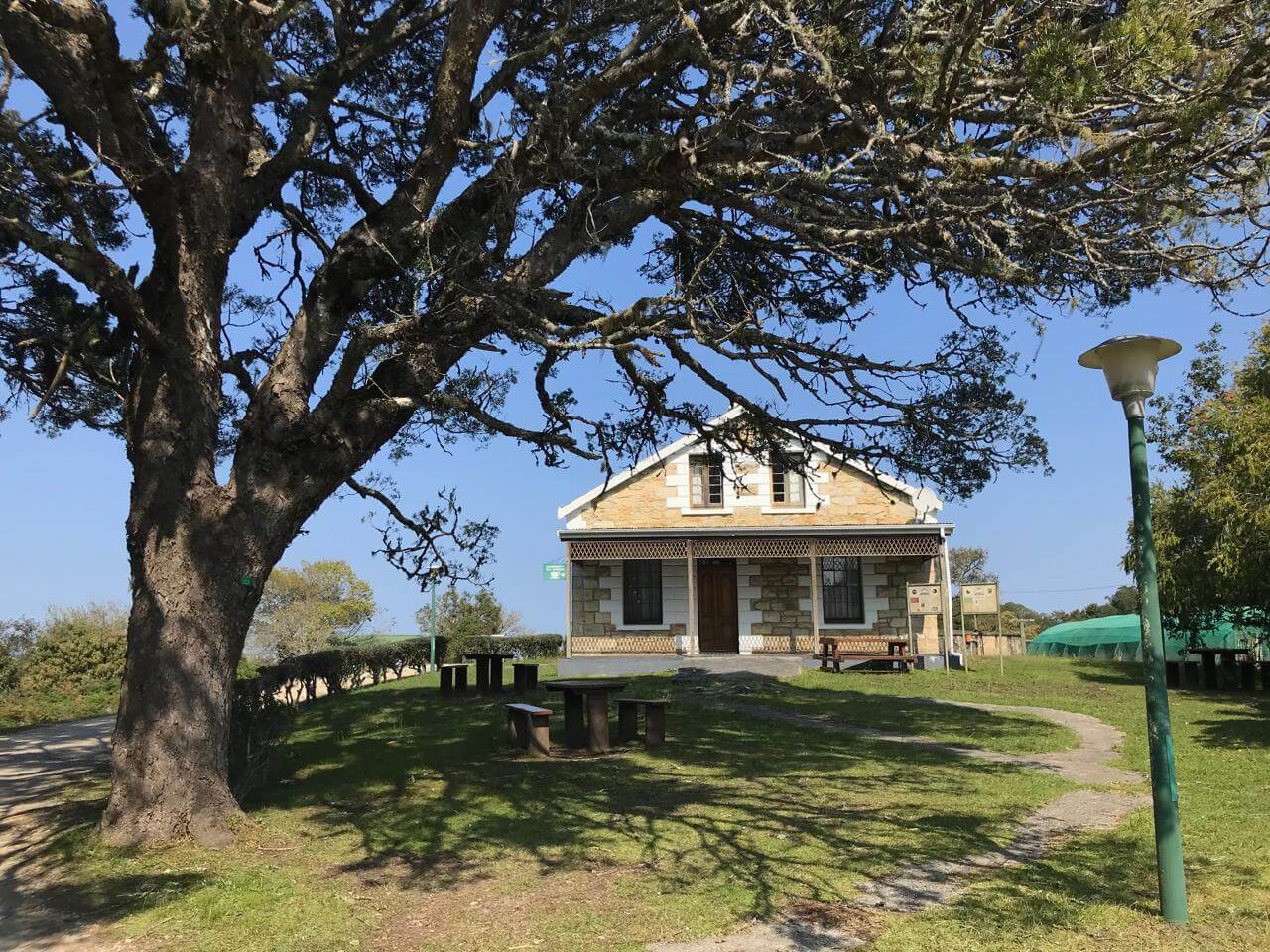
One of the stone forest houses.
The name Knysna is a Khoikhoi word, but its exact meaning is uncertain. It could mean “place of wood” or “fern leaves” – referring to the huge forest that surround Knysna. Today, the Knysna Forests (the country’s largest forest complex) cover only about 568 square kilometres. Even before people started harvesting them, indigenous, evergreen forests were something of a rarity in South Africa…
George Rex settled in the area in 1804 and developed the timber trade by harvesting wood from the indigenous forests. During the 1880s, gold was discovered nearby, leading to a short-lived gold rush. By 1890, most of the gold was mined out, and the timber industry remained the area’s main source of income. Whilst this was lucrative for the residents, it was NOT good news for the trees – or the elephants. The Knysna Forest is the largest indigenous forest in South Africa, featuring (albeit significantly less than before) yellowwood, stinkwood, and blackwood trees. The forest is also home to the beautiful Knysna turaco (lourie).
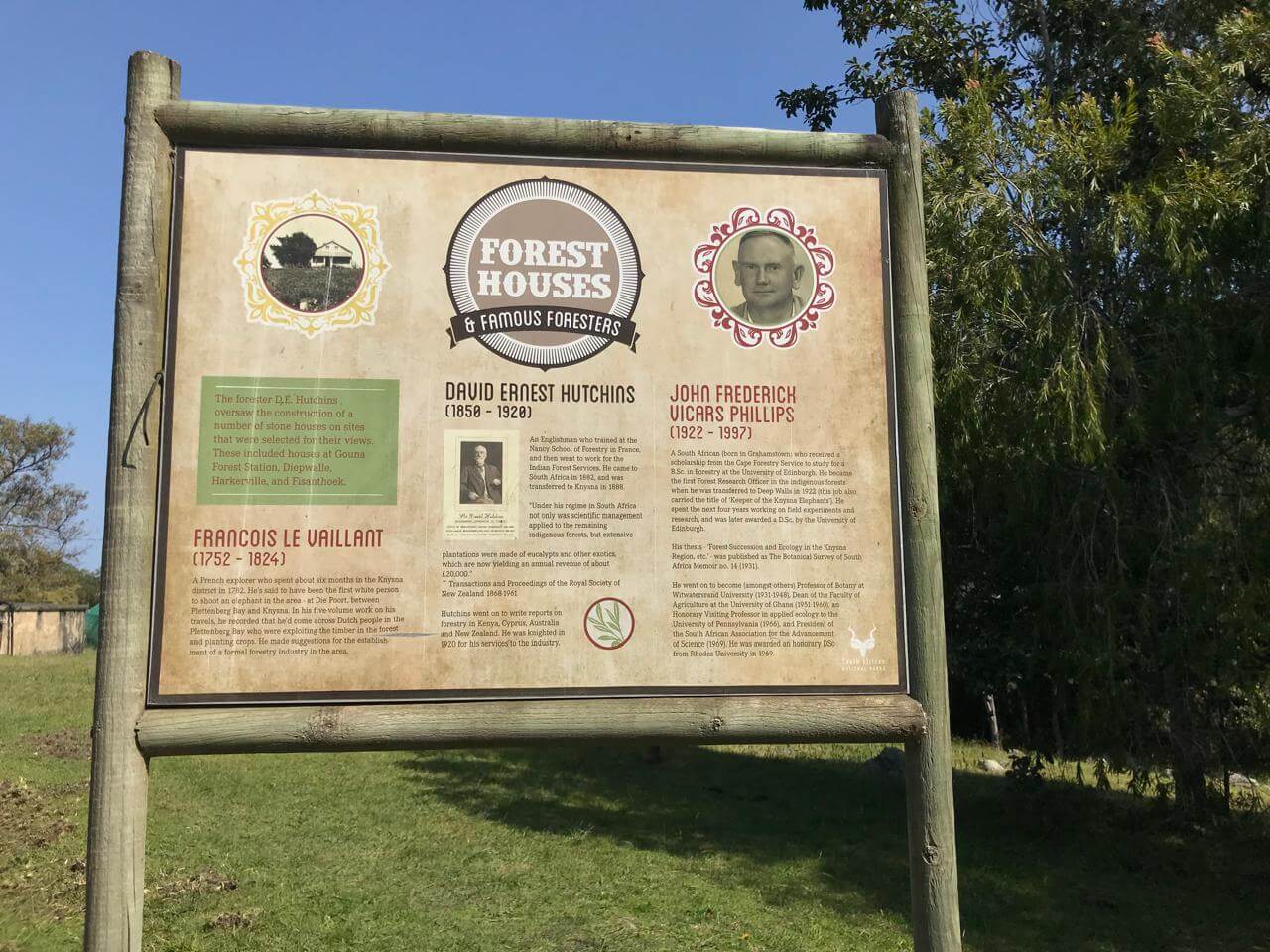
Signage boards have interesting stories to tell.
Back in the day, Knysna had large herds of elephants. Vasco da Gama (the Portuguese explorer) referenced seeing elephants in Mossel Bay when he landed there in 1497. Captain Christopher Harison (the colonial forest service’s Conservator of Forests for the Southern Cape) estimated that there were between 400 and 600 elephants in the Knysna-Tsitsikama area in 1856. Today only a few (some say only one) remain, living deep in the forest.
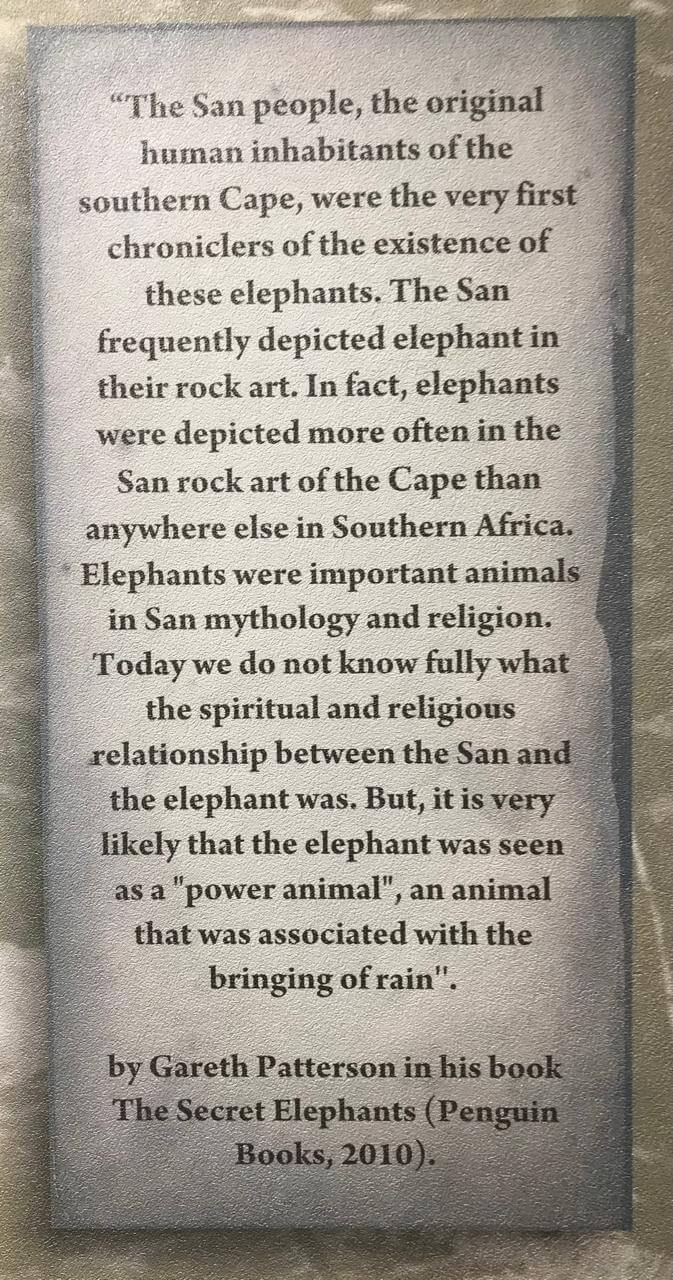
Quote from Gareth Patterson.
The Forest Legends Museum at Diepwalle (Deepwalls) is dedicated to those elephants, and also to the woodcutters of the 19th and early 20th Centuries who harvested the indigenous forests. It’s a lovely little museum – definitely worth a visit. It has three rooms. One depicts the lifestyle of the woodcutters. The second is all about the Knysna elephants – complete with a mounted skeleton of a male elephant that was discovered near the Garden of Eden in 1983. They say that it had died about ten years before it was found – some of you may remember seeing it standing in the window of Knysna Tourism, at 40 Main Street, in the late 1980s. The last room houses a collection of photographs and books about the plants and wildlife of the forests.
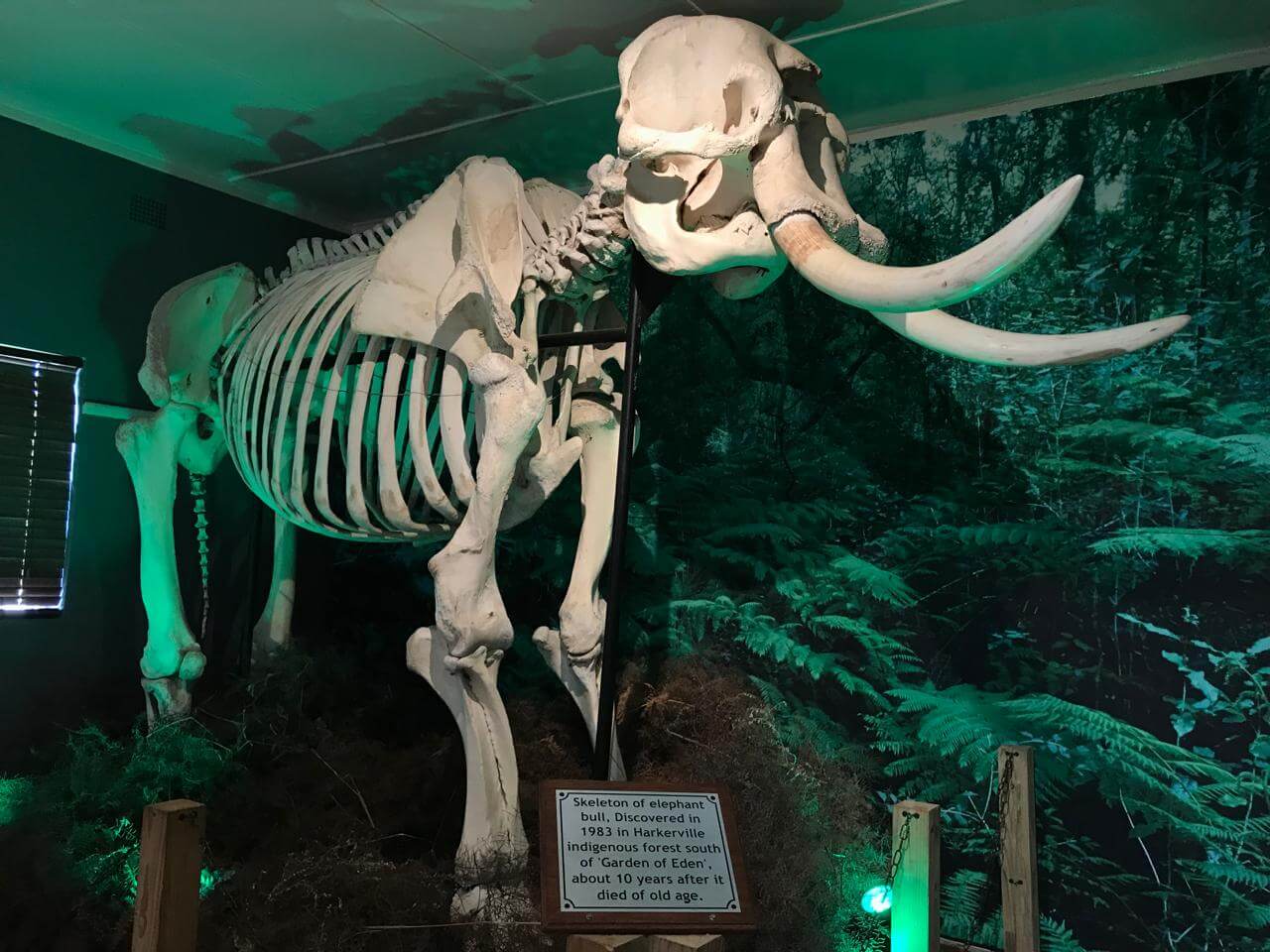
The elephant skeleton that used to live at Knysna Tourism.
Early hunter-gatherers likely had only a slight influence on the forest eco-system. It is said that they lived mostly in caves on the coast during winter and moved inland in summer. There they collected roots, tubers and bulbs, and may have burned fires to drive out the game animals they hunted. It was when the European settlers began logging the forests the real damage began. The indigenous people’s clans were scattered, and many became farm labourers. The elephants were hunted mercilessly…
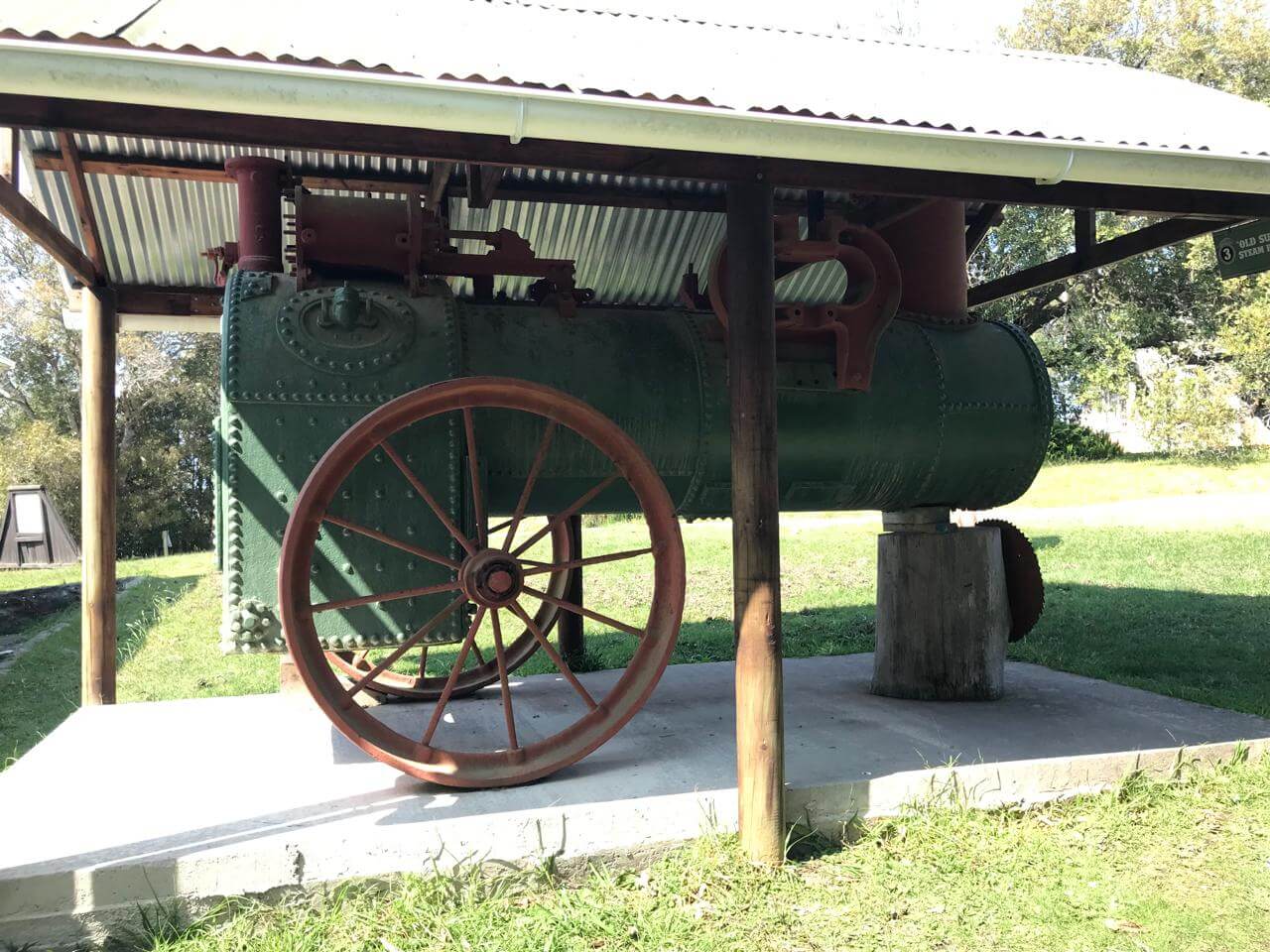
Suzie – the little steam engine.
Trains seem to take on a life of their own – particularly after their retirement. The train that belongs to this beautiful part of the world is known as “Suzie”. This little steam engine was used in the early 1900s for timber hauling and saw milling. Two days a week, the engine was used to provide power for sawing the timber. The rest of the week it was her job to winch logs from the forest. Suzie eventually broke down irreparably in 1920.
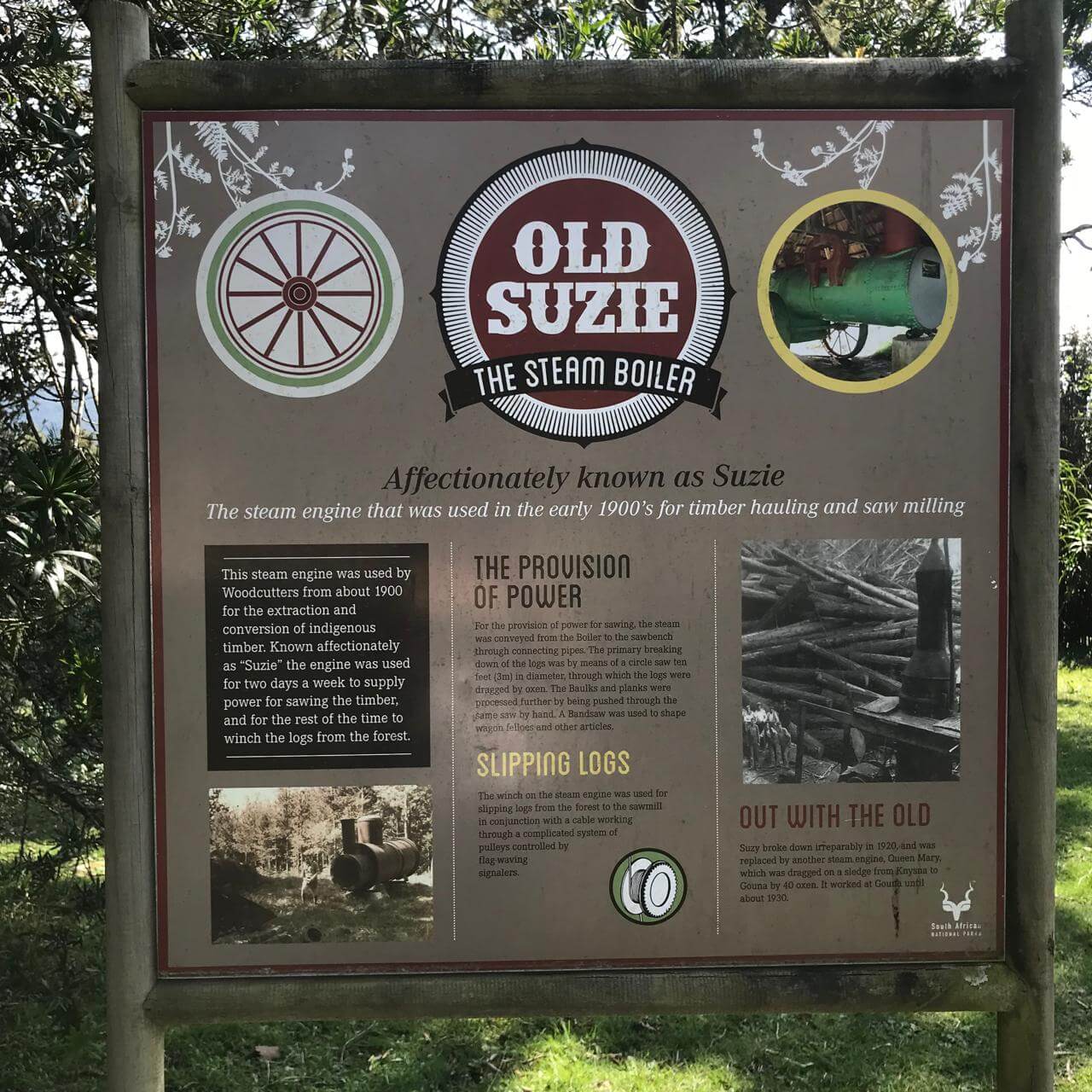
Informative board all about Suzie.
The Forest Legends Museum is situated at the Diepwalle Forest Station, just off the R339 (the approach road to the Prince Alfred’s Pass between Knysna and Uniondale). It’s 16 km from the N2 national road.
Jacqui Ikin & The Cross Country Team
INFO BLOCK:
Dr Naomi Cleghorn ESA Archaeology West Head, Knysna:
https://www.youtube.com/watch?v=GLiU-Zs1PL8&t=225s
