Gremlin Bells
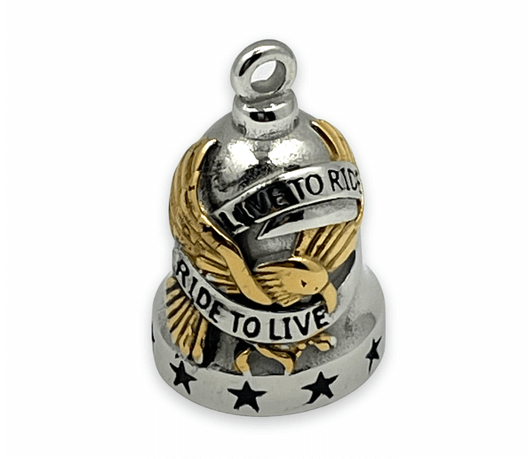
Are you superstitious? Originally, gremlins were imaginary spirits from Royal Air Force folklore during World War II who caused malfunctions in aircraft. A gremlin is defined as “an imaginary, mischievous sprite regarded as responsible for an unexplained problem or fault, especially a mechanical or electronic one” or “a mischievous invisible being, said by airplane pilots in World War II to cause engine trouble and mechanical difficulties”. Today, the term is also used more broadly for any small, troublesome creature or person who causes mischief, as seen in the 1984 movie Gremlins.
Interestingly, as early as the 11th Century AD, Catholics in England and Scotland rang “dead bells” in a funeral procession to ward off evil spirits. Slowly, the practice of using bells as a way to mourn passing souls grew in popularity in the Catholic Church. Interestingly, the use of bells hanging from windows and doors has been used in many cultures to ward off malicious spirits.
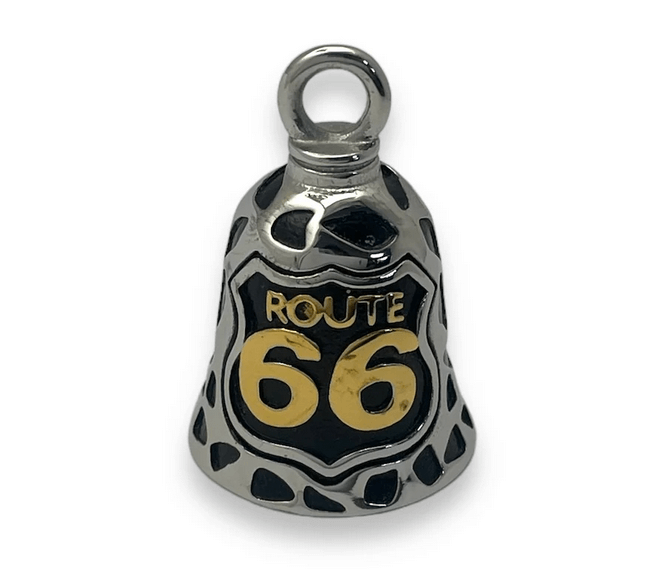
The word “gremlin” was coined in the 1920s, deriving from the Old English, “gremman” or “gremian”, which means to “to vex”. This was when pilots of the Royal Air Force began talking of little creatures that wreaked havoc with their airplanes.
Roald Dahl was a pilot in the RAF during WWII, and he advanced this idea into a children’s book entitled, “The Gremlins“. The book sold 50,000 copies initially with an additional 30,000 later on. Eventually, even the American pilots adopted the gremlin folklore and even claimed to have seen them just before a crash or malfunction. It was enough to convince many pilots to use charms to ward off gremlins, including the centuries-old dangling bell.
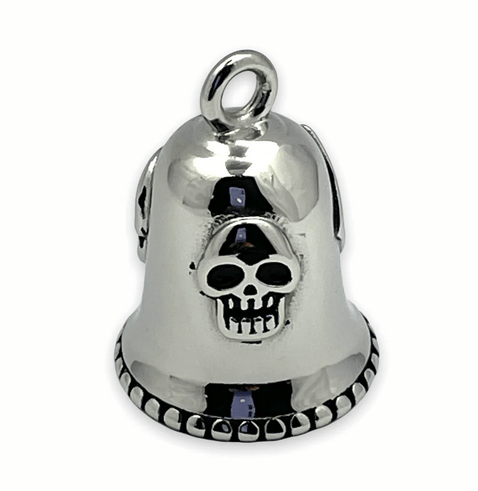
Many RAF pilots took small bells in their cockpits as a form of protection during their missions. These bells were meant to ward off evil spirits and bring good luck. Pilots faced many dangers in the war, from enemy fire, mechanical failures, and awful weather conditions. In the face of such uncertainty, these bells provided a sense of comfort and control. Hanging a bell in the cockpit became a symbolic gesture, representing hope and protection amidst the chaos of combat.
When American pilots returned home from WWII, many took to motorcycles, seeking the same sense of freedom, adrenaline, and brotherhood they had known in the military. They were seeking to continue the wartime camaraderie. Some of them formed clubs, making lifelong friends of their fellow servicemen. They brought with them the “gremlin” myth — the idea that mischievous little creatures caused mechanical problems in aircraft. Hanging a small bell was thought to ward off these gremlins.
According to legend, malevolent spirits are said to haunt the roadways, constantly searching for motorcycles to latch onto and cause trouble. Many riders have heard of mysterious, hard-to-diagnose issues – especially electrical ones – being blamed on “gremlins.” These troublesome entities are believed to be the very same mischievous spirits responsible for wreaking havoc on motorcycles and their riders.
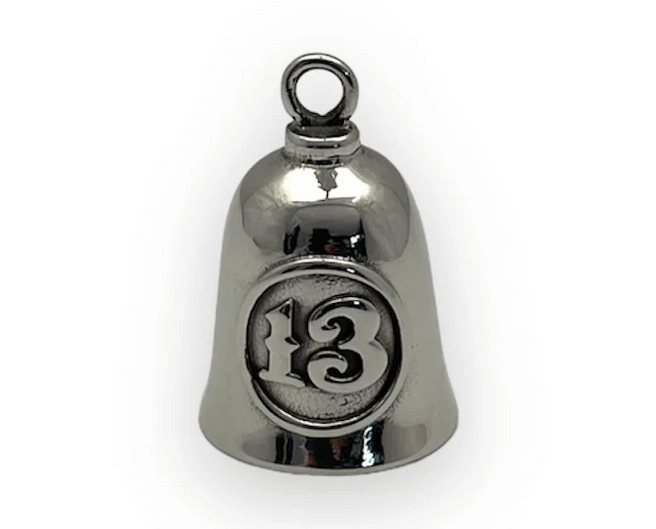
In the way that all things seem to go, and as motorcycle club culture increased in popularity, accessory manufacturers began looking for ways to capitalize and began selling motorcycle bells. As motorcycle clubs grew in popularity, the bell tradition spread within biker culture, symbolizing protection, good luck, and camaraderie among riders. Manufacturers quickly recognized an opportunity and began mass-producing motorcycle bells as accessories. The original belief held that a bell only worked if it was given as a gift, representing goodwill and friendship between riders. This notion that a motorcycle bell had to be given as a gift in order to gain protective powers seemed to discourage sales, however. Manufacturers, ever eager to improve profits, countered by introducing a contrasting myth that a self-purchased bell already has sufficient power, but that a gift-given bell had double power.
Long before motorcycles hit the highway, bells already had a powerful place in human culture. For centuries, they symbolized protection, connection, and communication with the divine. In Christian tradition, church bells were rung to chase away evil spirits, mark sacred moments, and bless communities with protection. Their sound was thought to cleanse the air and keep negativity at bay – a kind of spiritual defence system. Over time, those ancient beliefs evolved, inspiring the folk traditions that eventually put tiny bells on motorcycles.
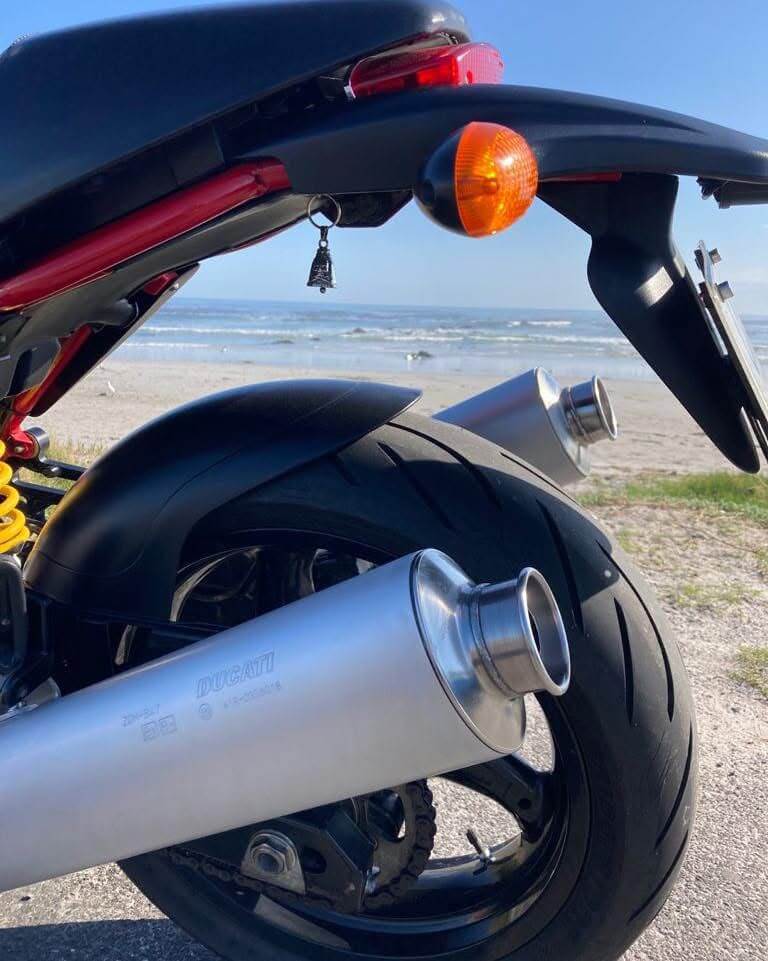
Remember that the bell should be attached to the LOWEST part of the bike…
There are one or two rules you need to follow with a guardian bell… They need to be gifted and not purchased. Their protective powers are believed to be enhanced when given as a gift from a fellow rider or loved one. If the bike changes owners, remove the bell – it is meant for the original recipient. Placement is also important… They should be hung low down on the motorcycle, ideally near the lowest point of the frame or as close to the ground as possible. The practice of placing a gremlin bell close to the ground stems from the folklore that mischievous “road gremlins” jump up from the pavement to cause mechanical failures and bad luck. Placing the bell at the lowest point of the bike ensures it is the first thing these spirits encounter. The constant ringing of the bell also annoys and confuses the gremlins once they are trapped inside its hollow. This drives them insane, causing them to lose their grip and fall back to the road, creating potholes. And last, but not least, when selling a motorcycle, the bell must be removed and kept by the rider. The protection is intended for the person, not the machine. If the rider wishes to give the bell to the new owner, it should be done face-to-face as a separate gift…
And remember… Never ride faster than your guardian angel can fly!
Jacqui Ikin & The Cross Country Team
INFO BLOCK:
Big Dog Steel Gremlin Bells
https://bigdogsteel.co.za/collections/guaradian-gremlin-bells