
Pass the Puffer – I need a hit!
The week between Christmas and New Year always has an ‘Alice in Wonderland’ feel about it. It’s a week where time seems suspended, and we’re in limbo. We felt it was the perfect time to gather some of those stories that cause you to scratch your head and wonder whether they’re true or not… Suspend your disbelief, get in touch with your inner child and let’s explore some rather ‘left of centre’ stories. Down the rabbit hole we go…

Passing the puffer
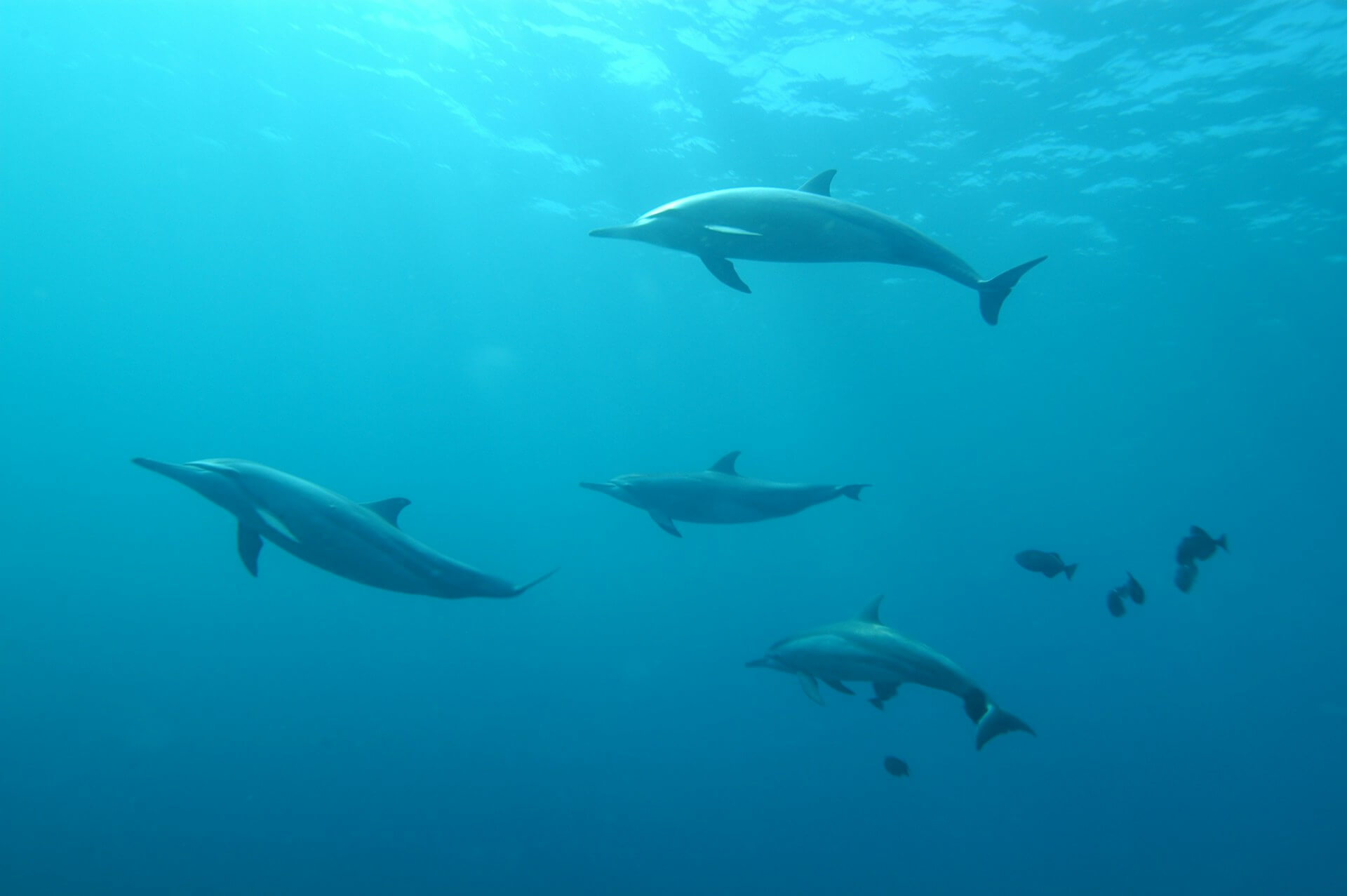
This is especially for those of you at the coast now… Can dolphins get high? The somewhat unexpected answer is a resounding “YES!”. You read correctly… Proper little addicts, choosing to grab a hit for the pure pleasure thereof. And then share the source! Recreational drug use of the highest order.
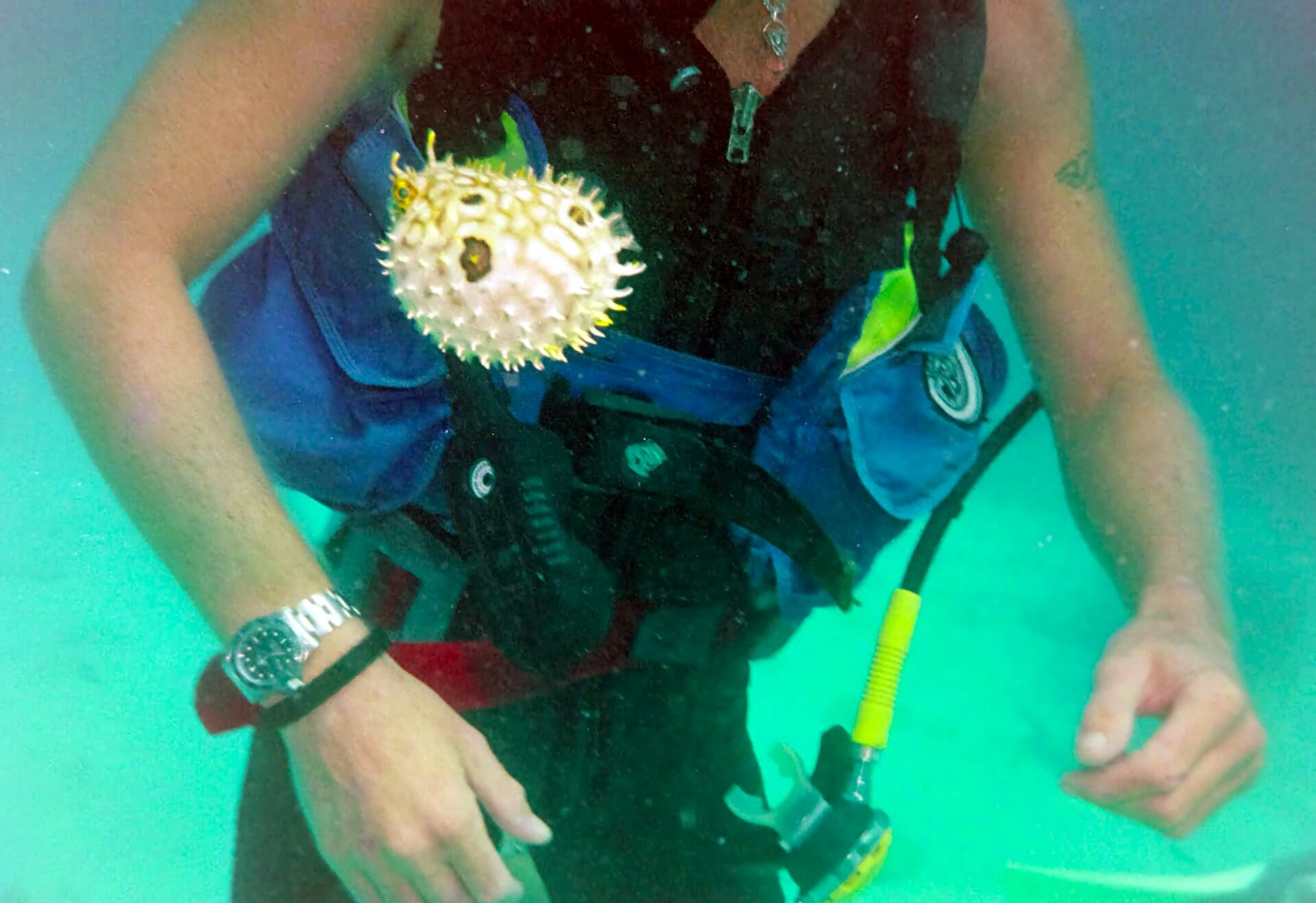
Puffer fish are well-known for their ability to puff themselves up. This defence tactic involves sucking water (and sometimes air) into their stomach, rendering them too large for some of their predators to eat. There are over 190 different species of puffer fish, and all have a chemical called tetrodotoxin in their liver, sex organs, and skin – although some species of puffers are more toxic than others. The toxin is deadly to humans. There is enough poison in one pufferfish to kill 30 adult humans, and there is no known antidote. In small enough doses, however, the toxin seems to induce “a trance-like state” in dolphins that come into contact with it. They carefully chew on the puffer and then pass it between the members of their pod. Watch the video in the info block – it’s fascinating!
Let’s blow bubbles!
Many animals are playful when they are young. However, as they grow up life gets more serious and significantly less play is observed. Like humans, however, many dolphins seem to retain a playful curiosity and sense of fun even after they are grown up. Dolphins have been observed creating and playing with intricate bubble rings.
Sometimes the highest level of brain development in various animals happens during play, and this could be the case for dolphins. It is also possible that what we observe as “play” is in fact, another behaviour – and careful study of this magnificent animal is required to fully understand what is really going on…
Do dolphins sleep?
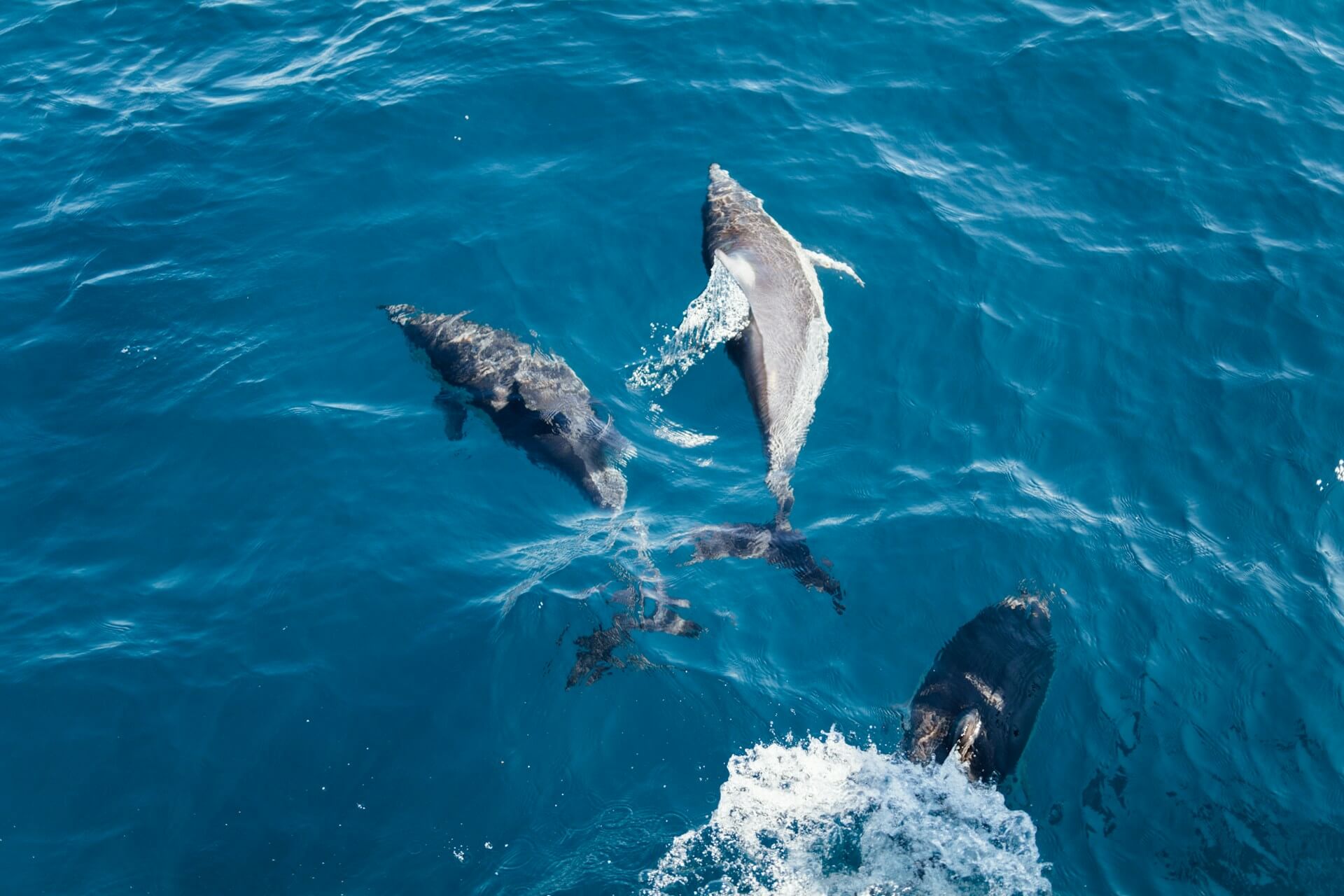
It is very dangerous to fully “sleep” in the ocean. You risk attack by predators – or even just losing your pod. So, dolphins alternate which half of the brain is sleeping periodically so that they can get the rest they need without ever losing consciousness. When sleeping, dolphins often rest motionless at the surface of the water, breathing regularly or they may swim very slowly and steadily, close to the surface.
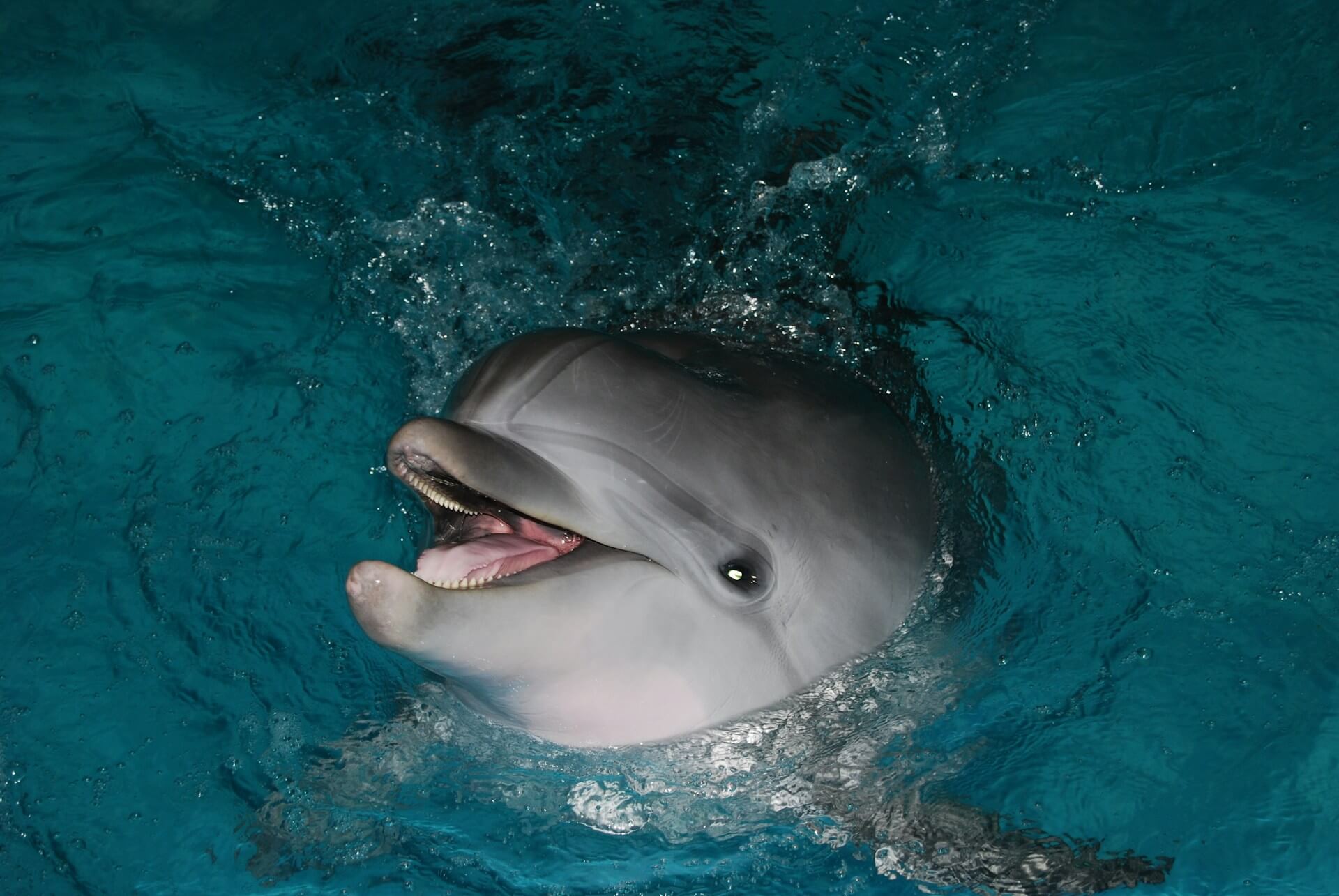
One of life’s greatest pleasures is to swim with wild dolphins. I have had the pleasure twice, once in Plett and once in Sodwana. On both occasions they approached us – which is the way it should be. In Plett, they joined us in the waves when we were swimming. In Sodwana they chose to join us while we were scuba diving. Beyond enjoying their presence in the water with you, by choice, it is also enchanting to listen to them… Dolphins have some of the most elaborate acoustic abilities in the animal kingdom. They make a variety of sounds including whistles, squawks, clicks, barks, squeaks, moans, groans and yelps.
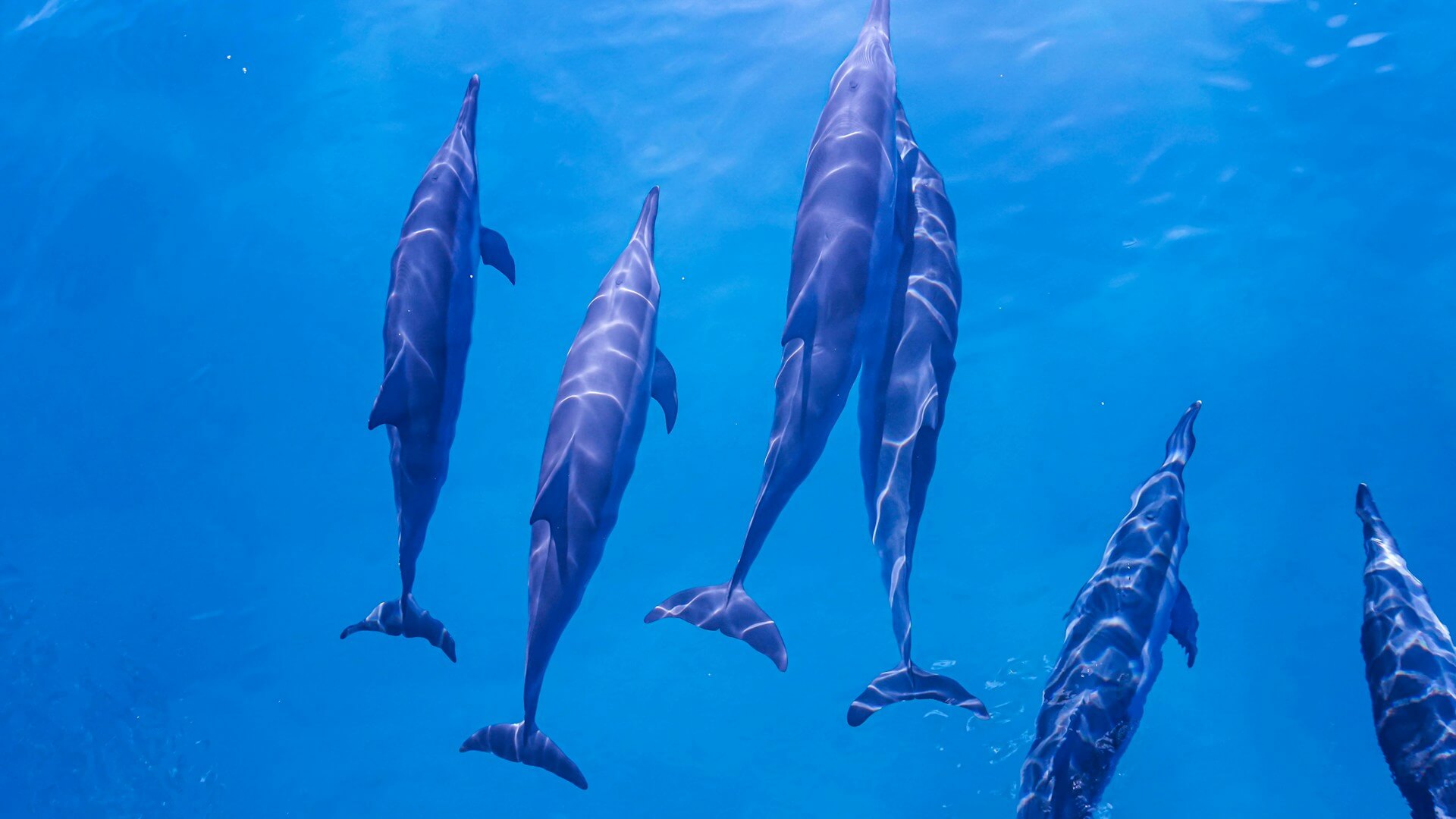
PLEASE NOTE: swimming with dolphins in South African waters (and many other countries) is strictly illegal in terms of the Marine Living Resources Act (legislation was gazetted in 1998). In terms of the Act it is also illegal to advertise these tours – even if they are outside South Africa. In 2017 the authorities reviewed the process of obtaining permits – see info box. We urge you to do the responsible thing by investigating the company facilitating the activities – ask to see their permit before booking. This is all done to protect our wildlife resources…
Scientific studies suggest that the feeding and nursery habits of dolphins are disturbed when people swim with them – so please do not have any dealings with tour operators who offer this activity illegally. Legally, recreational vessels may not intentionally approach a whale or dolphin within 300m. If the animals approach a vessel of their own accord, the boat operator should move away slowly at a “no-wake” speed. If a dolphin approaches you in the water, of their own accord, do not engage, pursue, or otherwise interact with the dolphin. Just observe. When all is said and done, they are wild creatures and should be treated accordingly – you (hopefully) wouldn’t choose to interact with a wild lion…
Jacqui Ikin & The Cross Country Team
INFO BLOCK:
Allocation process for boat-based whale watching and white shark cage diving operating permits.
https://www.dffe.gov.za/allocation-process-boat-based-whale-watching-and-white-shark-cage-diving-operating-permits
“Know the rules”. A useful booklet for taking care of some of our marine life.
https://naturesvalleytrust.co.za/wp-content/uploads/2023/06/Recreational-Vessels_rules-and-regulations.pdf
POLICY ON BOAT-BASED WHALE AND DOLPHIN WATCHING:
https://www.dffe.gov.za/sites/default/files/Pdf-Files/guidelines-and-policies/mlra_policy_g31209gon722_0.pdf
Dolphins purposely ‘getting high’ on pufferfish:
https://www.google.com/search?client=firefox-b-d&q=dolphin+ger+hugh+on+pufferfish#fpstate=ive&vld=cid:a7104b24,vid:msx3BAhIeQg,st:2
Dolphins Play Catch with a Pufferfish!
https://www.youtube.com/watch?v=0T5aGLybXEs
Dolphin blowing bubble rings
https://www.youtube.com/watch?v=72NdY9sZ8Wk&t=17s
Dolphins React to Bizarre Bubbles | Ocean Giants | BBC Earth
https://www.youtube.com/watch?v=WLhaPQvCExs
Dolphins trick fish with mud “nets” | One Life | BBC
https://www.youtube.com/watch?v=bzfqPQm-ThU
The advanced hunting strategy of a dolphin – The Wonder of Animals: Episode 9 – BBC
https://www.youtube.com/watch?v=-xm9PjKdf00
Dolphins Use Stingrays to Hunt Octopus | Ocean Giants | BBC Earth
https://www.youtube.com/watch?v=7g3wWgbYtMI
Dolphins sleep with just one half of their brain!
https://www.youtube.com/watch?v=JXN-1MRcIeY

