The Kaleidoscope that is Marrakesh
When a place you have travelled to has touched you deeply, memory returns to it like a kaleidoscope turning in the light. Fragments of moments – an unexpected view, a colour, a scent, a fleeting scene – shift and rearrange themselves in the mind. Certain images settle there, luminous and enduring, and whenever the place is recalled, they rise again, bright and sudden, shaping the memory of that landscape.
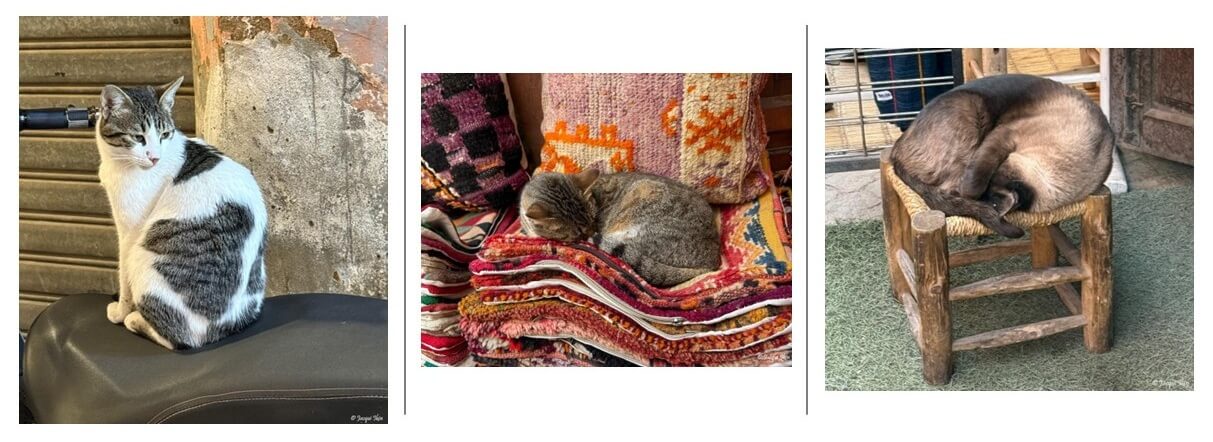
Whilst I remember seeing perhaps a single dog, the Cats of Marrakesh were plentiful and well looked after. In Marrakesh, cats are as much a part of the city’s rhythm as the call to prayer. They slip silently through the labyrinth of the medina, appearing in shafts of sun, curling on tiled thresholds, or watching the theatre of the souks with calm, ancient eyes. Some perch on baskets of oranges, others lounge beneath café tables, perfectly at ease amid the swirl of merchants, travellers, and motorbikes.
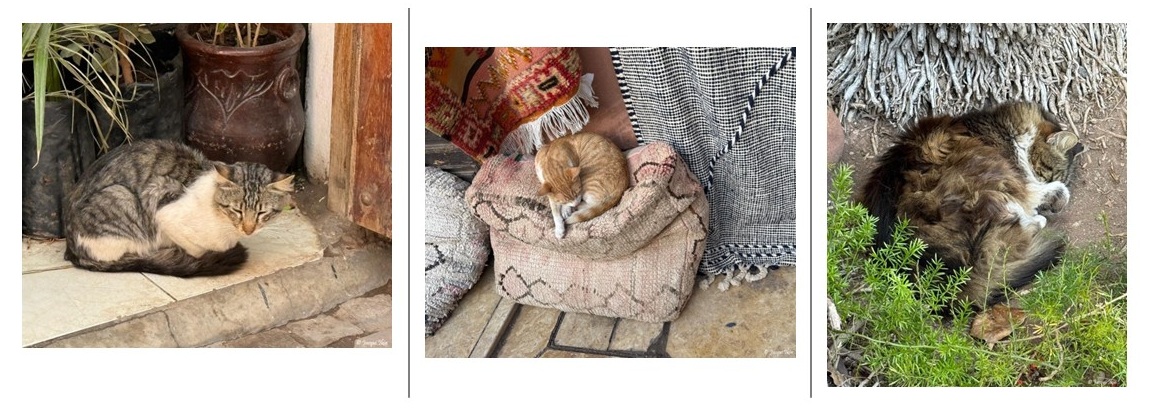
Their presence is not accidental. In Moroccan culture, cats are traditionally treated with gentleness and respect. Islamic tradition holds a special regard for them; stories of the Prophet Muhammad’s affection for cats are widely told and harming them is considered unkind and dishonourable. As a result, Marrakesh has long been a city where cats are tolerated, fed, and often quietly looked after by shopkeepers and residents.
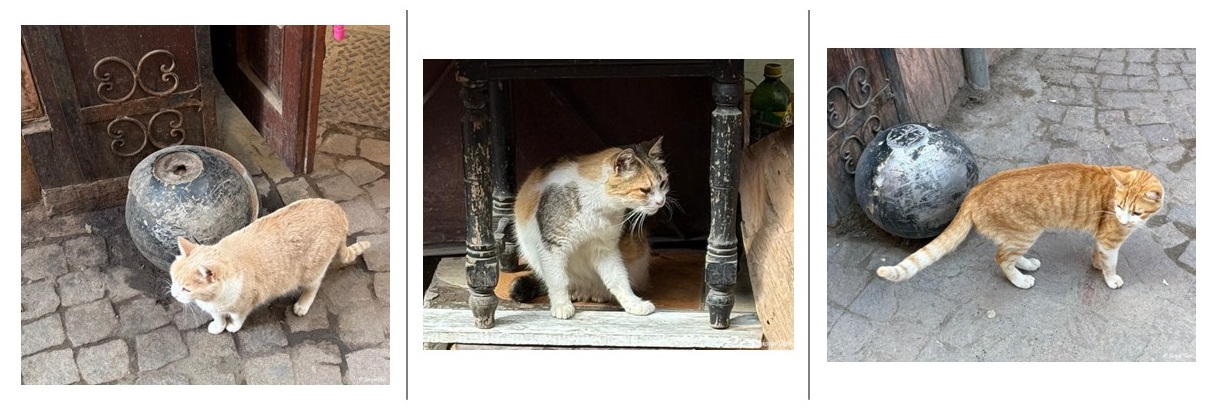
Many of the cats are semi-wild, living in loose colonies around food sources – fishmongers, markets, and riads. They move with an air of quiet independence, neither wholly domestic nor truly feral. Visitors often notice how they seem to belong effortlessly to the architecture itself: draped across warm stone, framed by carved wooden doors, or slipping through hidden alleys known only to them.
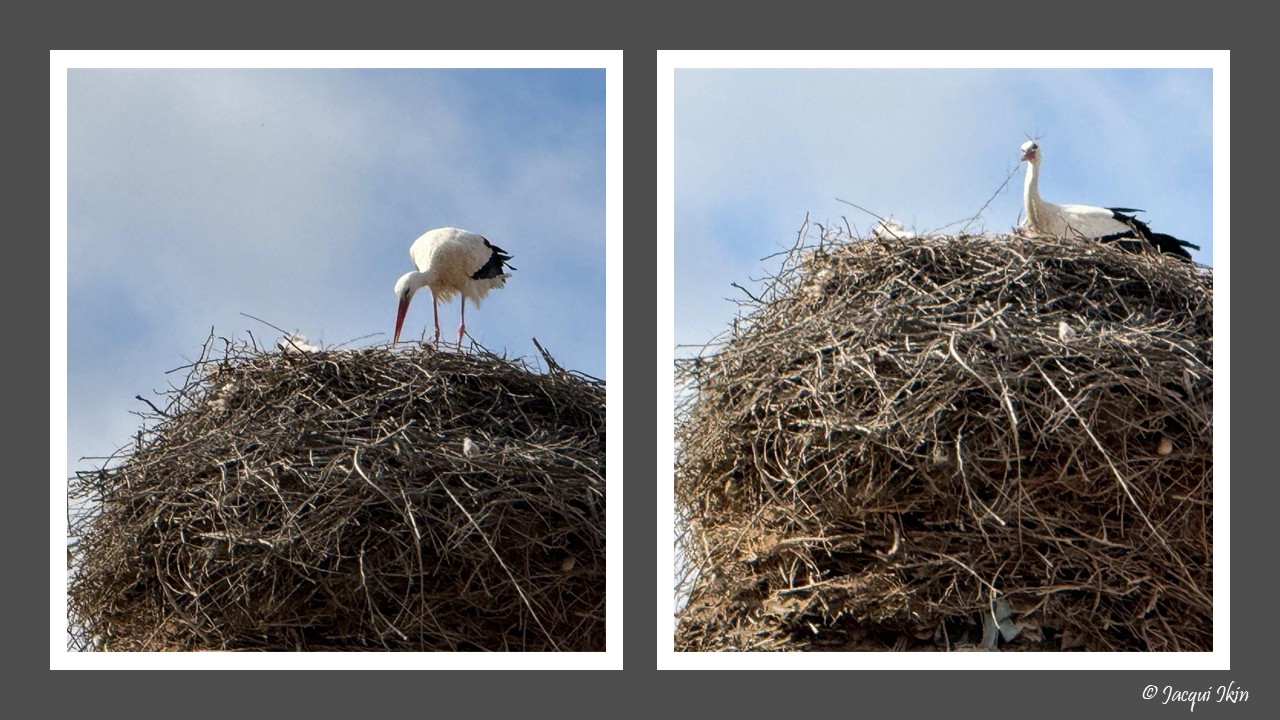
White storks (Ciconia ciconia) have nested in Marrakesh for centuries, their enormous wings black-tipped against brilliant white, moving with a slow, almost ceremonial grace above the medina. Each spring they return from long migrations across Europe and Africa, gliding over the Atlas foothills before settling on ancient walls and rooftops. Morocco hosts both local, year-round residents and migratory visitors from Spain, France, Germany, and even as far as Poland. Some stay through winter, while others pass through en route to sub-Saharan Africa, following land-based thermals along eastern and western routes through the Bosphorus or Gibraltar to conserve energy and avoid long water crossings.
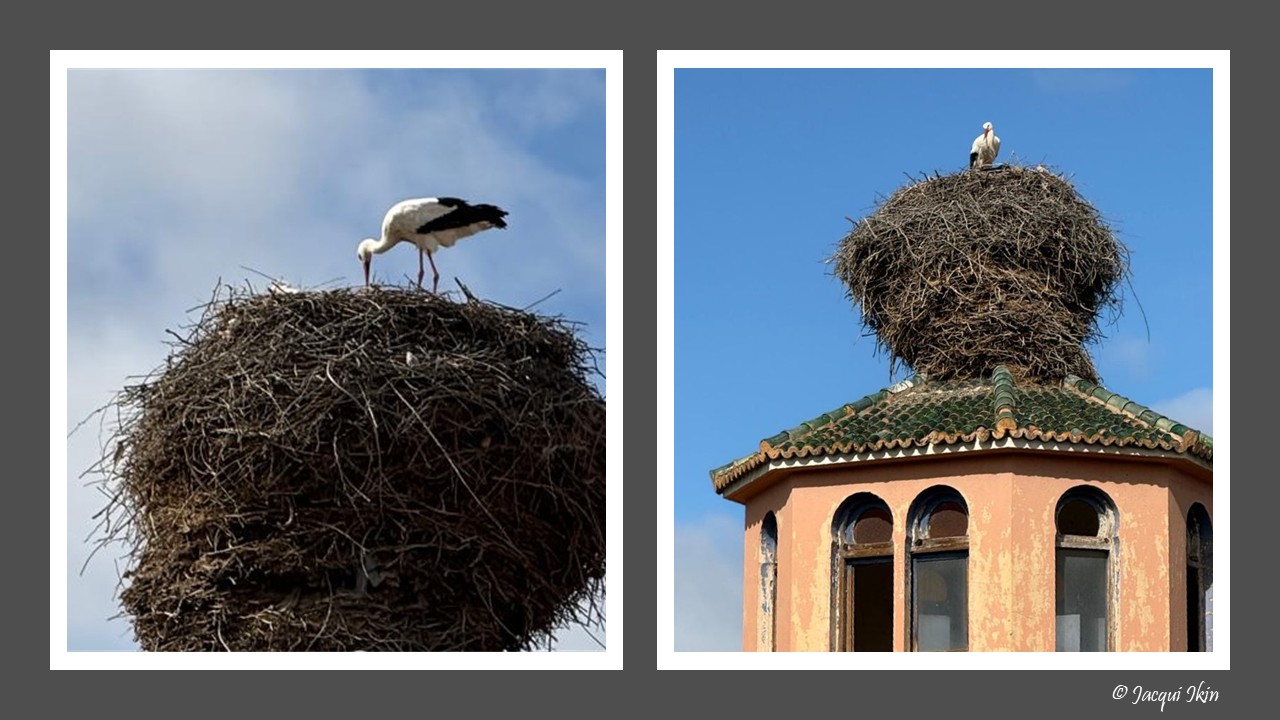
For Marrakesh residents, storks are more than passing birds. Steeped in folklore, storks (known as Bellarj) are believed to embody the souls of departed travellers or scholars, or to represent marabouts – holy figures in human form. Their presence on rooftops signals prosperity and good fortune, and harming them is considered a grave misdeed, with tales warning of severe consequences (like a three-month prison sentence) for those who do. In this way, storks are both guardians and omens, silently marking the rhythms of the city and the passing of the seasons.
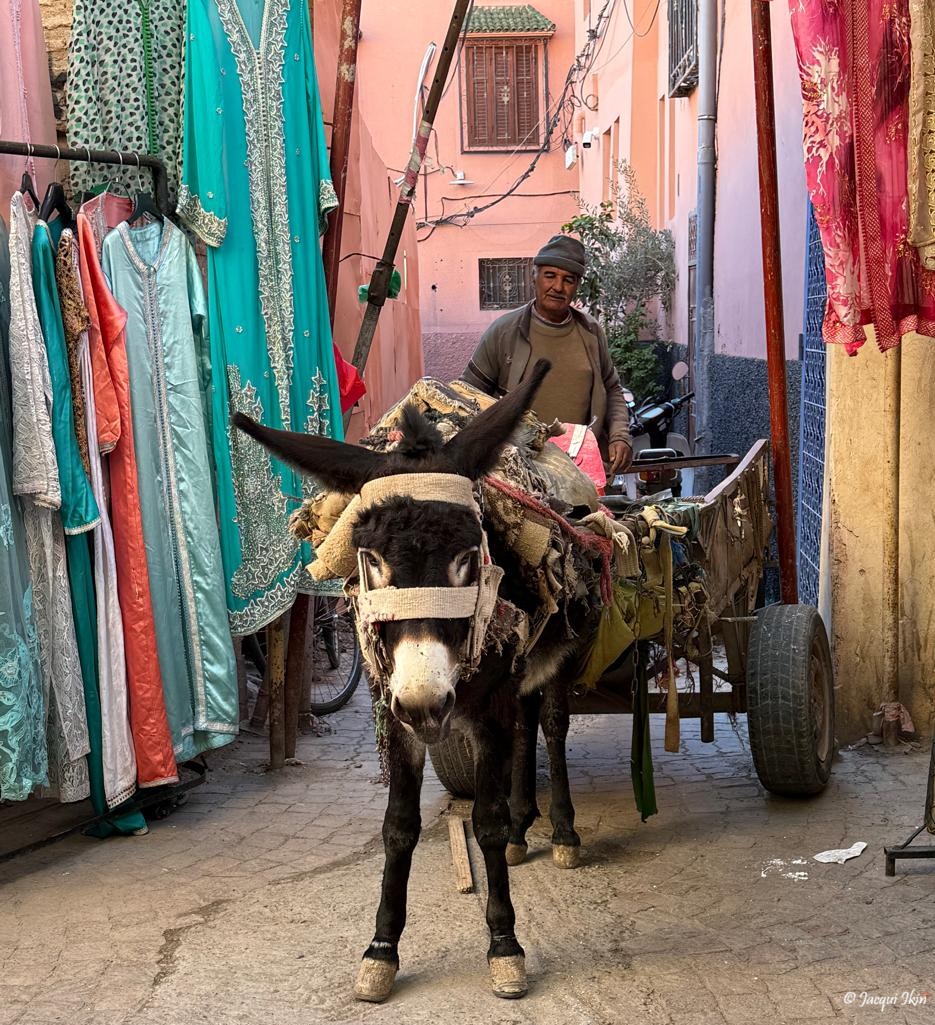
As you wander through the winding streets of the Marrakesh Medina, you quickly realize that the city’s bustling life is shared not just by people, but by donkeys as well. These steadfast animals form an essential part of the Marrakesh workforce, particularly in the narrow lanes of the Old Town, where carts and vehicles cannot pass. Here, materials for construction and goods for markets rely on the strength of donkey-drawn carriages, making these quiet companions indispensable.
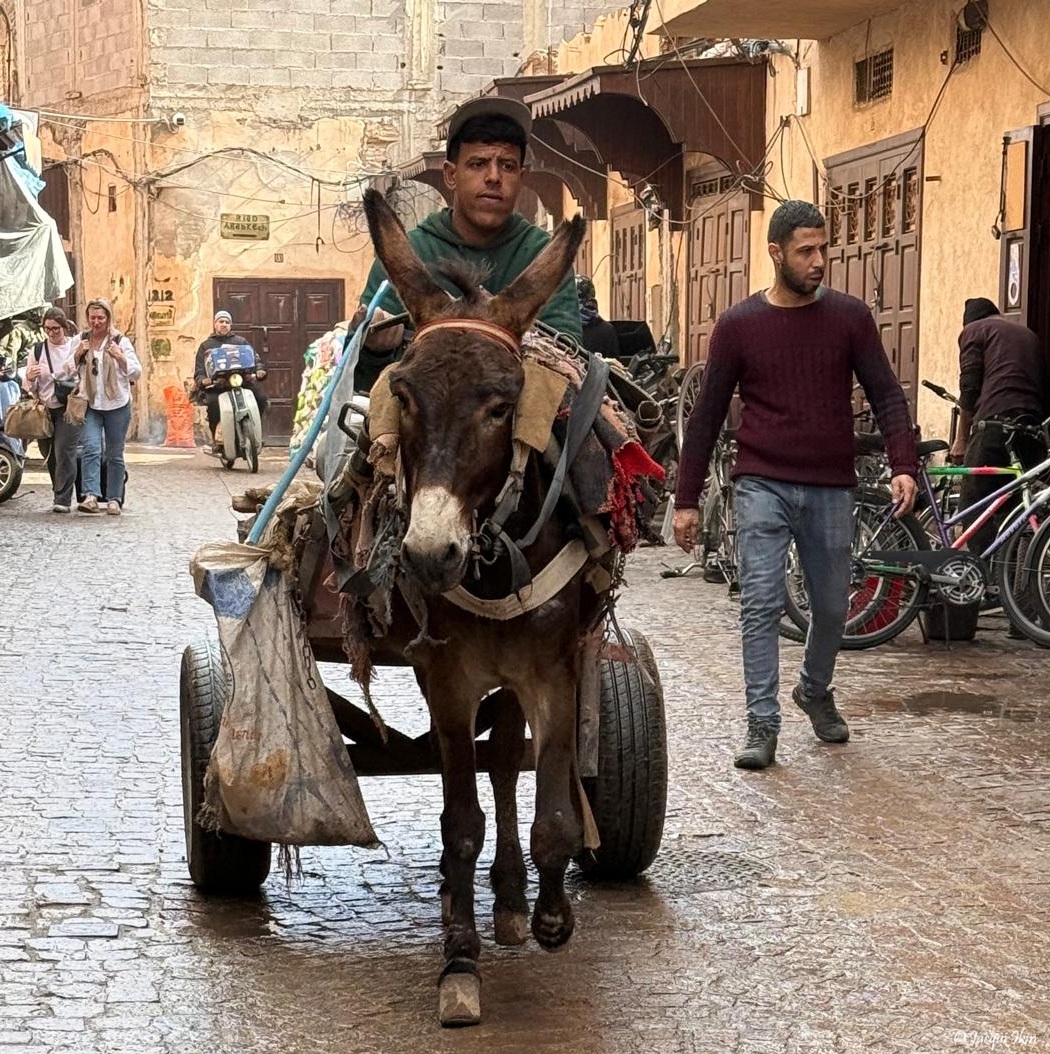
Tourists often pause at the sight of donkeys bearing heavy loads or swatting at the persistent flies, feeling a pang of concern. Yet for their owners, these animals are vital sources of livelihood, and their care is paramount. Many donkeys receive attentive feeding, grooming, and veterinary care, with clinics such as SPANA operating in the city to safeguard their wellbeing. The donkeys are small, with shoulders reached only to a human waist, and delicate hooves. Despite their size, they carry their duties out with quiet dignity, a humble yet indispensable presence threading through the heart of the Medina. I didn’t see any donkeys with obvious signs of abuse or wounds, but my heart nonetheless went out to these little beasts of burden…
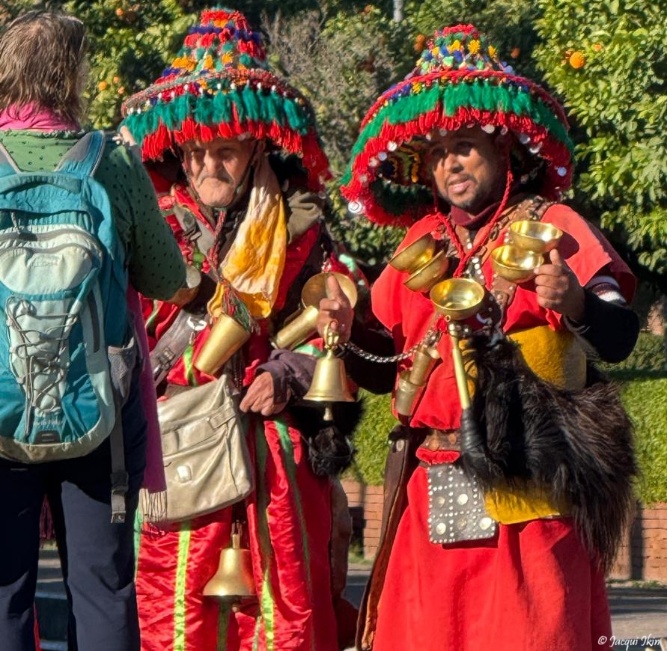
In Morocco, the traditional water seller is known as a Garrab (also spelled Guerrab or Lgarab). Dressed in colourful robes and often wearing a wide-brimmed hat, the Garrab carries water in leather goatskin bags, offering refreshment to locals and travellers alike while calling out through the square in a rhythmic, melodic chant. They are not merely vendors; they are living symbols of centuries-old tradition, connecting the rhythms of daily life with the city’s vibrant history. In this modern time, it’s more about posing for photographs for which they are paid…
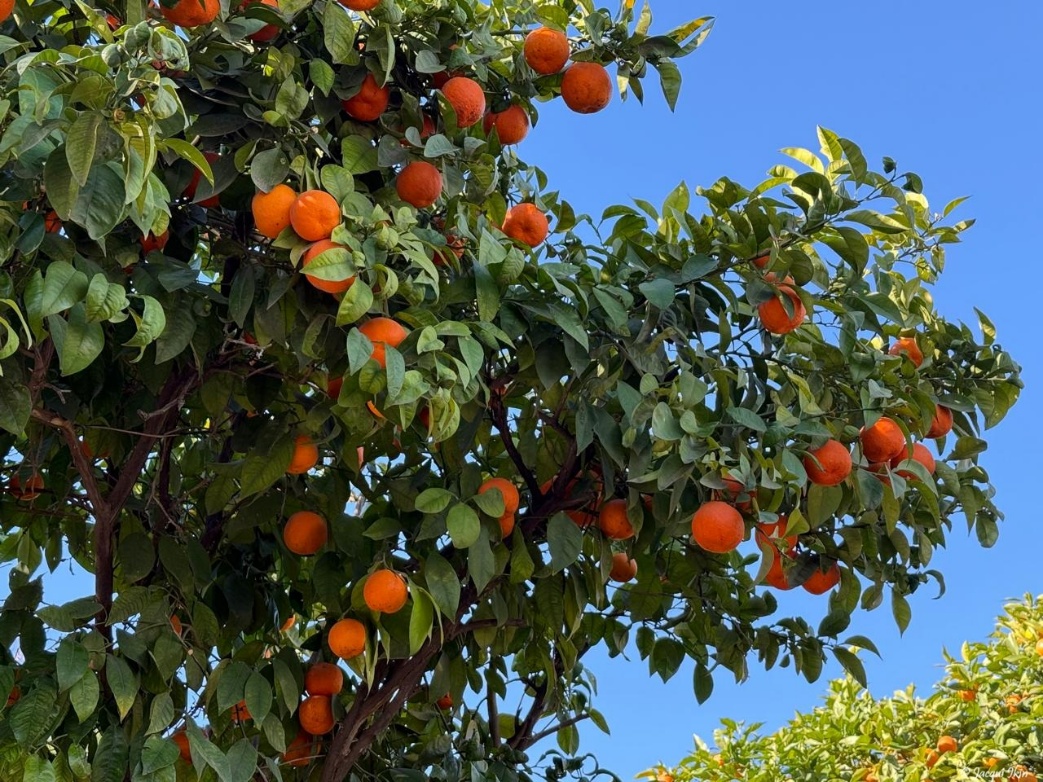
Everywhere in Marrakesh, orange trees line the streets, their glossy leaves and radiant fruit a constant presence. Against the deep blue of the sky, the vibrant oranges gleam with a quiet brilliance, a simple yet profound reminder of the city’s beauty woven into everyday life. Though orange trees are everywhere in Marrakesh, locals rarely eat the fruit that decorates the streets. These are bitter oranges (Citrus aurantium), often called Seville oranges, whose intense sourness and sharp bitterness make them unpleasant raw. Planted primarily for their beauty, fragrant blossoms, and generous shade, the trees serve more as living ornaments than as a source of food, perfuming the city while offering a splash of vibrant colour against the ochre walls and blue skies.
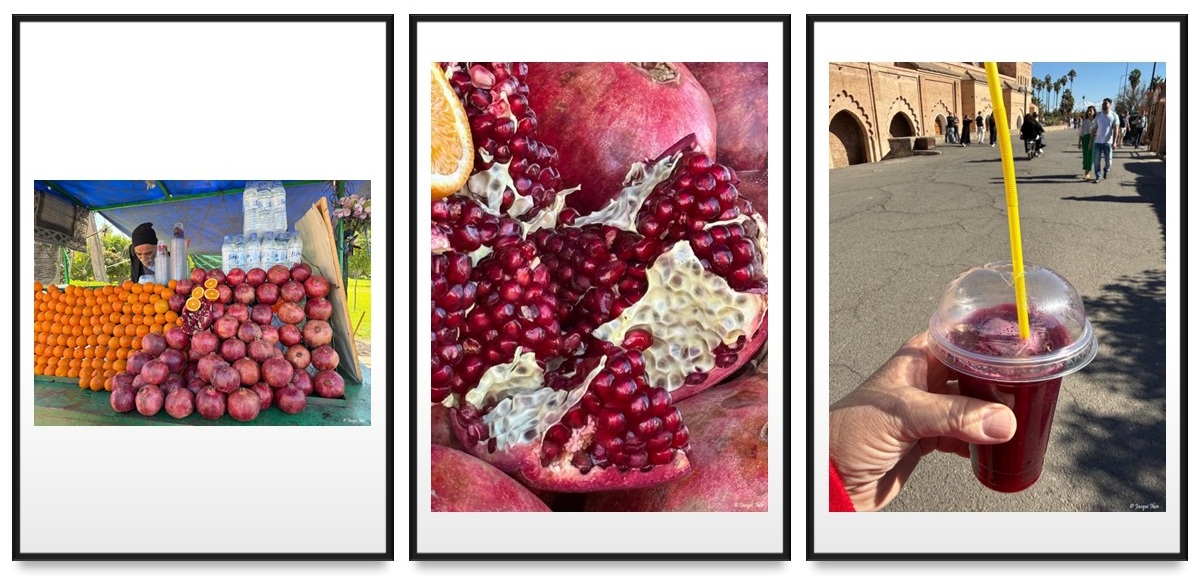
In Marrakesh, the ruby-red arils of the pomegranate are pressed into sweet, tart juice at bustling street stalls and market corners. Each glass glistens like a liquid jewel, offering a refreshing burst of flavour that mirrors the city’s vibrant energy. More than just a drink, pomegranate juice is a sensory emblem of the Medina, carried in the hands of locals and travellers alike. Freshly squeezed and prepared on-demand, it is especially iconic on the streets and in the souks, where vendors hand-press each fruit to ensure purity and flavour. Priced around R30, this antioxidant-rich juice offers a sweet, sour, and tangy respite – a simple, invigorating pleasure amid the city’s heat and hum.
Marrakesh – a riot of colour, scent, and sound – lingers in the senses long after its streets have faded from view, a city that lives as vividly in memory as it does in the sunlit dust of its alleys.
Jacqui Ikin & The Cross Country Team