
Strange Christmas Traditions
Stats will inform you that “around 85% of South Africans identify as Christian, making it the dominant religion”. With the Christian religion comes “Christmas”, together with some rather interesting traditions. It fascinates me how these traditions come from so many different countries and cultures around the world. What is even more interesting, is that each “origin” seems to have its own inception, which often pre-dates Christianity. So, let’s explore a couple…

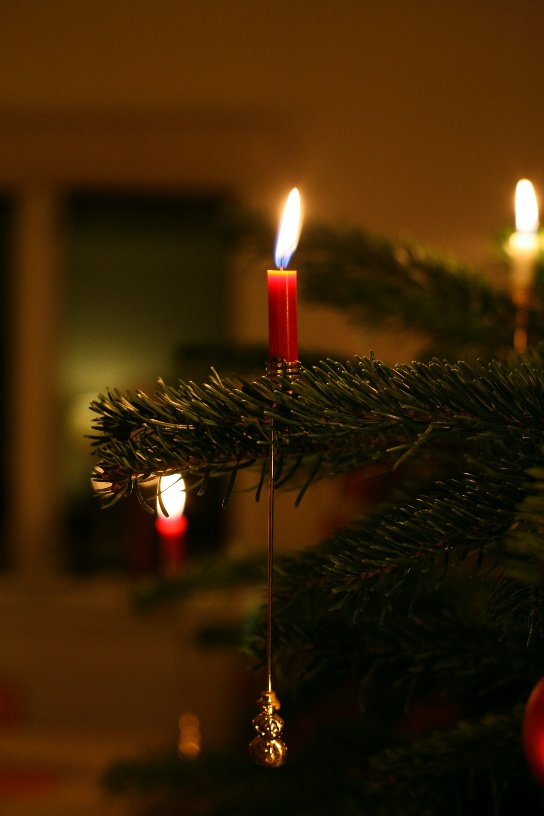
Thanks to international media, we have all seen the awful forest fires that occur like clockwork. Most of them seem to be in pine forests. Have you ever asked yourself why pine trees burn so fast? Well, it’s because they’re softwoods loaded with flammable resins and volatile oils (like turpentine) that ignite easily. When combined with a low density and high sap content, quick-starting, intense fires are created. Which is why it seems particularly strange that candles were used to decorate Christmas trees!
In ancient times, winter was a season of uncertainty and fear. Food stores dwindled, daylight faded early, and the bitter cold made survival difficult. Amid this harsh landscape, evergreens (trees that remained lush and green throughout the year) appeared almost magical. Unlike deciduous trees, they did not wither or shed their leaves in winter, and so they came to symbolize enduring life, strength, and renewal.
Across many ancient cultures, fir, pine, and spruce were believed to hold protective powers. Their persistent greenness was associated with the sun, rebirth, and the promise that the darkness of winter would eventually give way to spring. This made evergreens powerful symbols during midwinter festivals.
Long before Christianity, winter celebrations across Europe and beyond embraced evergreen plants. Germanic Yule featured evergreen branches and trees to honour the returning sun and to protect homes from wandering spirits of the long winter nights. Roman Saturnalia incorporated greenery to celebrate renewal and the loosening of winter’s grip. Celtic solstice rites used holly, ivy, and evergreen boughs in rituals representing resilience, fertility, and the eternal cycle of nature. The ancient Egyptians worshipped a god called Ra, who had the head of a hawk and wore the sun as a blazing disk in his crown. At the winter solstice, when Ra began to recover from his illness, the Egyptians filled their homes with green palms and papyrus reeds to symbolize the triumph of life over death.
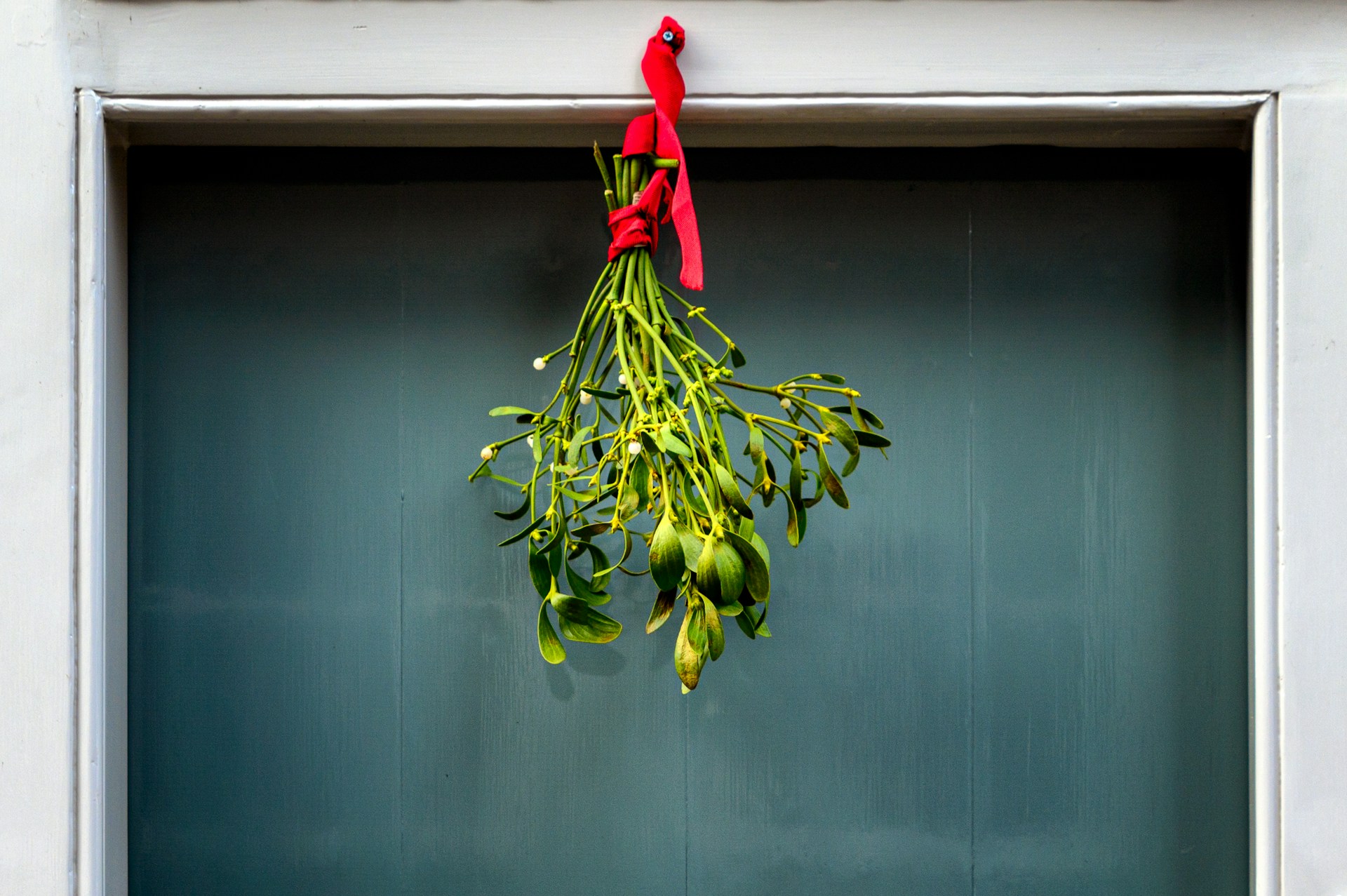
People decorated their homes, communal spaces, and sacred sites with evergreen boughs not only for beauty but also as tokens of protection, meant to ward off evil spirits, illness, and misfortune. These customs formed a deep cultural memory — one that endured even after Christianity spread through Europe. Over time, these ancient practices blended with Christian symbolism, ultimately shaping the Christmas traditions we know today. The mistletoe tradition blends pagan beliefs in life and peace (Druids, Norse myths) with Victorian customs of love and fertility, evolving from ancient winter solstice rituals where it symbolized peace, prosperity, and magic. Druids saw it as sacred, the Norse connected it to the god Baldur’s revival (leading to love pledges), and later, Victorian England popularized the kissing custom, adding rules like removing a berry for each kiss.
Germany is credited with starting the Christmas tree tradition as we now know it. By the 16th century, sources record devout Christians bringing decorated trees into their homes. Some built Christmas pyramids of wood and decorated them with evergreens and candles if resources were scarce. This practice was extremely dangerous, with dry branches and wax candles often leading to devastating house fires.
It is a widely held belief that Martin Luther, the 16th-century Protestant reformer, first added lighted candles to a tree. According to a common version of the story, walking home one winter evening, Luther was awed by the stars twinkling amidst evergreens. To recapture the scene for his family, he erected a tree in the main room and wired its branches with lit candles.
Fortunately, electric lights replaced candles on Christmas trees, primarily for safety (as real candles posed a severe fire hazard), but also due to convenience, increased affordability and the promotion of electricity by pioneers like Thomas Edison, making this a safer, brighter, and more accessible holiday decoration standard by the mid-20th century. In 1882, Edward H Johnson (a partner of Thomas Edison), created the first string of electric lights for a Christmas tree, showcasing it with red, white, and blue bulbs.

The history of decorative baubles or ornaments also dates back to 16th-century Germany, where it was a tradition to decorate fir trees with apples, nuts, and other fruits during the holiday season. These decorations served as a reminder that spring and warmer weather would come again.

The origin of Christmas stockings comes from the legend of St Nicholas, the inspiration for Santa Claus, who secretly helped a poor man by dropping bags of gold coins down his chimney, with the gold landing in stockings hung by the fire to dry. This act of anonymous generosity sparked the tradition of children hanging stockings (or shoes) hoping for gifts from the benevolent saint, evolving from simple items to the festive, filled socks we know today, often with treats like fruit, nuts, and small toys.

Saint Nicholas of Myra (traditionally 15 March 270 – 6 December 343), also known as Nicholas of Bari, was an early Christian bishop of Greek descent from the maritime city of Patara in Anatolia. The tradition of Santa Claus began with this historical figure, who was the patron saint of sailors, merchants, archers, repentant thieves, children, brewers, pawnbrokers, toymakers, unmarried people, and students. A generous bishop known for secret gift-giving, his legend merged with older folklore (like Norse myths of gift-giving gods) and Dutch traditions (Sinterklaas). Dutch settlers brought Sinterklaas to America, where his name morphed into “Santa Claus,” and 19th-century poems like “‘Twas the Night Before Christmas” solidified his modern image as a jolly, portly man in a red suit delivering gifts, an image later popularized by advertising. Leaving cookies and milk for Santa—and perhaps a few carrots for his reindeer—took off as an American holiday tradition in the 1930s, during the Great Depression. In that time of great economic hardship, many parents tried to teach their children that it was important to give to others and to show gratitude for the gifts they were lucky enough to receive on Christmas.

Christmas crackers began in the 1840s with London confectioner Tom Smith, inspired by French bonbon sweets wrapped in paper; he added mottos, then the “snap” (a friction-activated pop) after hearing a log fire crackle, and eventually replaced the sweets with toys and paper crowns, creating the festive treat we know today, though some say he bought the snap idea from a fireworks firm…
Is there something in the human psyche that finds comfort in traditions, in the continuance of rituals? Apparently, there is. Human beings are wired to find comfort, meaning, and stability in traditions. This isn’t just cultural; it’s deeply psychological and even biological. The main reasons why traditions feel so grounding and reassuring? Humans seek predictability. Life is full of uncertainty, and traditions act like anchors — repeating patterns that remind us that the world is still familiar and safe. Humans are also inherently social creatures. Traditions bring people together in shared experiences, whether in families, communities, or entire cultures. Traditions create a thread between generations — a sense that we are part of a much larger story. Rituals give structure to time and create meaningful “milestones” that help us navigate the cycles of life. Because traditions are often tied to childhood memories, sensory experiences, and stories, they evoke powerful emotions, such as nostalgia, comfort, joy, security and connectedness. This is a major reason many winter and solstice traditions endure. In dark or difficult seasons — literal or metaphorical — rituals remind us that light returns. Traditions meet deep human needs for connection, identity, stability, and meaning. They reassure us that we belong, that we come from somewhere, and that some things endure even as the world changes.

So, may your holidays be filled with love and light, meaning and connection. Whilst here in Sunny South Africa our heritage includes braais and watermelon alongside the more traditional rituals, the quintessential meaning of Christmas remains. We wish you “Safe Journeys” if you are travelling, and hope you all return, happy and refreshed, for 2026…
Jacqui Ikin & The Cross Country Team