
The fastest animal on the planet…
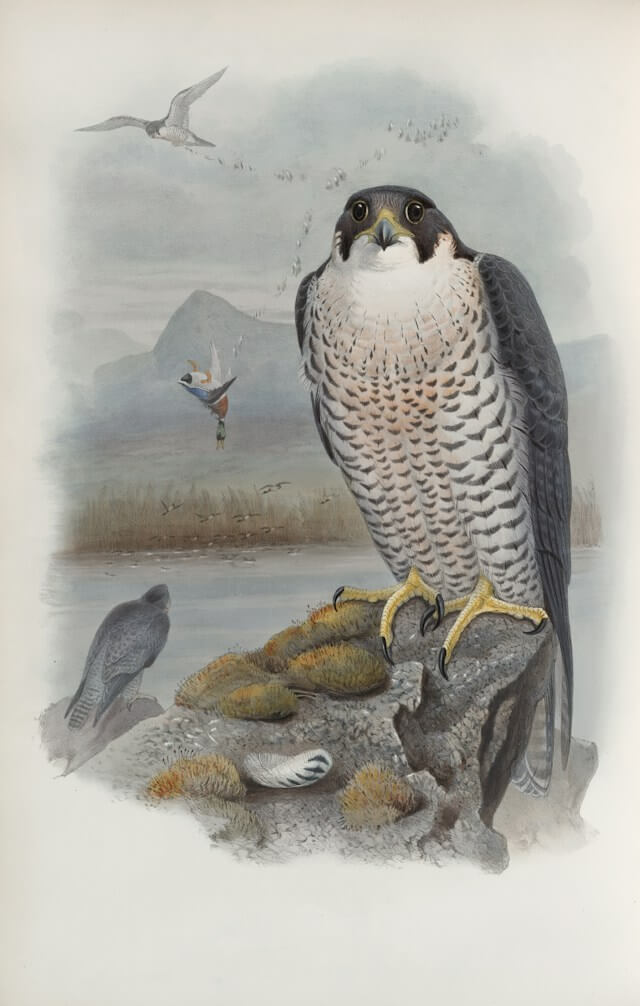
I recently re-watched The Bone Collector, starring Denzel Washington – great movie, by the way. At different points in the film, a peregrine falcon makes an appearance. The peregrine falcon (Falco peregrinus) has long been associated with unmatched focus, lightning-fast action and a higher, almost visionary perspective. I don’t want to spoil the movie for you (you can currently find it on Netflix) so I’ll say no more about that. But it did get me thinking about this remarkable bird.
Few birds have quite the mystique of the peregrine. Sleek, powerful and extraordinarily fast, it is a predator built for precision. It sees the world from above, locks onto its target and, when the moment comes, commits with astonishing speed. There is something almost cinematic about it – which perhaps explains why the peregrine has found its way into stories, legends and symbolism across cultures.
There is something particularly fitting about the peregrine’s name. The Latin peregrinus means “wanderer” or “pilgrim”, while its Afrikaans name, Swerfvalk, translates rather beautifully as “wandering falcon”.
In South Africa, peregrines are relatively rare resident raptors, and unlike their more common close relative, the Lanner Falcon, they show a strong preference for particular habitats. They are most reliably encountered in mountainous country, with the temperate southwestern Cape supporting a notable population. Sheer cliffs are particularly important, providing the secure ledges and vertical faces they favour for nesting.
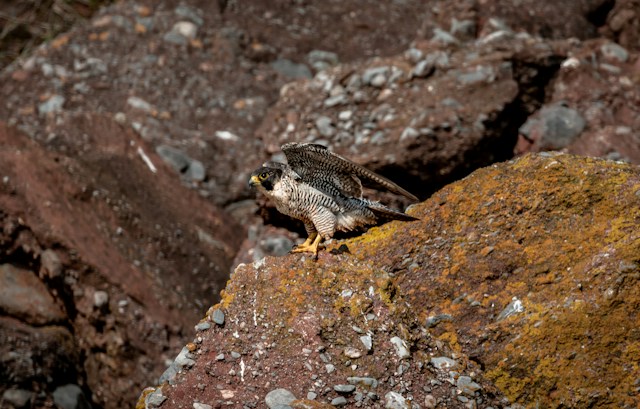
South Africa has its own resident breeding population, primarily the Falco peregrinus minor subspecies. But there is another peregrine story unfolding here each summer. The Arctic-breeding Falco peregrinus calidus is a rare non-breeding migrant to southern Africa, with some individuals undertaking extraordinary trans-continental journeys between the northern and southern hemispheres.
And these are not simply long flights. They are epic journeys across continents, oceans and vastly different landscapes. One tracked peregrine completed a staggering 6,346-kilometre journey before arriving in Cape Town – a remarkable reminder that the name “wanderer” is more than just a poetic description (see info block).
An animal is defined as “a living, multicellular organism belonging to the biological kingdom Animalia that eats organic material for energy and typically moves under its own power.” Which, of course, makes birds animals. So, what is the fastest animal on the planet? The cheetah? Nope. Not even close. It is the peregrine falcon!
The secret lies in something called a stoop – the peregrine’s spectacular high-altitude hunting dive. Rather than simply flying at tremendous speed, the falcon climbs high above its intended prey, folds its wings close to its body and then dives, accelerating into a near-vertical blur. It can strike another bird in mid-air with extraordinary precision.
The highest speed ever recorded for a peregrine is an astonishing 242 mph (389 km/h). The record was documented in 1999 by American falconer Ken Franklin with a captive-bred peregrine named Frightful. To measure the speed, Franklin and the bird descended together from an altitude of around 17,000 feet, while a tiny altimeter computer weighing just four ounces was attached to the falcon’s tail feathers (see info block).
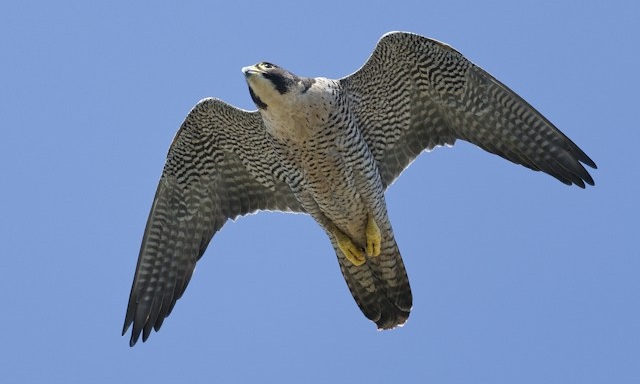
At those speeds, however, simply being streamlined isn’t enough. The peregrine has evolved some remarkable aerodynamic adaptations. Inside its nostrils are small, bony structures called tubercles, which help manage the violent airflow entering the nasal passages during a high-speed dive. They effectively disrupt and redirect the air, helping prevent the extreme pressure changes from damaging the bird’s respiratory system. Its eyes have their own high-speed protection: a transparent third eyelid, known as a nictitating membrane, sweeps across the eye to protect it while still allowing the falcon to see.
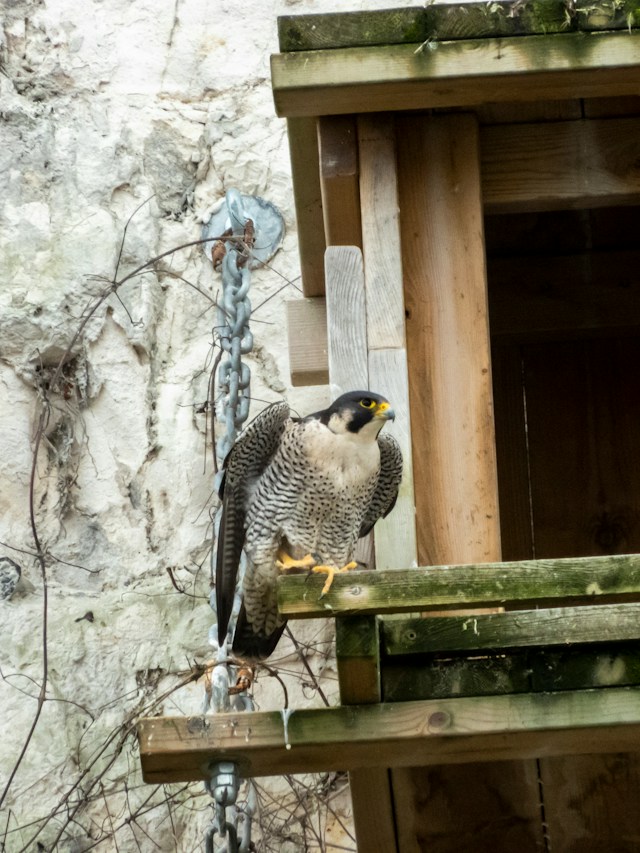
It is an extraordinary example of evolution solving an aerodynamic problem that would challenge even the best aircraft designer. Indeed, the peregrine’s remarkable respiratory and aerodynamic adaptations have attracted the attention of engineers and inspired research into airflow and high-speed design. Nature, it seems, got there first.
But it’s not just about aircraft. Bugatti Design Director Frank Heyl explains that the designers looked to the peregrine’s behaviour during its high-speed stoop. When the falcon dives, it tucks its wings tightly against its body, dramatically reducing its frontal area and therefore reducing aerodynamic drag. Bugatti applied the same principle to the Tourbillon. The result is a lower, narrower, highly streamlined teardrop-shaped body, with a reduced frontal area compared with the Chiron. Bugatti says this aerodynamic philosophy was part of the Tourbillon’s design from the beginning, helping prepare the car for speeds of up to 445 km/h (see info block).

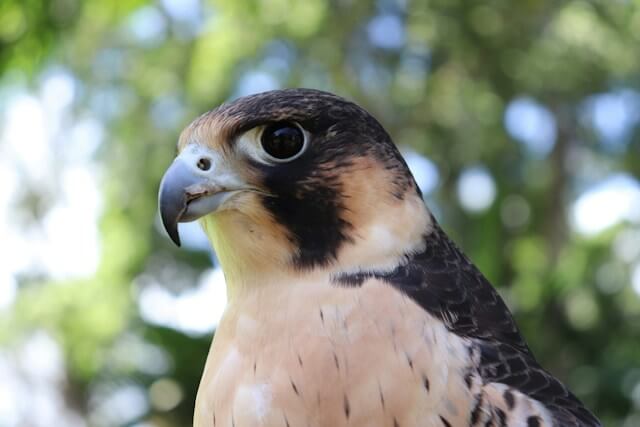
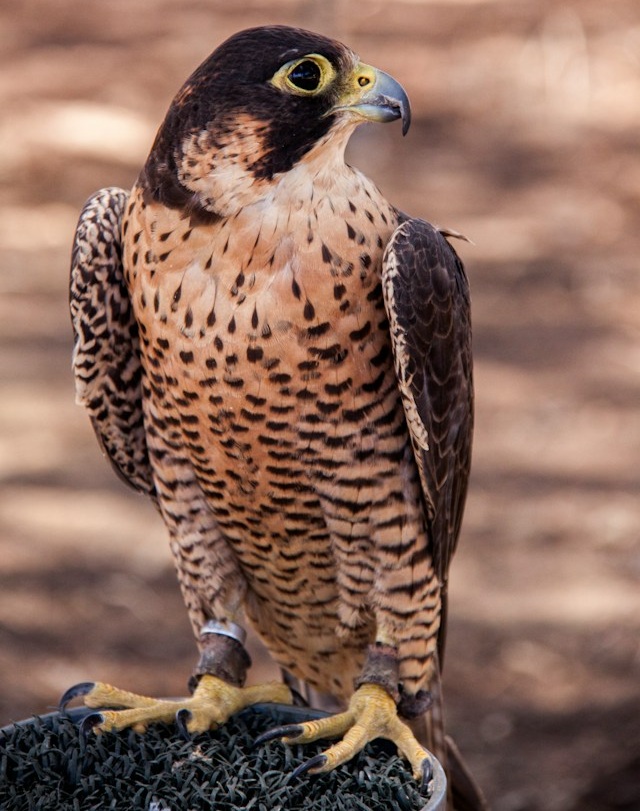
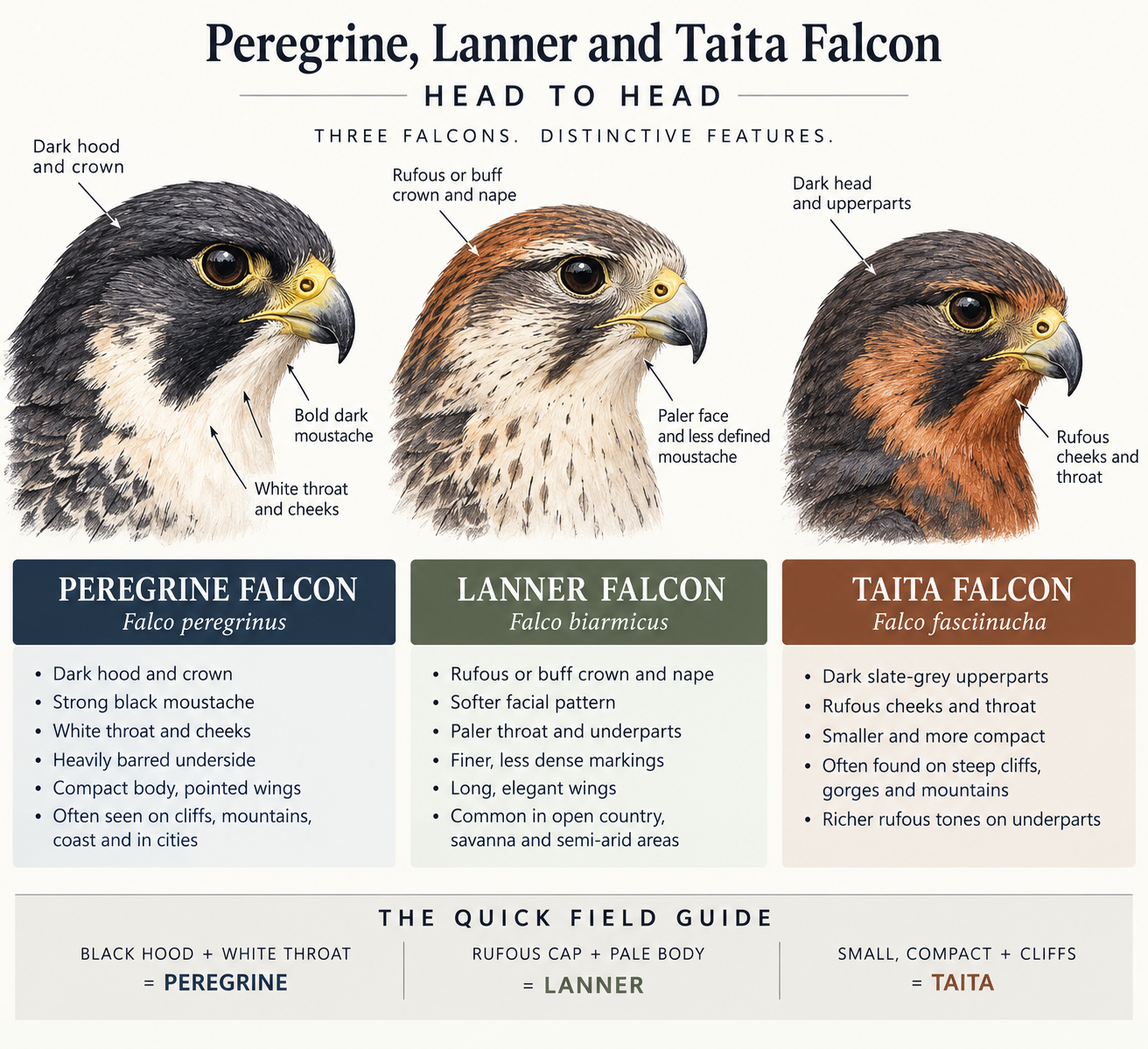
There are three falcons that are particularly easy to confuse: the Peregrine, Lanner and Taita. Telling them apart can be tricky at first, but there are a few useful clues. The Peregrine Falcon is generally the darkest and most strongly marked, with its distinctive black hood, white throat and bold dark moustache. Its underparts are usually heavily barred. The Lanner Falcon is generally paler, with a softer facial pattern, lighter underparts and a more elongated, elegant appearance. The Taita Falcon is the smallest and most compact of the three, with darker upperparts and often rich rufous colouring. It is particularly associated with steep cliffs, gorges and rugged mountainous terrain. Of course, nature rarely reads the field guide. Age, lighting, moult and individual variation can make identification less straightforward – but once you know what to look for, these three magnificent falcons become considerably easier to tell apart. For me, the markings on the head remain the simplest method of telling them apart. And since a picture paints a thousand words:
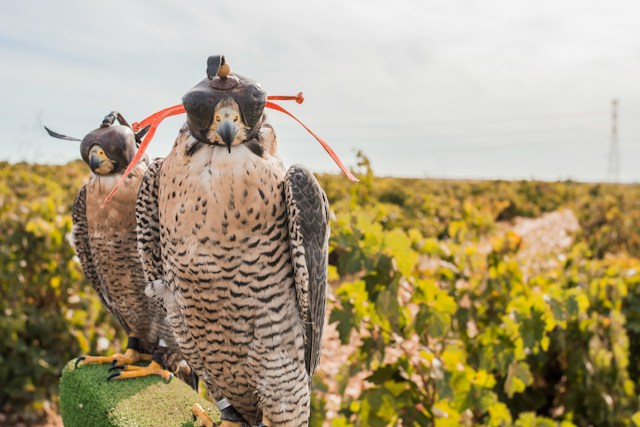
Peregrine falcons (Falco peregrinus) are universally considered the pinnacle bird of prey in falconry and are among the most highly valued raptors in the sport’s 3,000-year history. The top recorded price specifically for a peregrine falcon reached 650,000 Saudi Riyals (about $173,000 USD – nearly R3 million) for a young wild-captured Shaheen peregrine (a powerful, non-migratory subspecies of the peregrine falcon found primarily across the Indian subcontinent) sold at the Saudi Falcons Club Auction in October 2020.
Peregrine falcons sleep with half of their brain awake, and one eye open – a habit known as unihemispheric slow-wave sleep. One brain hemisphere rests while the other stays alert to watch for danger. The eye connected to the awake brain side stays open, while the other eye closes. They close both eyes only when they feel completely safe. They often sleep standing on one leg with their head tucked into their back feathers to stay warm. Locked foot tendons keep them from falling off their perch.
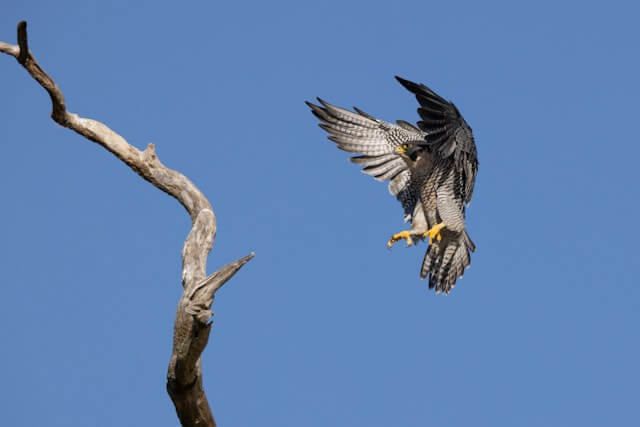
Interestingly, female peregrine falcons are about one-third larger and up to 50% heavier than males, a pattern known as reversed sexual dimorphism. Roughly 1/3 larger and heavier, weighing up to 50% more than their male counterparts. Because of their large size, females are simply called “falcons”. About 1/3 smaller than females, males are historically called “tiercels,” a word that means “a third”.
I found this story to be one of the most interesting about these birds. Following widespread use of the pesticide DDT after the Second World War, peregrine populations in the eastern United States collapsed. DDT caused eggshell thinning and reproductive failure, and by the early 1960s the peregrine had effectively disappeared as a breeding bird from the eastern US. Conservationists then embarked on one of the great raptor recovery programmes of the twentieth century. The pioneering work led by Tom Cade at Cornell included raising young captive-bred peregrines and releasing them through a technique known as hacking. The birds were placed in artificial nesting sites and allowed to develop naturally before being released. And eventually, they came back. New York City recorded its first peregrines nesting on bridges in decades in 1983. The birds discovered that the city’s skyscrapers, bridges and towers offered something remarkably similar to their natural habitat: height, cliffs and an abundant supply of prey.
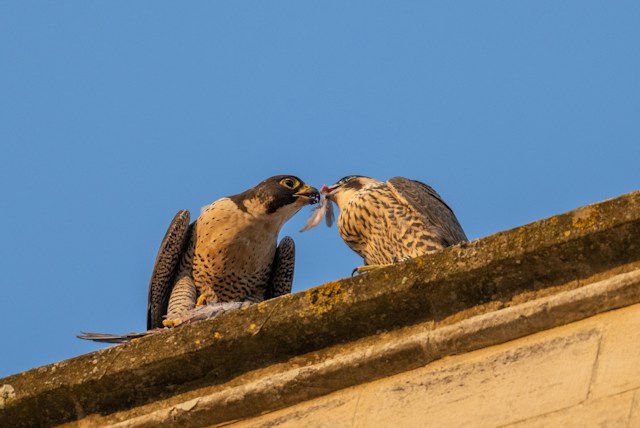
Perhaps that is what makes the peregrine so captivating. It is a bird of extraordinary speed, precision and power, yet it is also a wanderer – capable of crossing continents, clinging to remote cliffs or making its home among the skyscrapers of New York. It has survived persecution, pesticides and the loss of much of its traditional habitat and somehow found a way to return. From the highest mountain crag to the canyons of Manhattan, the peregrine continues to remind us that survival is not always about resisting change. Sometimes, it is about adapting to it, finding a new vantage point, and knowing exactly when to take the plunge.
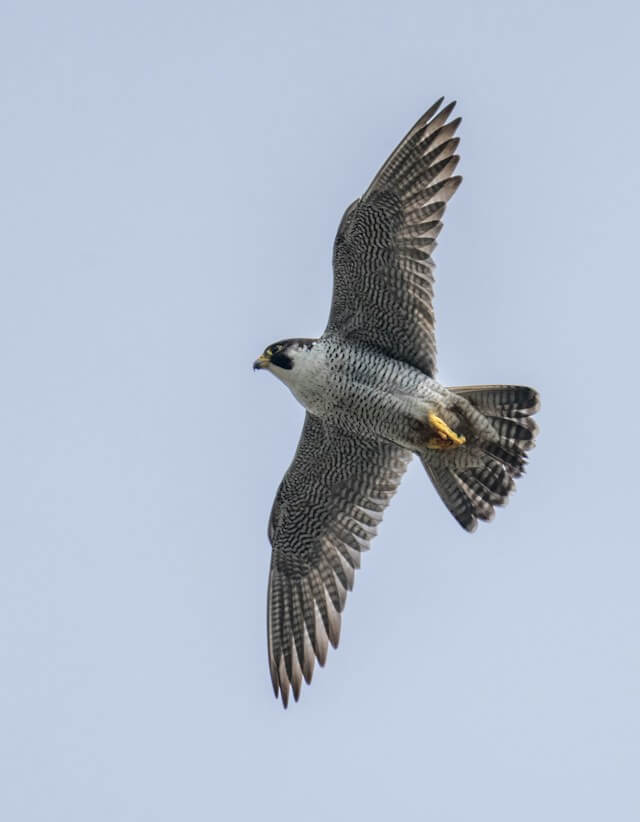
“You cannot know what freedom means till you have seen a peregrine loosed into the warm spring sky to roam at will through all the far provinces of light.” JA Baker.The Peregrine (1967).
Jacqui Ikin & The Cross Country Team
INFO BLOCK:
Migration of a Peregrine Falcon from Saudi Arabia to Cape Town as revealed by satellite telemetry:
https://www.researchgate.net/figure/Migration-of-a-Peregrine-Falcon-from-Saudi-Arabia-to-South-Africa-during-29-October-22_fig1_321954947
High-Velocity Falcon | National Geographic
https://www.youtube.com/watch?v=j3mTPEuFcWk
How the peregrine falcon has influenced Bugatti design language for the past century
https://retrorides.com.au/originals/bugatti-tourbillon-type-57-sc-atlantic-surbaisse-design-peregrine-falcon/
How Peregrine Falcons Thrive in Cities
https://www.facebook.com/watch/?v=1762717758405939
